
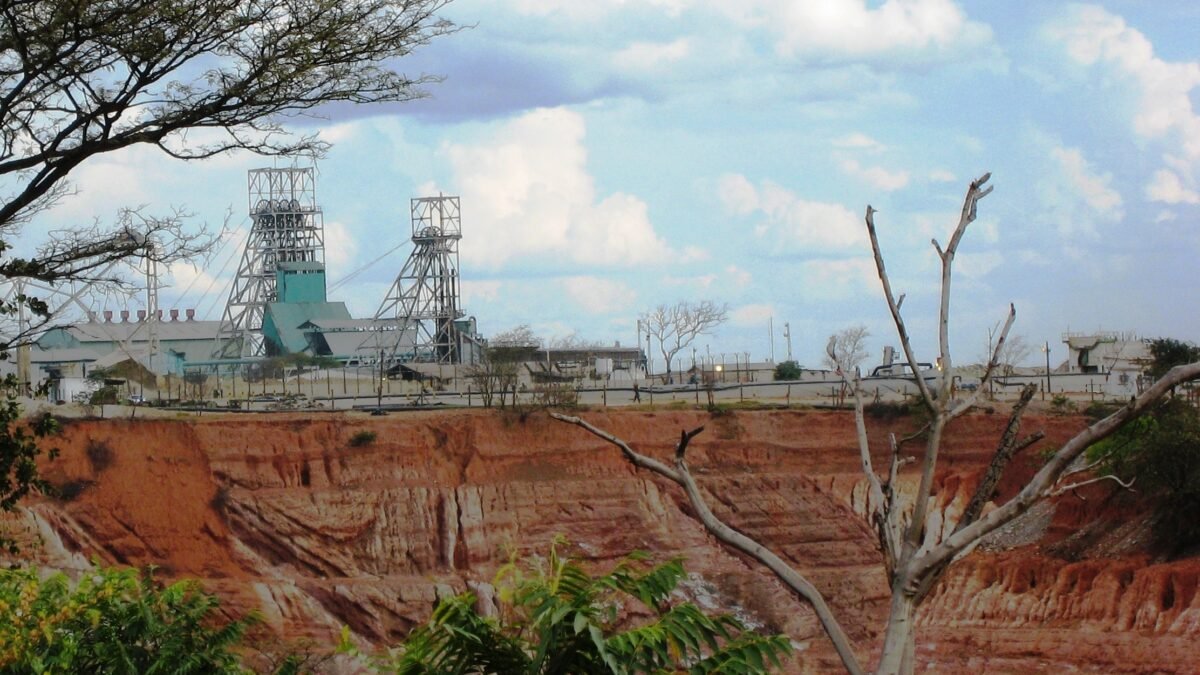
Zambia is no longer being discussed primarily as a debt story. After years defined by debt distress and restructuring negotiations, the country is increasingly being viewed as a strategic minerals state. That shift in framing carries implications that extend far beyond Lusaka’s fiscal position, into the question of whether any African economy can convert strategic importance into durable industrial leverage before the next cycle of dependency hardens around it.
The country’s recent progress under the G20 debt restructuring framework has improved investor confidence and eased some of the financial uncertainty that overshadowed its economy for years. But the more important shift is what is replacing that narrative. Lusaka is steadily repositioning itself around copper expansion, transport-corridor leverage, energy-transition supply chains, and ambitions for greater domestic participation in the value generated from its mineral sector. Copper has acquired significance far beyond traditional commodity markets. Demand tied to electric vehicles, battery systems, renewable energy infrastructure, data centres, and industrial electrification is reshaping how major economies think about supply security, and Zambia sits near the centre of that recalibration.
As one of Africa’s major copper producers, Zambia is increasingly tied to competing infrastructure and investment strategies linking Central and Southern Africa to global manufacturing systems. Rail corridors through Angola’s Lobito route and Tanzania’s TAZARA network are both being repositioned as strategic export arteries capable of moving copper and related minerals toward Atlantic and Indian Ocean markets. That growing infrastructure competition has elevated Zambia’s importance beyond extraction alone. Geography itself has become leverage. Countries positioned inside major logistics systems connected to critical minerals are attracting renewed diplomatic attention, financing initiatives, and commercial interest from powers seeking stable supply-chain access.
The competition over Africa’s mineral future is expanding beyond mines and railways into the technological systems surrounding them. AI-assisted exploration, geological data systems, and predictive modelling are beginning to reshape who finds the copper next, and that matters as much as who owns it today.
Zambia’s evolving engagement with technology-driven exploration projects points toward a broader shift underway in the global mining sector. AI-assisted copper exploration initiatives suggest that the next phase of mineral competition may depend not only on ownership of resources, but also on who possesses the computational capacity, geological data systems, and predictive technologies capable of identifying commercially viable deposits faster and more efficiently. The minerals economy is becoming integrated with digital capability in ways that extend the contest well beyond the physical corridors now dominating the public conversation.
Lusaka has increasingly emphasised value addition, local processing, and attempts to capture more economic activity around the minerals sector rather than remaining solely an exporter of raw materials. Yet the structural risks remain familiar. Resource-rich economies have historically struggled to translate commodity demand into diversified industrial transformation. Infrastructure can accelerate extraction without necessarily deepening manufacturing capacity or improving long-term resilience. Minerals can generate external interest while leaving domestic productive systems relatively shallow. Zambia’s current repositioning carries broader continental importance precisely because it is unfolding at a moment when the terms of the global minerals economy are genuinely in flux.
Debt restructuring progress has given Zambia breathing space. But recovery alone is not the defining story anymore. The deeper question is whether the country can convert strategic importance into durable industrial leverage before the next cycle of dependency hardens around it. That challenge extends across the continent. States rich in critical minerals are being drawn into a global competition shaped by energy transition demands, technological rivalry, and supply-chain insecurity. The countries able to combine resource wealth with logistics control, digital capability, and domestic industrial expansion may emerge with greater bargaining power than in previous eras. For now, Zambia stands at the intersection of those forces, no longer merely recovering from crisis, but navigating the opportunities and pressures created by a world reorganising itself around the minerals beneath its soil.
The trap is specific and worth naming, because strategic importance and industrial leverage are not the same thing and are easily confused. Zambia is important to the energy transition the way a quarry is important to a builder: indispensable, and entirely replaceable in its bargaining position if all it offers is the raw stone. The copper that leaves the Copperbelt as concentrate is refined, alloyed, and turned into cathodes, wire, and batteries elsewhere, where the margin and the jobs accumulate. Strategic importance attracts suitors; it does not, by itself, change the terms on which they buy. The leverage Zambia is being courted for today expires the moment the metal crosses the border unprocessed, and the courtship will have changed nothing structural about the relationship. Whether Zambia leaves this intersection with more than it entered with depends on whether it uses the current attention to move one stage up the value chain. In contrast, the attention lasts because the world is reorganising around the copper, whether or not Zambia captures the reorganisation. That is Africa’s test as much as Zambia’s.