Every capital city project launched by a government facing political pressure is, at some level, an argument about the future made in concrete, the contention that the problems of the present are being superseded by the infrastructure of what comes next. Zimbabwe’s proposed administrative capital at Mt Hampden, located approximately 20 kilometres northwest of Harare, is no exception. The question is whether it is an argument the country can afford to make.
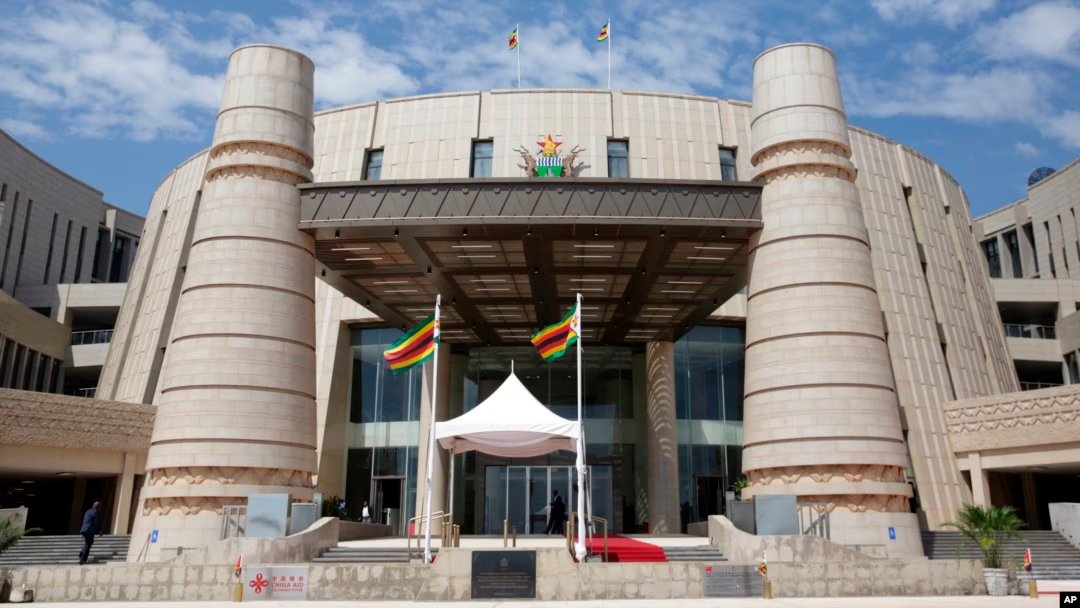
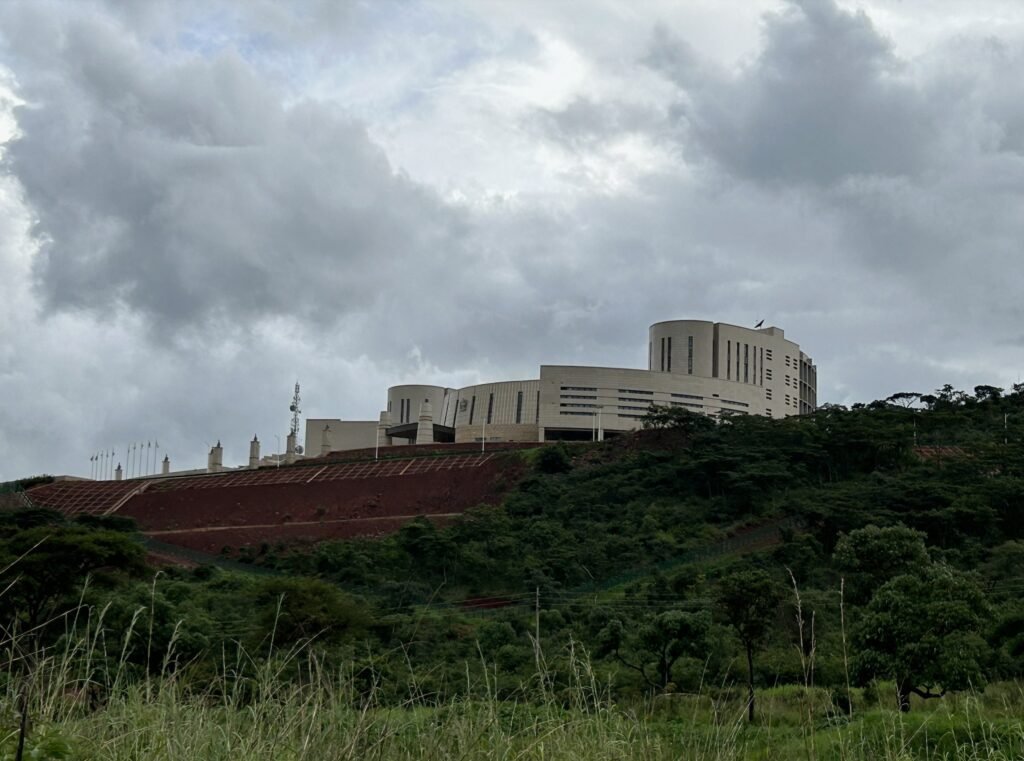
President Emmerson Mnangagwa’s government announced the Mt Hampden capital project as part of Vision 2030, Zimbabwe’s declared roadmap to middle-income status by the decade’s end. The proposed Parliament building, funded through a parliamentary complex grant from China, was presented as the anchor of a new administrative hub designed to relieve Harare’s congestion, modernise government infrastructure, and signal Zimbabwe’s emergence from the economic and political crises of the Mugabe era. The symbolism was intentional. A new capital for a new Zimbabwe, one that could attract investment, restore international confidence, and demonstrate that the country was building rather than merely surviving.
The symbolism does not resolve the economics. Zimbabwe entered this decade with an economy scarred by hyperinflation, dollarisation, de-dollarisation, and reintroduction of a national currency whose credibility the market remained unconvinced of. Infrastructure across the country- roads, electricity generation, water treatment- reflected decades of underinvestment and deferred maintenance. In this context, the case for a new capital city project required answers to questions that the government’s communications did not consistently address.
The Chinese Financing Question
China’s funding of the parliamentary complex at Mt Hampden, a grant reportedly in the range of $140 million, represents the most concrete financial commitment in the project. It also represents the most strategically legible element of the arrangement. China has made parliamentary buildings and government complexes a signature instrument of diplomatic presence across Africa, funding facilities in Uganda, Mozambique, Sierra Leone, and elsewhere. The buildings are gifts, but they are not without logic: physical presence in the architecture of African governance creates ongoing relationships of maintenance dependency, aesthetic influence, and soft power that Chinese state planners understand well.
For Zimbabwe, the parliamentary building grant removes a significant funding obstacle for the project’s most visible element. But the parliament building is the beginning of a capital city, not its completion. The residential zones, commercial districts, government ministry buildings, service infrastructure, and transport connectivity that would make Mt Hampden a functional administrative centre require financing that has not been secured at the scale the project’s ambition requires.
A new capital city project requires answers to questions the government’s communications did not consistently address, and the citizens who need functioning hospitals, reliable electricity, and passable roads are entitled to ask them.
The Opportunity Cost of Symbolic Infrastructure
Zimbabwe’s electricity generation capacity has been insufficient for years, with load-shedding schedules that disrupt both domestic life and commercial production. The country’s road network outside Harare and Bulawayo has deteriorated substantially from its post-independence condition. Rural healthcare facilities face critical shortages of medicines and qualified staff. Public education has been sustained in part by the commitment of teachers, who are among the most poorly compensated public employees on the continent relative to their qualifications.
Against this backdrop, a capital city project invites a standard infrastructure prioritisation question: does Zimbabwe’s greatest governance need currently lie in a new administrative complex, or in the systems that determine whether ordinary citizens can access power, healthcare, clean water, and education? The government’s response, that Vision 2030’s ambitions require modern administrative infrastructure, is not implausible. The counter-response, that symbolic infrastructure, without improvements to functional infrastructure, serves the government’s image more than citizens’ welfare, is also not implausible. Both observations can be simultaneously true.
The Model This Follows
New capital city projects are not unprecedented in African governance; Nigeria moved its federal capital from Lagos to Abuja beginning in the late 1970s; Tanzania moved its capital functions progressively to Dodoma; Egypt announced construction of the New Administrative Capital east of Cairo. Each project carried its own political logic and its own economic risks. None has been uniformly judged a success in the terms originally declared, though each has produced real infrastructure outcomes.
What determines whether Mt Hampden becomes an economic anchor or an administrative island is not the ambition of its designers but the coherence of its integration with the surrounding economy. A capital city that civil servants commute to from Harare, that lacks residential infrastructure sufficient to attract genuine relocation, and that does not generate employment multipliers in its surrounding area produces administrative continuity, not economic transformation. Zimbabwe’s government has declared transformative ambitions. The test is whether the project’s implementation framework can deliver them, and whether the financing to close the gap between the parliament building and the full capital city vision will materialise before Vision 2030’s deadline requires a reckoning with what was built and what was promised.