
Ten of the world’s twenty longest-serving heads of government currently lead African states. This is not a cultural diagnosis; it is a structural one. It is the outcome of political systems that were designed, adapted, and in many cases deliberately engineered to convert the formal apparatus of democratic governance into mechanisms for the perpetuation of specific individuals and networks. Understanding why this pattern persists requires interrogating the architecture, not the character of the men at its centre.
The post-independence promise in Africa was self-determination, the replacement of colonial authority with accountable governance rooted in the consent of the governed. What emerged across a significant portion of the continent was a different arrangement: the transfer of state authority from colonial administrators to national elites who discovered, relatively quickly, that the institutional frameworks they inherited were better adapted to holding power than to distributing it. The colonial state was not designed for citizen accountability. It was designed for extraction and control. Many of its successors have been faithful to that design while adorning it with electoral procedures.
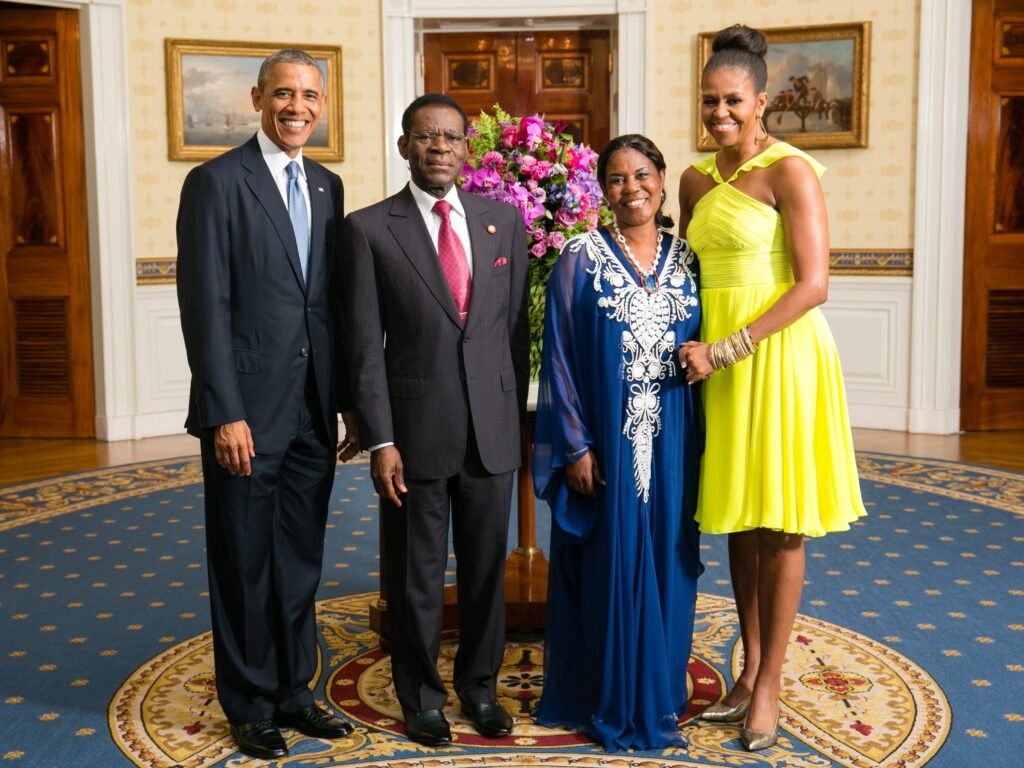
Teodoro Obiang Nguema Mbasogo has governed Equatorial Guinea since 1979, a tenure of over four decades, presiding over oil wealth that has made him and his immediate circle fabulously prosperous while the majority of his citizens lack access to basic services. Paul Biya in Cameroon has been referred to as an “absentee landlord” by political analysts. This president governs more frequently from European hotels than from his own capital, while opposition voices are managed through a combination of co-optation and repression. Denis Sassou Nguesso of Congo-Brazzaville has so thoroughly embedded himself in the state structure that the boundary between his personal interests and those of the republic has ceased to function as a meaningful distinction.
What all of these systems share is not simply the longevity of the leader. They share a set of structural features: constitutional provisions that have been amended or interpreted to extend term limits; electoral processes that maintain the form of competition without its substance; security apparatus loyalty that has been converted from institutional into personal; and economic arrangements in which state resources flow through networks attached to the ruler rather than through institutions that operate independently of him. The Ibrahim Prize for Achievement in African Leadership, created precisely to reward dignified, voluntary departure from power, has been awarded a handful of times since 2006. The rarity of its recipients is its most informative data point.
The contrast with the democratic outliers is equally instructive. Ghana, Botswana, and Zambia, each of which has demonstrated the viability of peaceful, competitive power transfer, have done so through the construction of specific institutional features: electoral bodies with genuine operational independence, civil society organisations with the capacity and legal freedom to monitor and report, judiciaries that have demonstrated willingness to rule against executive preferences in specific cases, and political cultures in which the norm of peaceful transfer has accumulated enough repetition to create expectation. These features did not emerge spontaneously. They were built through deliberate institutional investment and political decisions that prioritised system durability over individual incumbency.
The argument that African political longevity reflects cultural acceptance of elder authority is frequently advanced and rarely examined carefully. It conflates the legitimacy that African cultures historically attached to wisdom and experience, embedded in institutional forms that included accountability mechanisms, with the manufactured permanence of modern authoritarian incumbency. The traditional ruler in most pre-colonial African political systems operated within constraints, lineage accountability, council oversight, and the possibility of deposition for failures of governance that the modern African executive has systematically eliminated. Cultural continuity is not the explanation for African autocracy. It is one of its rhetorical resources.
The youth populations bearing the consequences of this governance arrangement understand this with a clarity that their elders sometimes lack. The frustration that produced sustained street mobilisation in Sudan before Omar al-Bashir’s fall, in Zimbabwe before Mugabe’s removal, and in Senegal during the Sonko affair- that frustration is not about individual leaders. It is about systems that were built to be impermeable to popular demand and that have operated according to their design. When the wall finally moves, as it did in Sudan, as it did in Zimbabwe, it moves because the accumulated pressure exceeded the structural capacity to contain it. What this means is that the systems have a breaking point, even if the path to that point is long and costly.
The democratic institutional work that Africa requires is neither glamorous nor rapid. It is the slow, consistent construction of the systems that make peaceful power transfer normal, electoral bodies that develop credibility through consistent independence, judiciaries that resist executive capture, civil society organisations that function as permanent accountability infrastructure rather than episodic crisis responders. Ghana did not become a model of African democratic transfer in one election. It became one through the accumulation of institutional decisions across multiple electoral cycles that gradually made the expectation of peaceful transfer into a norm that even ambitious incumbents found it costly to violate.
Africa does not lack the political talent, the intellectual capacity, or the civic energy to build that institutional infrastructure. What it needs is the political will to prioritise institutions over individuals, and the international environment that stops treating individual African leaders as the primary variable in African governance outcomes, and starts treating African institutional quality as the measure that actually matters.