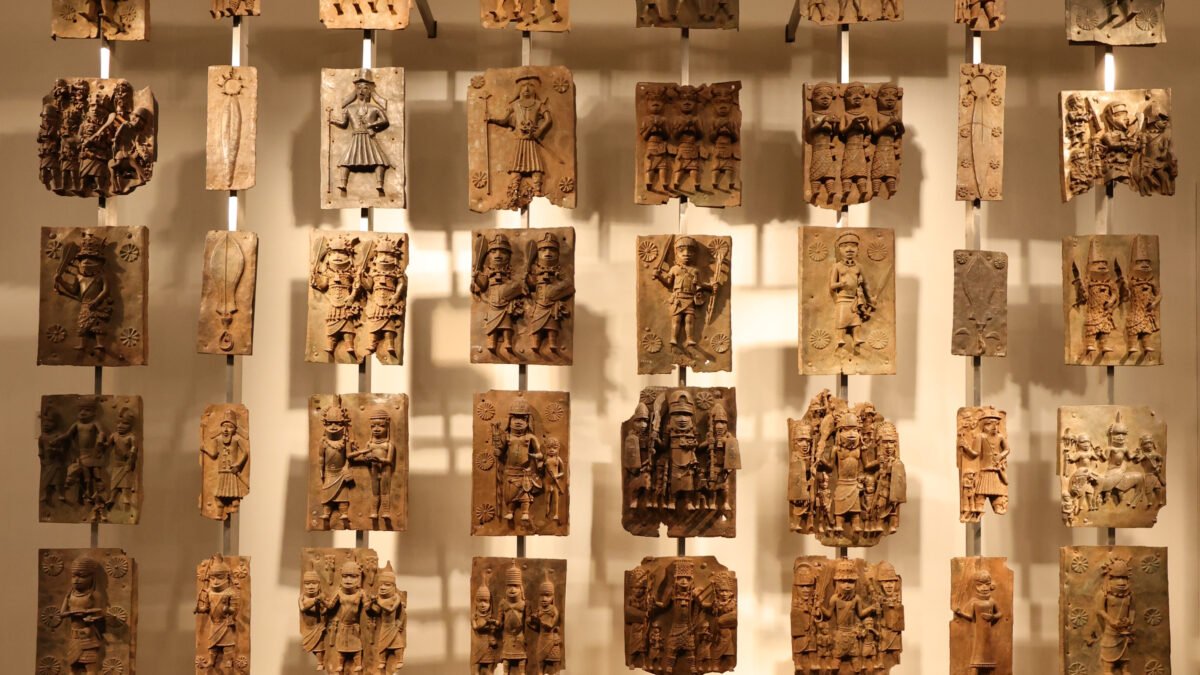
British soldiers looted thousands of bronze plaques, ivory carvings, and royal artefacts from the Kingdom of Benin in a punitive 1897 expedition, dispersing them into museum collections across Europe and North America, where several of the most prominent, the Bronzes above all, became fixtures of institutions like the British Museum and Berlin’s Ethnological Museum for well over a century. The campaign for their return, sustained by Nigerian activists, scholars, and successive governments since the 1930s, achieved its most significant breakthroughs recently: Germany transferred ownership of over 1,000 pieces to Nigeria in 2022, and other institutions across Europe have followed suit with partial returns. The moment looked, briefly, like a clean resolution to one of the most cited cases in the global restitution debate. What followed instead was a dispute within Nigeria over who the returned artefacts actually belong to, one that has complicated matters for the very museums that returned them.
A Proclamation That Redirected Ownership
In 2023, Nigeria’s federal government issued a proclamation, under outgoing president Muhammadu Buhari, vesting ownership of the returned Benin Bronzes not in Nigeria’s National Commission for Museums and Monuments. This public institution had represented Nigeria throughout decades of restitution negotiations, but in the Oba of Benin, the traditional monarch whose royal court the pieces were originally looted from in 1897. The legal logic had a genuine historical basis: the Bronzes were royal court property before colonial soldiers seized them, and restoring them to the Oba’s custody could be read as the most direct possible correction of the original theft, returning stolen royal property to the royal institution from which it was stolen.
The proclamation nonetheless unsettled several of the German and British institutions that had negotiated their returns explicitly with the expectation, encouraged by Nigerian federal officials during the negotiations, that the artefacts would enter public museum collections accessible to researchers and the general public, rather than private royal custody where display, access, and even the question of eventual resale would rest with the Oba’s court rather than any public accountability structure. Germany’s culture ministry, having spent years building the political case for restitution partly on the argument that these objects belonged to the Nigerian public, found itself having transferred ownership into an arrangement its own domestic critics could plausibly describe as one private collection returning looted goods to another.
Germany’s culture ministry found itself having transferred ownership into an arrangement its own critics could plausibly describe as one private collection returning looted goods to another.
Whose Heritage, Governed by Whom
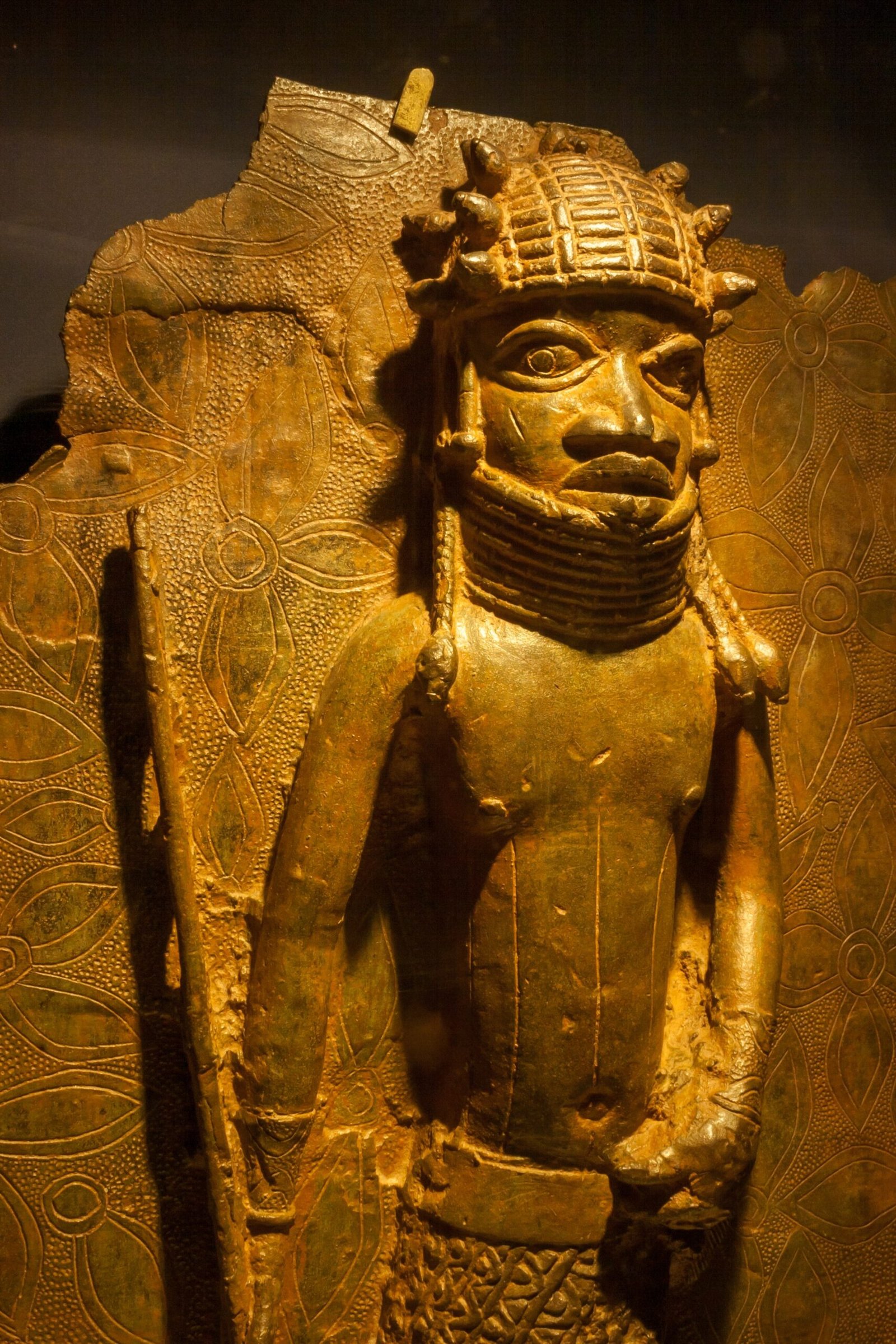
The dispute is not a simple case of bad faith on any side. The Oba of Benin’s court has a legitimate historical and cultural claim as the original owner and the living institutional continuation of the kingdom the objects came from, a claim considerably stronger than the Nigerian federal state’s, which did not exist in its current form when the looting occurred and inherited the restitution case as the internationally recognised sovereign successor rather than as the original owner. The federal museum system’s claim rests on a different, also legitimate, logic: public heritage institutions provide access, conservation standards, and accountability that keep returned artefacts available to scholarship and public view rather than subject to the discretion of a single court, however historically grounded that court’s claim may be.
What This Reveals Beyond One Kingdom’s Bronzes
The unresolved question sits underneath most African restitution cases even when it is not stated as bluntly as it has been in Nigeria: colonial-era looting stole objects from specific institutions, kingdoms, chieftaincies, religious bodies, that in many cases still exist in some form, while the restitution movement has largely been negotiated government to government, between the modern nation-states that inherited the diplomatic standing to make the claim. When those two claims align, the government and the traditional institution are in agreement on custody, and restitution proceeds smoothly. When they diverge, as they have over the Benin Bronzes, the returning museum discovers that giving an object back does not resolve the deeper governance question of who, inside the country receiving it, has the legitimate and lasting authority to hold it in trust for the public the restitution campaign was fought in the name of. Nigeria’s Bronzes dispute is not a reason to slow restitution elsewhere. It is a preview of a question every future case involving a still-living traditional institution will eventually have to answer, and Europe’s museums, having spent decades resisting return because Africa lacked the capacity to care for its own heritage, are now discovering that the harder question was never capacity. It was governance.
Nigeria’s federal government and the Oba’s court have since indicated openness to a shared arrangement, a dedicated museum built with royal cooperation rather than either party holding the Bronzes exclusively, and that compromise, if it holds, may end up the more durable model for future cases than either strict state custody or strict traditional custody alone. What the episode has already accomplished, regardless of how the Bronzes are finally displayed, is to force both African governments and European museums to confront a question that the restitution campaigns spent decades avoiding: repatriation was only ever the first half of the argument. Legitimate custody was always the second half, and it turns out to be the harder one to settle.