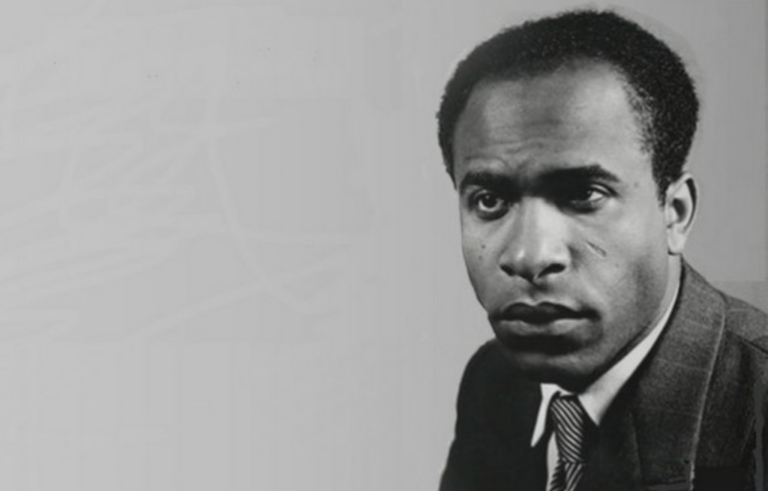
Patrice Lumumba governed the Republic of the Congo for seventy days. In that compressed, electric window between independence and assassination, he articulated something the Belgian administrators and their American counterparts understood before he had finished speaking: a Congo that controlled its own resources would restructure the power architecture of the entire continent. He was removed, by a plot involving the
Belgian government, the CIA, and Congolese collaborators, before that restructuring could begin. The debt that removal created has never been settled. It accrues interest in every cobalt mine that feeds the global energy transition while Congolese communities remain without reliable electricity. Lumumba is not history. He is a live account.
What the Record Establishes
The facts of Lumumba’s fall have been established with sufficient documentary precision to remove ambiguity. Belgium’s parliamentary commission of inquiry, published in 2001, concluded that Belgian officials bore moral responsibility for his death. The United States Senate’s Church Committee documented CIA involvement in plans to assassinate him, including a scheme involving poisoned toothpaste. Mobutu Sese Seko, whose decades-long kleptocratic rule followed, was sustained by Western backing throughout the Cold War on the simple logic that a pliant, corrupt government was preferable to a sovereign nationalist one. The pattern established in January 1961, when Lumumba was shot in a clearing in Katanga province, became the template for how the international system would manage African assertions of genuine sovereignty for the following half-century. The template was not abandoned. It was refined.
What Lumumba represented was not merely Congolese nationalism. He was the articulation of a continental proposition: that the resources of Africa belonged structurally to Africa, and that independence without economic sovereignty was a performance rather than a transfer of power. His June 1960 independence speech, delivered in the presence of the Belgian king, unrehearsed and unapproved, described colonial rule with a precision that the assembled dignitaries had not authorised him to speak. The speech was remarkable not for its anger but for its accuracy. He named what had been taken. That naming was the political act for which he was ultimately killed. You do not assassinate a man for his anger. You assassinate him for his clarity.
The Mechanism of the Debt Trap
Congo’s trajectory since 1961 reads as a ledger of the sovereignty debt trap: the compounding effect of interrupted self-determination, in which each intervention to prevent genuine Congolese sovereignty created the instability that justified the next intervention. Mobutu was backed until he became embarrassing, then dropped. Kabila was installed, then killed. The M23 conflict, the involvement of Rwanda and Uganda, the persistence of militia networks across eastern Congo- these are not separate events. They are iterations of a single system designed to keep the state too weak to govern its own resources and too fragmented to negotiate on equal terms. The minerals beneath Congolese soil- cobalt, coltan, lithium, gold- are extracted under conditions of managed chaos that maximise yield for external actors and minimise accumulation for Congo itself.
The word debt is precise, not rhetorical, because the mechanism compounds the way debt does. Each interruption of Congolese sovereignty did not merely delay self-rule; it destroyed the institutions that self-rule requires, which made the next interruption easier and the next recovery harder. A state stripped of its first nationalist leadership cannot build the bureaucratic memory, the army loyal to a constitution rather than a patron, or the negotiating capacity that would let it bargain over its own minerals. The instability is not the failure of the system. It is the system’s product, and it is profitable, because a country that cannot organise itself cannot set the price of what is taken from it. Weakness, once engineered, becomes self-financing.
Cobalt and the Energy Transition
The cobalt dimension carries particular contemporary force. Global electric vehicle production depends on cobalt, and the Democratic Republic of Congo holds an estimated 70 per cent of the world’s confirmed reserves.
The energy transition, the West’s central response to climate change, is structurally dependent on Congolese soil. Yet artisanal mining operations, many supplying the supply chains that lead to London and Silicon Valley, operate without meaningful labour protection. Children mine by hand in conditions that safety regulations in the consuming countries would prohibit. The energy transition that promises a cleaner future for European and North American consumers is being built, in part, on the same extractive logic that Lumumba died trying to interrupt. The moral incoherence is not incidental. It is architectural. What makes it architectural rather than accidental is that the same outcome recurs regardless of which actors occupy the roles. The mining company changes, the consuming market changes, the government in Kinshasa changes, and the structure, extraction without accumulation, survives all of them. A pattern that outlasts every change of personnel is not a failure of individuals. It is a design, and Lumumba understood that the design, not any single administrator of it, was the thing that had to be broken.
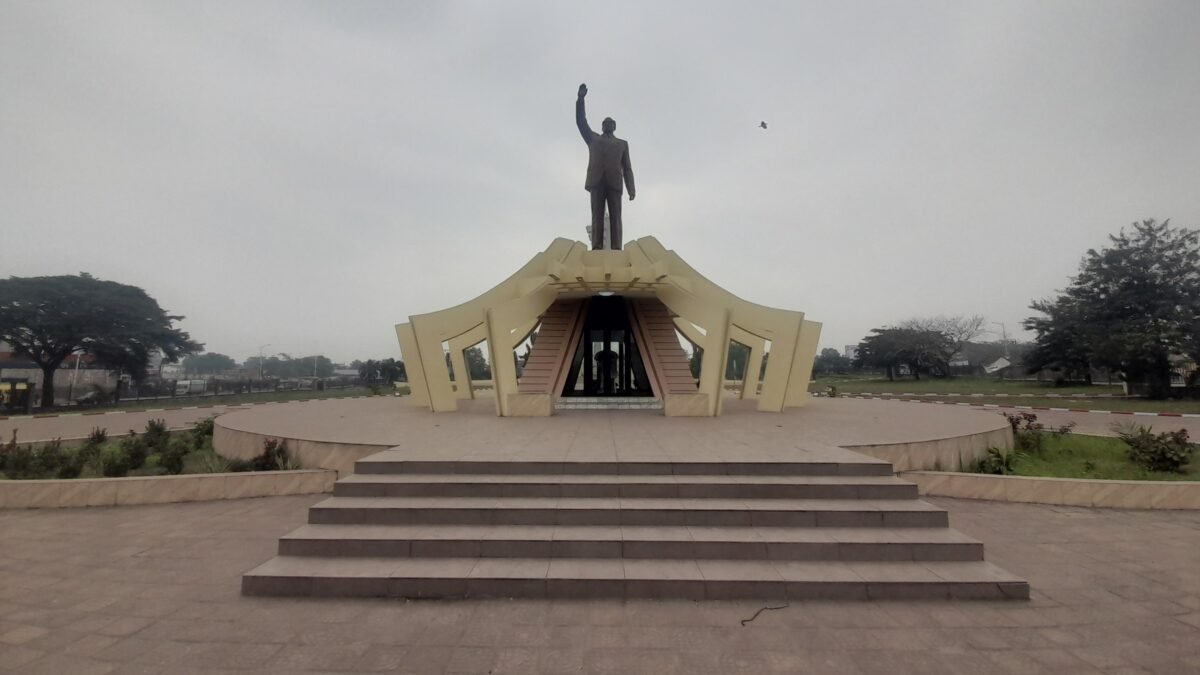
Lumumba has been absorbed into iconography, his image on murals, his name on airport terminals, his words quoted at African Union summits. Iconography is the political system’s way of honouring a threat without addressing it. The honest commemoration of Lumumba is not a mural. It is the question of whether the Congolese state can be structured, protected, and resourced sufficiently to negotiate the terms of its own mineral extraction, to capture value, build refining capacity, and participate in the global energy transition as a sovereign actor rather than a quarry. Belgium returned Lumumba’s only recovered remains, a gold tooth, to his family in 2022. The gesture was real. The sovereignty debt remains outstanding. It will not be settled with teeth.