An immigrant is marked by both departure and arrival, like a bird caught between two seasons, fleeing the cold grasp of deprivation while chasing the warmth of opportunity. But migration’s deeper truth is not about the individual journey. It is about what the movement of millions of people reveals about the systems- economic, political, and institutional- that produce the conditions that make leaving feel necessary.
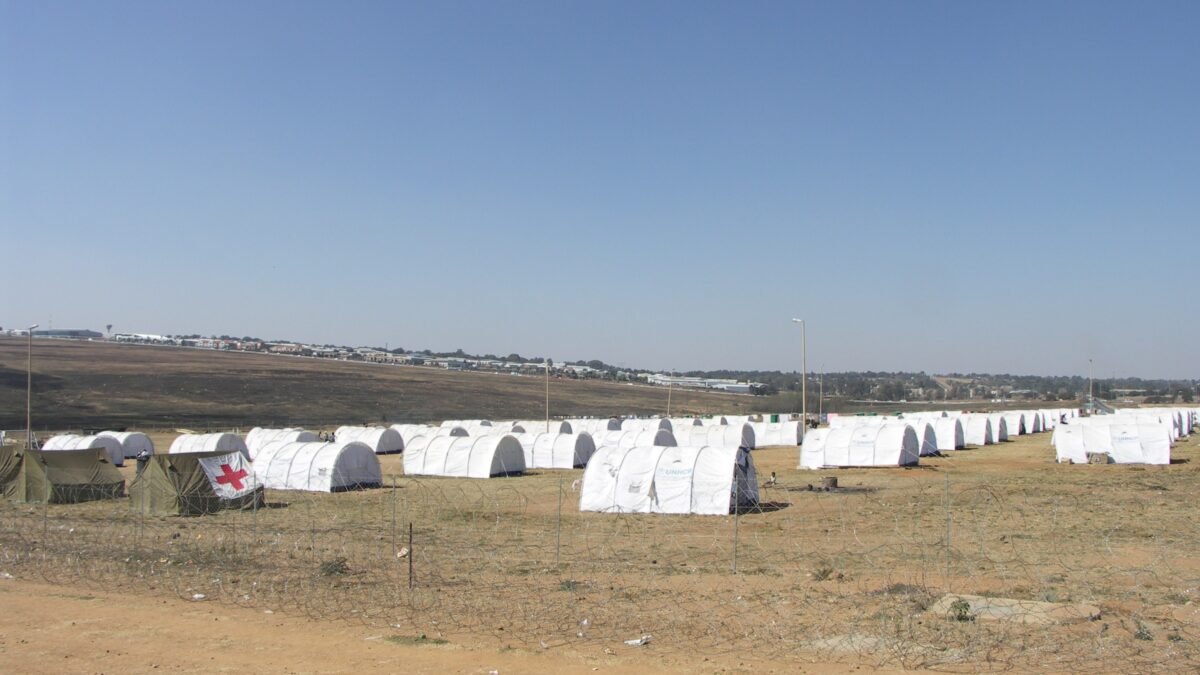
The number of international migrants grew from 173 million in 2000 to 258 million in 2017, according to the United Nations International Migration Report, and the trend has not reversed. In a world of escalating climate disruption, governance fragility, and widening economic inequality, the forces that move people across borders are not weakening. They are deepening. The frameworks designed to manage that movement- national border regimes, bilateral agreements, multilateral compacts- are being strained by a pace of displacement that their architects did not design for.
In Africa, migration’s logic defies the simplified narrative that dominates Western policy debates. The majority of African migration is not toward Europe. It is intra-continental. Within West Africa, cross-border movements under ECOWAS’s free movement protocol account for more than eighty per cent of regional migration flows, surpassing extra-continental movement by a substantial margin. The Sahelian communities moving toward coastal cities, the Somali and Ethiopian nationals navigating East Africa toward South Africa, the circular labour migration that sustains household economies across borders- these are the dominant patterns. North Africa and Libya’s position as a transit corridor to Europe represent the most visible and deadly layer of a migration system whose majority is invisible to European audiences because it does not end at their shores.
Migration is not the disruption. It is the mirror, reflecting the shape of the inequalities, conflicts, and governance failures that the receiving world would rather not examine too closely from a position of border-enforced distance.
Europe’s encounter with irregular migration, more than one million arrivals by sea in 2015 alone, primarily via Turkey and Greece, produced a policy response shaped primarily by containment rather than root-cause resolution. The EU-Turkey deal in 2016 redirected flows toward Italy and Spain. Agreements with Libya, Morocco, and Tunisia offered financial incentives for tighter border enforcement. These deals reduced numbers at the points that mattered politically in European capitals, while doing little to address the conditions that made the journeys feel worth the risk. Meanwhile, smuggling networks, which UNODC data consistently links to organised crime across both the Mediterranean and West Africa-to-Libya routes, adapted, finding new corridors as old ones were sealed.
The Global Compact for Safe, Orderly and Regular Migration, adopted by the UN in 2018, represents the most ambitious multilateral framework for migration governance yet produced. It emphasises human rights protections, legal pathways, and addressing the root causes of forced migration. The African Union’s Agenda 2063 envisions more structured intra-continental migration governance. ECOWAS’s free movement protocol, while inconsistently enforced, represents an African-designed regional solution that predates most of the debate about whether managed migration is possible. These frameworks exist. The gap between their provisions and reality is the gap between what states sign and what states build the institutional capacity to deliver.
Migration is not in itself the crisis. The crisis is what it reveals: a world where borders harden while economic forces drive mobility faster than political systems can process the movement, where sovereignty is asserted loudly while its exercise is quietly outsourced to smugglers, detention contractors, and bilateral deals that hold regardless of the dignity of the people they process. Where the human movement exposes, each time someone crosses a border they were not supposed to cross, the precise distance between the stated values of the global order and its actual operational logic. Migration, then, becomes less about movement and more about what movement reveals, and what it reveals is a fractured global system that does not yet know how to govern itself honestly around the question of who belongs where and why.