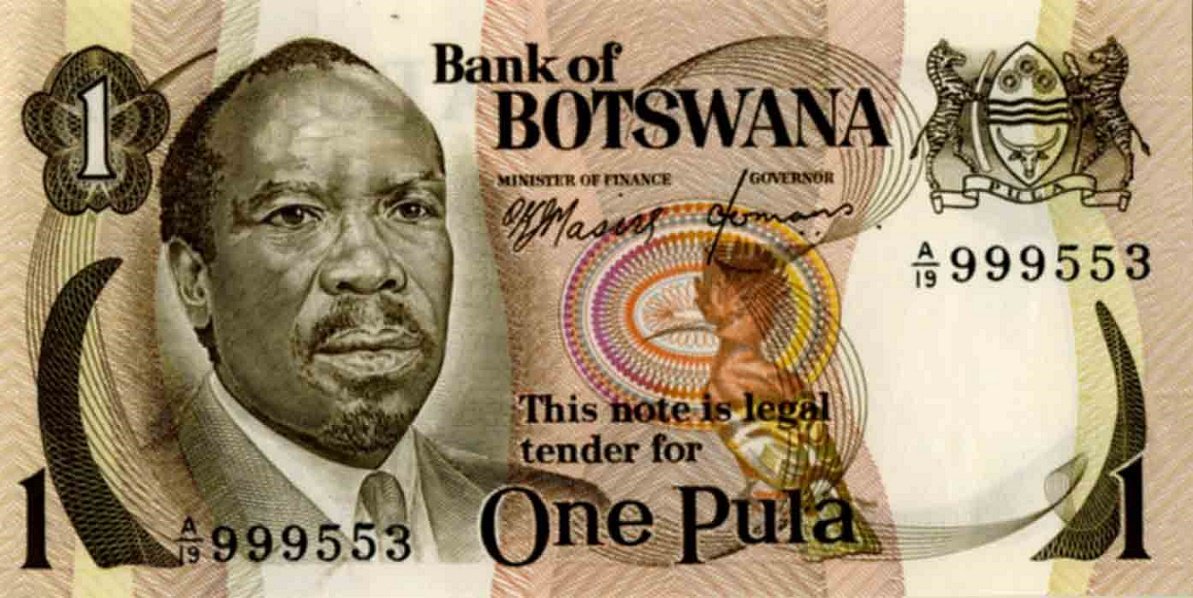
Seretse Khama was born in 1921 into a position that British colonialism had simultaneously recognised and hollowed out. As the grandson of Khama III, the Bamangwato king who had travelled to London in 1895 to negotiate the terms of his people’s relationship with the Crown, Seretse inherited both a royal lineage and the complex architecture of an indigenous leadership operating inside a protectorate whose ultimate authority rested in Whitehall. That architecture defined his life not because he accepted its terms but because his most consequential decisions forced its contradictions into the open.
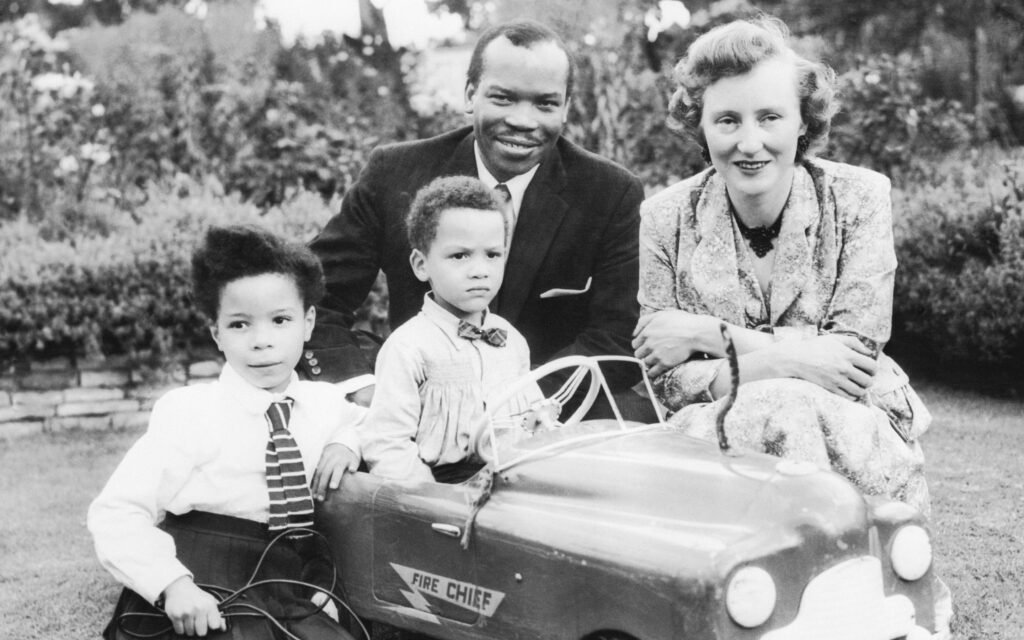
His marriage in 1948 to Ruth Williams, a British clerk he met while studying law in London, produced an international crisis that reveals more about the racial politics of the postwar British Empire than any amount of official documentation. The marriage was legal, acknowledged by his Bamangwato community after initial resistance, and sanctioned by no one of consequence who had the power to prevent it. What it threatened was not Bamangwato custom, which ultimately accepted Ruth, but the political arrangements Britain was managing with the newly institutionalised apartheid government of South Africa and with the white minority government of Southern Rhodesia. Seretse married a white woman. His neighbours to the south had just made such marriages criminal. The British government’s response, exile, was a calculation of diplomatic convenience dressed as concern for Seretse’s own interests.
The exile lasted six years, from 1950 to 1956, during which Seretse was stripped of his right to return to Bechuanaland and denied the chieftaincy that was constitutionally his inheritance. He and Ruth lived in Britain, where he worked as a clerk and gave interviews that made visible the extraordinary contradiction of a Labour government, theoretically committed to racial equality, enforcing racial exile on behalf of the apartheid regime it officially opposed. When the exile was lifted, it came with a condition: Seretse could return only as a private citizen, having renounced the chieftaincy. He accepted.
Building a Non-Racial State
What he built from that position of enforced private citizenship is the argument for his importance that transcends the personal drama of his marriage and exile. Returning to Bechuanaland in 1956, he entered politics not as a deposed chief seeking restoration but as an organiser of the democratic movement that would carry the country to independence. The Bechuanaland Democratic Party he founded in 1962 was built on a principle unusual in the independence-era politics of southern Africa: non-racialism not as aspiration but as organisational structure, with white and Asian Batswana as founding members. The country he led from independence in 1966 until his death in 1980 became, in the regional context of apartheid South Africa and Rhodesia. This functioning democracy demonstrated what the region’s racial order claimed was impossible.
The choice to renounce the chieftaincy deserves more weight than it usually receives. The crown he gave up was the one office the colonial order was prepared to let him hold, provided he did so on their terms. The party he built instead answered to an electorate rather than a lineage. He traded inherited authority he could not control for democratic authority he could construct, and everything Botswana later became rests on that exchange.
The Diamond Foundation

The economic transformation Seretse oversaw was rooted in the discovery of diamonds at Orapa in 1967, a year after independence. His government’s negotiation of the terms of that discovery, maintaining majority state ownership through the Debswana partnership with De Beers, ensuring that royalty structures directed revenue into public finances rather than into private extraction, established the model that made Botswana’s development trajectory possible. The country he led was among the poorest in the world at independence. By 2000, two decades after his death, it had achieved middle-income status based on diamond revenue managed through institutions that Seretse’s government had built to be durable rather than personally convenient.
The Debswana Model
The Debswana arrangement is the part of the story that travels furthest because it is the answer to a question the rest of the continent has mostly failed to answer. Botswana did not simply extract diamonds; it negotiated to co-own them, structuring the partnership with De Beers so that the state captured a controlling share of the value and routed it through a public-finance system designed to survive the men who built it. The contrast with the resource trajectories elsewhere is not a matter of luck or the quality of the stones. It is a matter of the terms signed at the beginning and the institutions built to enforce them. Seretse understood that sovereignty over a resource is written in the contract, not announced at the mine, and that the difference between a windfall and a foundation is whether the wealth is bound to the state or to the people who happen to be running it. Many African leaders inherited resources. Few built the institutions to keep them. That is the whole of the lesson, and it is why his name is invoked precisely where others are not.
Seretse Khama’s story is a testament to what African leadership can look like when the leader in question rejects the terms colonial and post-colonial systems offer. He refused exile’s invitation to bitterness. He refused the chieftaincy’s invitation to tribal politics. He refused the post-independence temptation to centralise power in ways that would outlast democratic accountability. He died in office in 1980, having governed constitutionally for fourteen years, leaving a country whose institutional architecture was sufficiently robust to survive his absence. That is the measurement of a leader who understood that building something that lasts beyond you is the only political achievement worth the name.