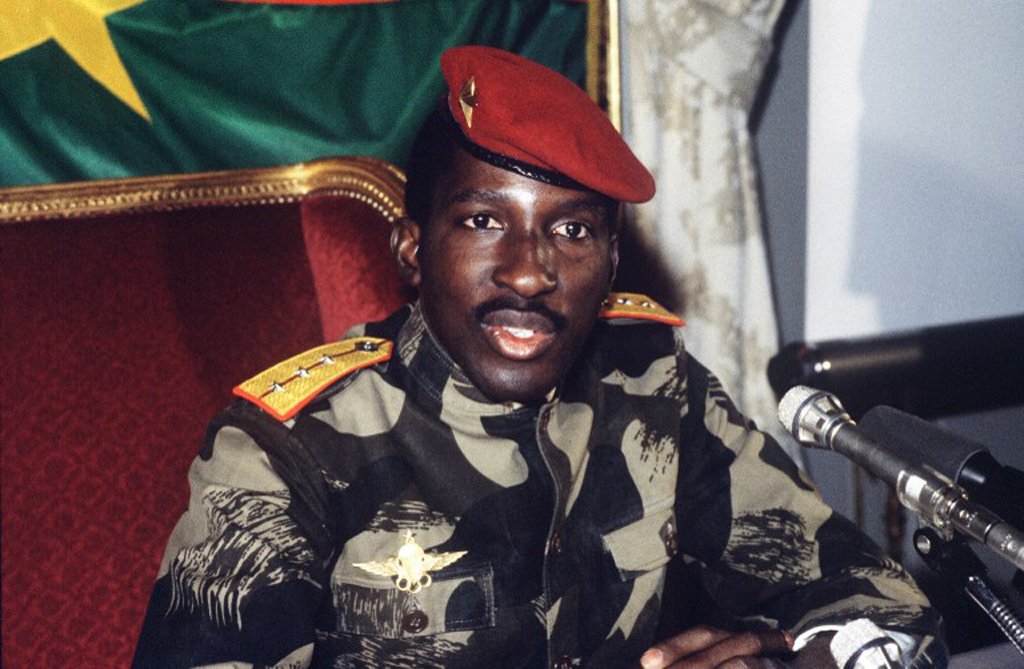
Captain Ibrahim Traoré has emerged as a viral Pan-African icon. Yet behind the imagery lies a deteriorating state, escalating violence, and a democratic vacuum that threatens West Africa’s fragile stability. While Traoré projects strength and sovereignty through algorithmic populism and Pan-African rhetoric, Burkina Faso’s reality tells a different story: conflict deaths surging past 7,200, governance institutions receding, and the youth-driven euphoria consumed by crisis.
Traoré’s rise in 2022 came not through grassroots mobilisation but through a military coup. Aged just 34, he led Burkina Faso’s second coup in under a year, ousting a military leader who had himself deposed an elected president. Unlike past revolutionary figures, Traoré’s myth is built not through oratory in stadiums but through stylised AI-generated content. Deepfakes depict him teaching children, standing on tanks, and addressing Pan-African congresses, many events that never occurred. These images are amplified by disinformation networks, with digital forensics linking the campaigns to Russian-aligned influence farms. The spectacle fills the void left by absent governance.
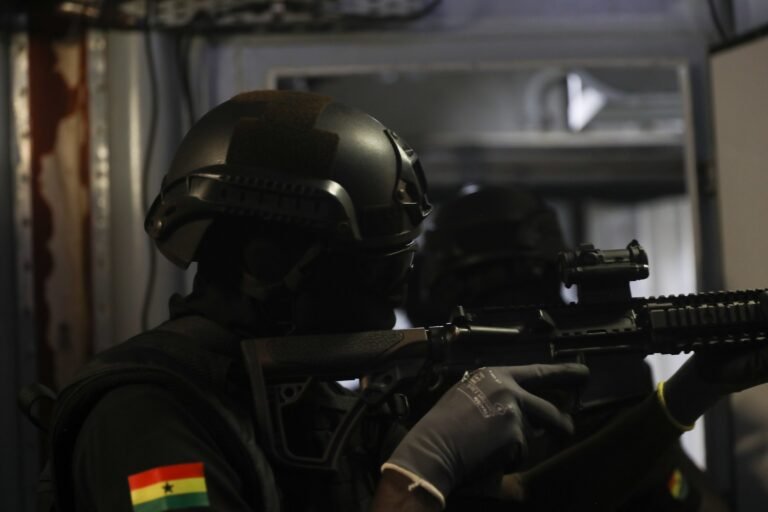
Upon taking power, Traoré promised to neutralise armed insurgents in record time. Instead, Burkina Faso experienced its deadliest year in decades. In August 2024, over 600 civilians were massacred in Barsalogho. By March 2025, pro-government militias killed at least 130 Fulani civilians near Solenzo. Jihadist reprisals followed; an ambush in Diapaga killed 63 Burkinabè soldiers. Over 2.3 million people have been displaced. Burkina Faso recorded the highest number of terrorism-related deaths globally in 2023, accounting for nearly one-quarter of all terrorism deaths worldwide [Institute for Economics and Peace, Global Terrorism Index 2024].
Policy Theatre Without Reinforcement
Traoré has undertaken sweeping policy announcements: renegotiating mining contracts, raising public sector salaries, cancelling foreign debt, withdrawing from ECOWAS, and co-founding the Alliance of Sahel States with Mali and Niger. Yet Burkina Faso’s economic fundamentals remain bleak. The nationalisation of gold mines triggered arbitration claims from multinationals. Foreign direct investment sits at a decade low. Inflation in 2025 hovers near 18 per cent, driven by border closures, a depreciating CFA franc, and logistical disruptions. The Burkinabè treasury faces ballooning defence expenditure surpassing 30 per cent of its 2025 budget.
The Alliance of Sahel States deserves to be read as a structure rather than a slogan. Three junta-led states exiting ECOWAS did not merely change flags on a map; they removed themselves from the region’s only framework for collective bargaining, trade preference, and mutual defence, and replaced it with a pact whose members share a security crisis rather than an economy. Each is landlocked. Each depends on the coastal neighbours it has just antagonised for its ports, its transit routes, and much of its food. A sovereignty project that cuts a country off from its own supply lines while its territory burns is not autarky. It is isolation rebranded, and the bill arrives through the border posts the rhetoric closed. The alliance may yet develop real institutions, but it has not yet built one that feeds a city.
The Authoritarian Turn
National elections, once scheduled for 2024, have been postponed to 2029. The justification is persistent insecurity; in practice, observers say the regime is consolidating authoritarian control. Dissenting journalists have been detained. Internet blackouts accompany major security operations. Civil society forums are routinely cancelled. Burkina Faso’s press freedom score fell 18 points in a single year, one of the sharpest drops in the world.
“Sovereignty that secures the soldier but not the citizen is not sovereignty. It is occupation with a local accent.”
The Ghost and the Gap
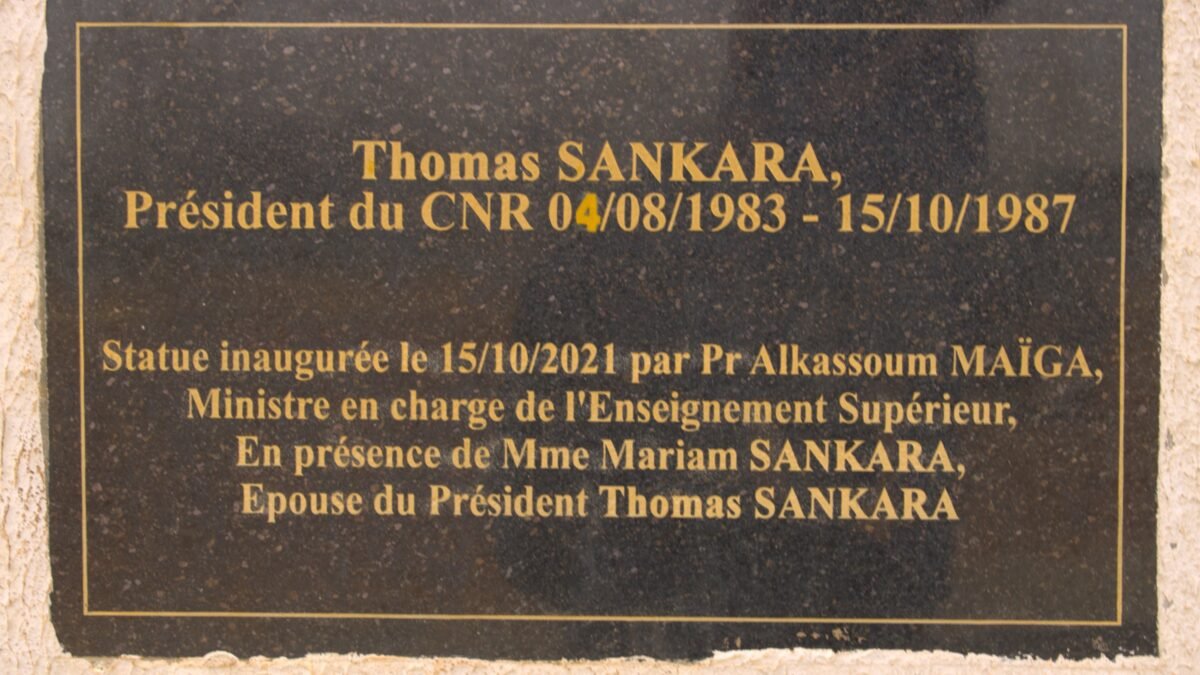
Traoré wraps himself in the iconography of Thomas Sankara, commissioning a mausoleum, renaming roads, referencing Pan-African unity. But where Sankara dismantled patronage networks and launched anti-FGM campaigns, Traoré has presided over militarised governance with little social reform. Sankara’s politics were participatory; Traoré’s platform is top-down, digitally manufactured, and opaque. Even his economic team remains largely unknown to the public. The contrast is not lost on civil society.
The mechanism worth naming is the substitution of image for delivery, and it is more than a public-relations trick. A government that cannot secure its territory or pay for its war can still manufacture the appearance of momentum at almost no cost, because a rendered image of the captain on a tank requires no road built, no clinic staffed, no soldier paid. Symbolic capital is cheap to mint and expensive to redeem. It buys time and legitimacy in the short run, and it accumulates a debt that comes due the moment citizens measure the icon against their own conditions. Sankara’s authority was earned in the costly currency of land reform, vaccination drives, and a budget that matched its rhetoric. Traoré’s is borrowed against a future that the insurgency is steadily foreclosing. A myth can outrun the facts for a while. It cannot outrun a massacre with a date and a place attached to it.
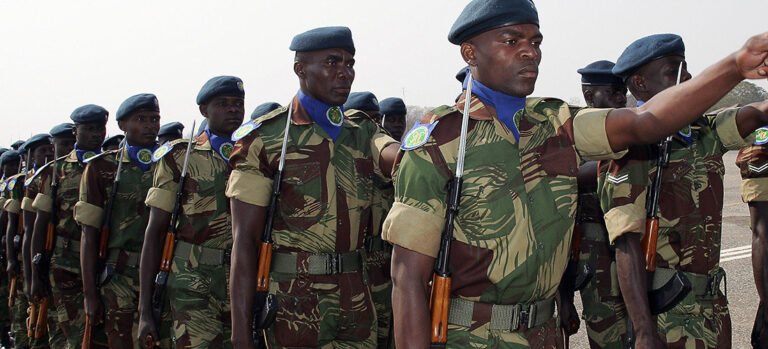
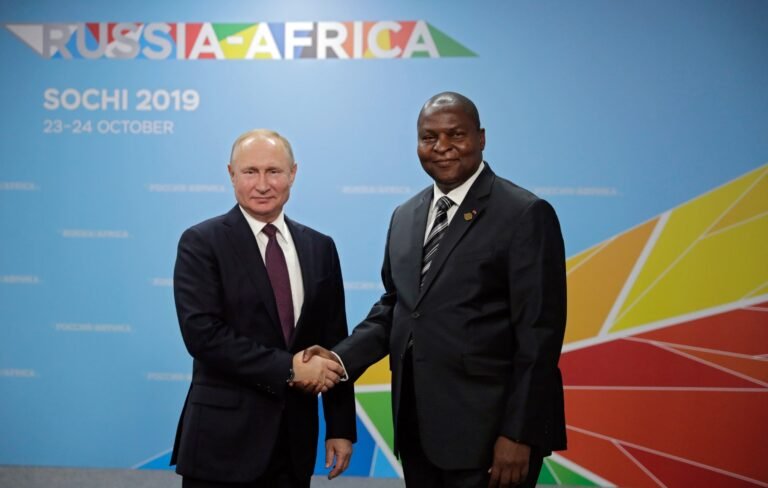
Burkina Faso’s pivot toward Russia has geopolitical ramifications. Following France’s troop exit, Russian paramilitary operatives, many linked to the Wagner Group, now assist counterinsurgency missions. While Moscow presents itself as an anti-colonial ally, human rights watchdogs report abuses including extrajudicial killings in joint operations. Captain Traoré now stands where symbolism meets substance. Whether he becomes a chapter in Africa’s long archive of postcolonial misrule or an unlikely architect of national reinvention will depend not on memes or murals, but on governance, restraint, and results. Symbolic capital has an expiry date. The insurgency is not retreating. Investors are pulling out. The risk is not just to Burkina Faso, but to the credibility of a Pan-African vision rooted in digital optics rather than constitutional reality.