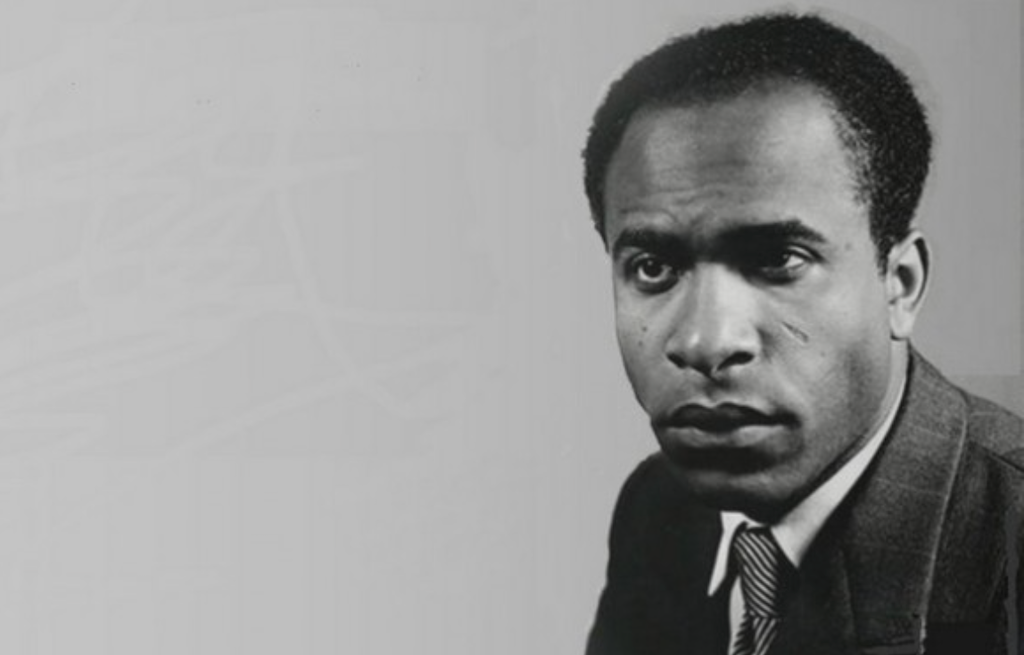
Frantz Fanon’s thought is often remembered for its raw, unflinching advocacy of revolutionary violence. In The Wretched of the Earth, he famously called for armed resistance as the only viable path to liberate colonised peoples from the grip of imperial domination. Yet to reduce Fanon’s legacy to militant rhetoric alone is to overlook the moral and philosophical core of his project. This radical humanism seeks not only the end of colonialism but the rebirth of human dignity itself.
At the heart of Fanon’s work lies a powerful and unresolved tension: a dynamic interplay between destruction and renewal, between rage and reconciliation, between the particularity of race and the universality of the human. His work offers one of the most urgent, profound, and enduring frameworks for rethinking identity, race, and nationhood in both postcolonial and contemporary global contexts.
Fanon was a product of colonial violence and a fierce critic of its psychological and structural legacy. Born in Martinique under French rule and later serving as a psychiatrist and revolutionary in Algeria during its war for independence, he experienced firsthand the dehumanising effects of colonisation. His writings reflect a lived knowledge of oppression, and a deep, unshakeable belief in the possibility of human renewal through struggle. In The Wretched of the Earth, Fanon argues that colonialism is inherently violent, not only in its conquest and exploitation of land and people but also in its assault on the psyche of the colonised. Under such conditions, violent resistance becomes not merely a political tool but a cathartic force, a means by which the colonised reclaim agency, purge internalised inferiority, and begin to reconstruct their subjectivity. But this is not where Fanon’s analysis ends. Beneath his revolutionary militancy lies a morally urgent humanism. He does not seek revenge or a simple reversal of power. He calls for the creation of a new human being, liberated from the racial and cultural hierarchies imposed by colonial rule.
The Wound of Race
Few thinkers have analysed the psychic and structural effects of race as incisively as Fanon. In Black Skin, White Masks, his first major work, he examines how colonialism racialised identity, casting Blackness as a symbol of inferiority and idealising whiteness as the standard of civilisation. He traces how this internalised racial hierarchy fractures the self, producing alienation, self-contempt, and a longing to assimilate into the world of the oppressor. Yet Fanon refuses to affirm racial essentialism. He does not advocate a return to an idealised African past or a simple inversion of racial roles. “I am not a prisoner of history,” he writes. “I must not look for the meaning of my destiny. I must recognise that I am not the slave of the slavery that dehumanised my ancestors.” The universalist impulse in Fanon does not erase the specificity of Black suffering. Rather, it ensures that no one, regardless of skin colour, is ever again reduced to a racial stereotype. His critique of racism is both political and existential, concerned with reclaiming the full scope of human freedom, consciousness, and possibility.
“I am not a prisoner of history. I must not look for the meaning of my destiny. I must recognise that I am not the slave of the slavery that dehumanised my ancestors.”, Frantz Fanon, Black Skin, White Masks
The Pitfalls of the Nation
For Fanon, nationalism functioned as both a necessary weapon and a dangerous temptation. In the anti-colonial struggle, it provided a unifying identity and a mobilising force, enabling disparate communities to imagine themselves as a people bound by shared history and a collective dream of freedom. But Fanon remained deeply wary of what he termed the “pitfalls of national consciousness.” Post-independence elites, he warned, might hijack the revolutionary project, replacing colonial rulers only to entrench similar systems of inequality and exclusion, trading the rhetoric of liberation for personal gain and political patronage. True decolonisation, Fanon insisted, required more than formal independence. It demanded a radical reimagining of the nation as a space of justice, democratic participation, and shared humanity. National identity must emerge not from tribalism or elite manipulation but from the lived experiences and aspirations of ordinary people. His nationalism was therefore not an endpoint but a means to a broader, more inclusive internationalism.
Humanism from the Ruins
Fanon’s radical humanism grows from the ruins of both colonial oppression and compromised postcolonial leadership. He is unflinching in his critique not only of imperial domination but also of the failures of newly independent states that mimic the extractive logics of their former colonisers. Political freedom without economic justice is, for Fanon, an illusion. Decolonisation must involve the redistribution of wealth, the revitalisation of indigenous culture, and the creation of participatory political systems. This humanism insists that the formerly colonised must be the agents of their own transformation; development cannot be imposed by foreign powers or dictated from above. As a psychiatrist in colonial Algeria, Fanon gained intimate insight into the psychological damage inflicted by systemic racism and state violence. He treated victims of torture, witnessed the mental toll of occupation, and documented the internalised feelings of worthlessness experienced by the colonised. Yet he does not allow trauma to dominate or paralyse. He transforms it into a political and philosophical resource, showing how suffering can either immobilise or mobilise, and in his own case fuelling a profound ethical commitment to revolutionary transformation.
Fanon’s ideas remain deeply relevant today. In a world marked by authoritarianism, neocolonial economic structures, racialised violence, and forced migration, his analyses retain urgent clarity. In the global North, movements such as Black Lives Matter echo Fanon’s demand to expose and dismantle structural racism. In the global South, his warnings about elite-driven nationalism are visible in the failures of many postcolonial states to deliver economic justice or political accountability. His insistence that true liberation must begin with a reclamation of human dignity continues to inspire activists, scholars, and ordinary people who understand that colonialism was not only a political event but an ontological wound, one that can only be healed through both structural transformation and a reimagining of what it means to be human. Frantz Fanon was not only a theorist of decolonisation. He was, and remains, a prophet of human becoming. His words challenge, unsettle, and ultimately remind us that to fight for justice is to fight to be fully human, and that no system built on the diminishment of any people can claim legitimacy until that fight is won.