
The room is tense. A judge presides, robes starched, expression unreadable. Opposing counsel are poised: one for the state, the other for the secessionists. The gallery seethes with quiet desperation, the air heavy with history. Outside, a chorus rises like dust in dry season: “We want Biafra!” Inside, the silence grows thick, not of peace, but of unresolved war. A question cuts through the theatre like a machete through underbrush: “But my Lord, who exactly are the Biafrans?”
Fifty-seven years have passed since Colonel Chukwuemeka Odumegwu Ojukwu declared the Republic of Biafra in May 1967. It was not rebellion for rebellion’s sake. It was, in Ojukwu’s own framing, a survival response, a declaration born from the ashes of failed protection, systemic pogroms, and the profound betrayal of Eastern lives in post-independence Nigeria. Yet even in its most righteous fury, the Biafran project carried a crucial flaw: the assumption of a singular identity.
Colonialism had drawn Nigeria’s boundaries like a drunken surveyor, stitching together hundreds of distinct ethnicities with a flag and a forced anthem. The Eastern Region, which became Biafra, was not homogeneous. Alongside the dominant Igbo lived the Ijaw, Efik, Ibibio, Itsekiri, and Ogoni, nations within a nation within an uninvited experiment. Biafra was declared by geography, but not always by consent. As Dr Obinna Ijeoma, a political historian at the University of Nigeria, Nsukka, has explained: “Biafra isn’t just a political dream. It’s a reaction to humiliation.”
An Identity Built on Divergence
Beneath the war drums, ethnic mistrust simmered. For many minority groups, the idea of Biafra felt less like liberation and more like annexation. By 1968, the Biafran war machine was no longer just battling federal forces; it was splintering along fault lines of identity, representation, and resentment. Allegations of Igbo-centric monopoly dogged the Biafran leadership. Dr Ifeoma Okeke, an ethnic conflict analyst at the Centre for African Dialogue, puts it starkly: “Secession without consensus is a house of cards. Identity politics will undo it before the first passport is printed.”
The Wounds That Outlived the War
After the conflict, Igbo citizens returned to other southern states only to find their lands seized, their properties confiscated, and their neighbours emboldened by victory. The post-war dispossession generated stereotypes that still whisper through marketplaces and political corridors, unfair generalisations forged in the crucible of war and never fully dismantled. Memory never forgets, even when law demands it move on.
“Like a blacksmith’s hammer to hot iron, the state’s actions forged Kanu into a warlord in the eyes of his followers.”, Segun Olorunfemi, constitutional lawyer
Kanu and the Resurrection of the Flame
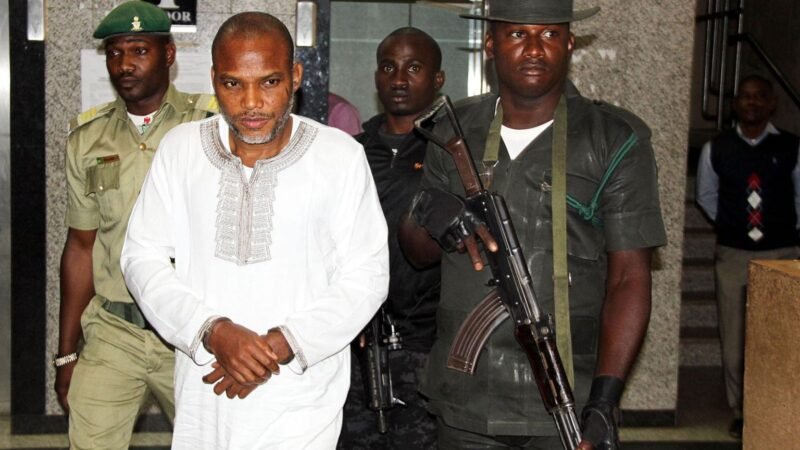
In 2015, Nnamdi Kanu rose from the embers of Biafran memory, a London-educated agitator and founder of the Indigenous People of Biafra. With incendiary rhetoric, military-style broadcasts, and a devoted online following, he reanimated the ghost of secessionism. By 2017, his message had grown teeth: marches, clashes, arrests. The Nigerian state detained Kanu on charges of treason. The move backfired. His arrest only deepened IPOB’s radicalisation. Youthful, unemployed, and disillusioned, many Igbos began to see Biafra not as history, but as the future.
The Biafran question has never truly been about secession. It has always been about what Nigeria refuses to become. The persistent demand for Biafra is, at its core, an indictment of a federal structure that has repeatedly mistaken geographic unity for political legitimacy. Nigeria’s unity has always been an incomplete, contested negotiation, underwritten by oil revenues that have narrowed, not widened, the covenant between state and citizen. What the Biafran movement exposes, again and again, is the vacuum at the centre: a federal government that collects but does not construct, that governs by attrition rather than agreement.
The economic geography deepens the grievance. The South-East has produced one of Nigeria’s most commercially successful populations, the trader networks of Onitsha and Aba, the apprenticeship system economists study as indigenous venture capital, a diaspora whose remittances built towns the federation never reached. Yet the region hosts no functioning deep seaport despite its commercial weight, sits low in federal infrastructure allocations, and watches its goods travel through Lagos at a cost levied by distance and neglect. A people who feel they finance a federation that will not build in their homeland do not need an ideology to feel estranged; the invoice does the arguing. Biafra’s persistence is, in this reading, less a nostalgia than an audit, and every year the audit goes unanswered it acquires new subscribers.
The Fault Lines Ahead
Three pressure points will determine whether Nigeria finds its way toward a new constitutional moment or deeper toward fracture. Kanu’s trial has long ceased to be merely a legal proceeding; every adjournment deepens the symbolism. A conviction may silence a man; it will not silence the movement. Eastern governors are now speaking openly of regional autonomy in corridors that once treated the word as sedition. And IPOB’s financial architecture runs through London, Houston, and Frankfurt, sustained by a professional diaspora class that left Nigeria, built lives elsewhere, and remained invested in its transformation or its dissolution.
The longer Abuja responds to identity claims with detention orders and proscription lists, the more it validates the very argument it seeks to silence. Suppressing a question is not the same as answering it. And in Nigeria’s political architecture, unanswered questions do not disappear; they radicalise. The gavel still waits. But Nigeria is running out of time to decide whether it wants to be the judge or the defendant in its own constitutional reckoning.