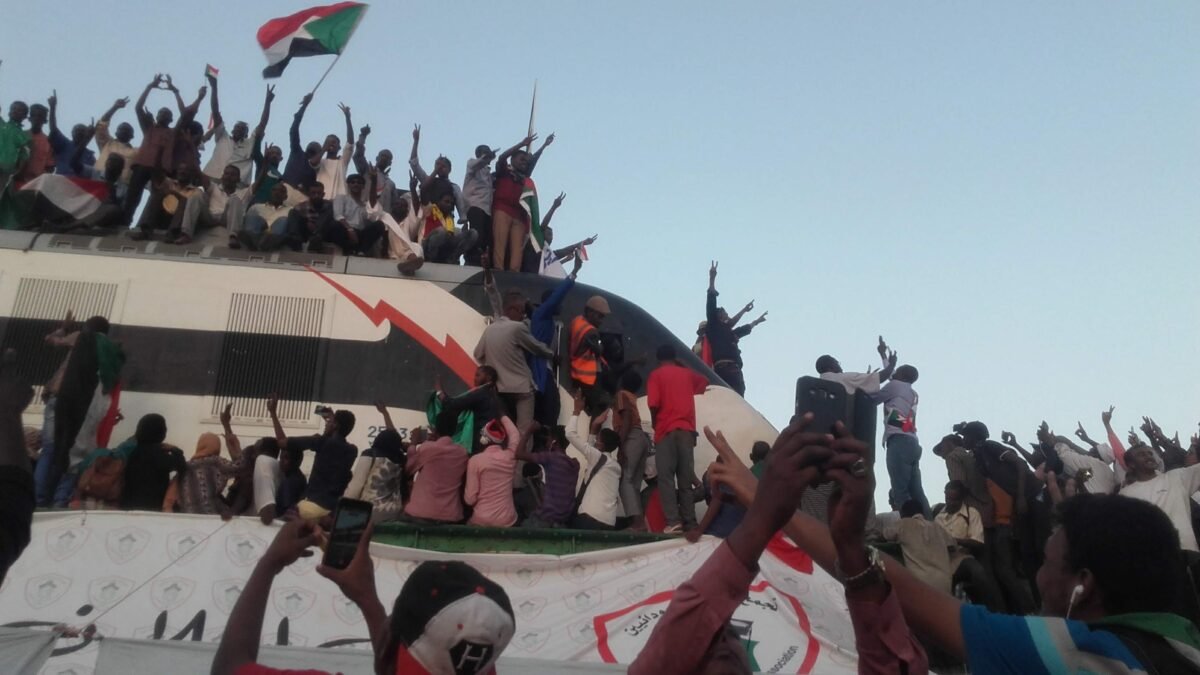
On 30 August 2025, in the dust-thick air of Nyala, capital of South Darfur, Mohamed Hamdan Dagalo, Hemedti, was sworn in as head of a rival Sudanese government. The ceremony was not a military announcement. It was the formalisation of something that had been assembling itself for months: a parallel state, constructed in territory the Rapid Support Forces controlled, with its own administrative apparatus, its own narrative of legitimacy, and its own claim on Sudan’s future.
The war that began in April 2023 between the RSF and the Sudanese Armed Forces has produced the largest displacement crisis in the world and one of the most catastrophic humanitarian collapses in recent African history. By August 2025, more than ten million people had been displaced. Khartoum, once a capital of three million, had become a ruin administered by two armies. The SAF held the formal international recognition; the RSF held the ground. What Dagalo did in Nyala was attempt to close that gap, to match territorial control with a claim on political sovereignty that the international community had so far declined to grant.
The question the rival government announcement forces is uncomfortable precisely because it does not have a clean answer. Is the Dagalo doctrine, accumulate territory, establish civilian administration, erect the architecture of governance, then declare, the blueprint for a shadow state designed to entrench permanent fragmentation? Or is it the strategic logic of a movement that, whatever its origins in the Janjaweed militias of Darfur, now represents the political aspirations of significant portions of Sudan’s western and southern populations who have never been governed well by Khartoum?
Origins and Patrons
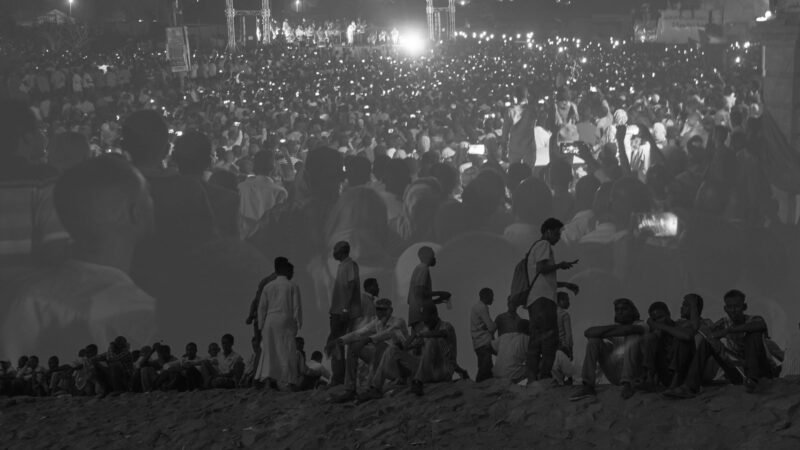
The RSF’s origins are impossible to separate from its present ambitions. Hemedti built his organisation from the remnants of the Janjaweed, the Arab militia that carried out the Darfur genocide under Omar al-Bashir’s direction in the early 2000s. He accumulated wealth through gold mining operations in Jebel Amer, amassed a force that eventually numbered well over a hundred thousand fighters, and positioned himself as an indispensable broker between Sudan’s military establishment and the Gulf states, particularly the UAE, which has been his primary external patron throughout the war. The humanitarian atrocities the RSF has committed since April 2023, including mass rape, ethnic violence, and the systematic destruction of civilian infrastructure, are documented and extensive. They cannot be footnoted away in any analysis that seeks to be accurate.
And yet the geopolitical architecture around the RSF is not simple. Sudan’s SAF, under General Abdel Fattah al-Burhan, represents the Islamist-aligned military establishment that ran the country under Bashir and then through the transitional period after his fall. The democratic civilian coalition that briefly participated in governance between 2019 and 2021 was ousted by a coup that al-Burhan led. Egypt, which backs the SAF, is invested in a Sudan governed by a military it understands, one that will maintain the Nile water arrangements Cairo depends on and will not open the country’s political space to the Islamist currents Egypt’s own government has spent a decade suppressing. The contest between these two armed formations is not simply good versus evil. It is a collision between two different visions of extractive power, with Sudanese civilians paying the cost of both.
Conquest Into Legitimacy
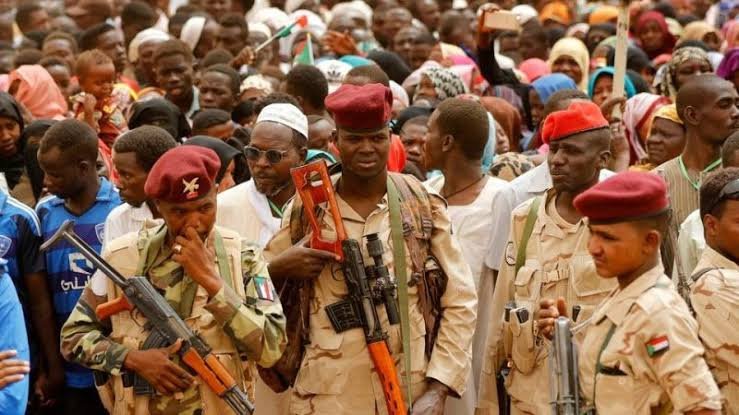
The rival government in Nyala raises a specific problem for the African Union and the international community that they have so far avoided confronting directly: at what point does territorial control, extended over sufficient duration and coupled with administrative provision for civilian populations, create a sovereignty claim that cannot be indefinitely dismissed? The AU’s Constitutive Act prohibits recognition of governments brought to power through unconstitutional means, and Dagalo’s administration has no democratic mandate. But Sudan’s pre-war government was itself the product of a military coup. The application of constitutional standards to one armed actor while extending diplomatic cover to another armed actor is not neutral. It is a choice, and it is a choice that the international community has consistently made in favour of established military establishments over challengers, regardless of comparative humanitarian records.
Sovereignty by Endurance
The Dagalo doctrine, if it succeeds, will have demonstrated something that African and international actors have long feared demonstrating: that a sufficiently resourced and externally backed armed group can convert military conquest into political legitimacy through the simple strategy of governing long enough that the alternative becomes worse. That is not a novel doctrine, it is the history of many post-colonial states, but its application in real time, in Sudan, with the AU watching and the international community issuing communiqués without consequence, is a live experiment in the limits of the international order’s ability to enforce its own norms.
What Sudan now has, in the worst case, is not a war ending in one victor but a continent, informally partitioned, one government holding the UN seat, another holding the territory. Both extracting from the population they claim to serve. Both outside the reach of accountability. Whether Hemedti calls that rescuing a nation or building a shadow state depends entirely on which side of Nyala you are standing on. For the civilians caught between them, the distinction has never mattered less.
The doctrine’s real significance is the precedent it offers every armed entrepreneur watching from Goma to the Sahel: that sovereignty, in the current international order, is not conferred by legitimacy but accumulated through endurance. Hold ground long enough, administer a population long enough, and the world’s preference for a settled fact over a contested one does the rest, converting conquest into recognition by sheer attrition. The African Union’s charter forbids exactly this, but the AU extended its cover to Burhan’s military government, itself the product of a coup, which means the principle being defended in Sudan is not constitutional legitimacy but incumbency. That is a distinction the next Hemedti will study closely, because it tells him the one thing he needs to know: that the gate to statehood is guarded not by a standard but by a queue, and the price of admission is simply outlasting everyone’s patience for stopping you.