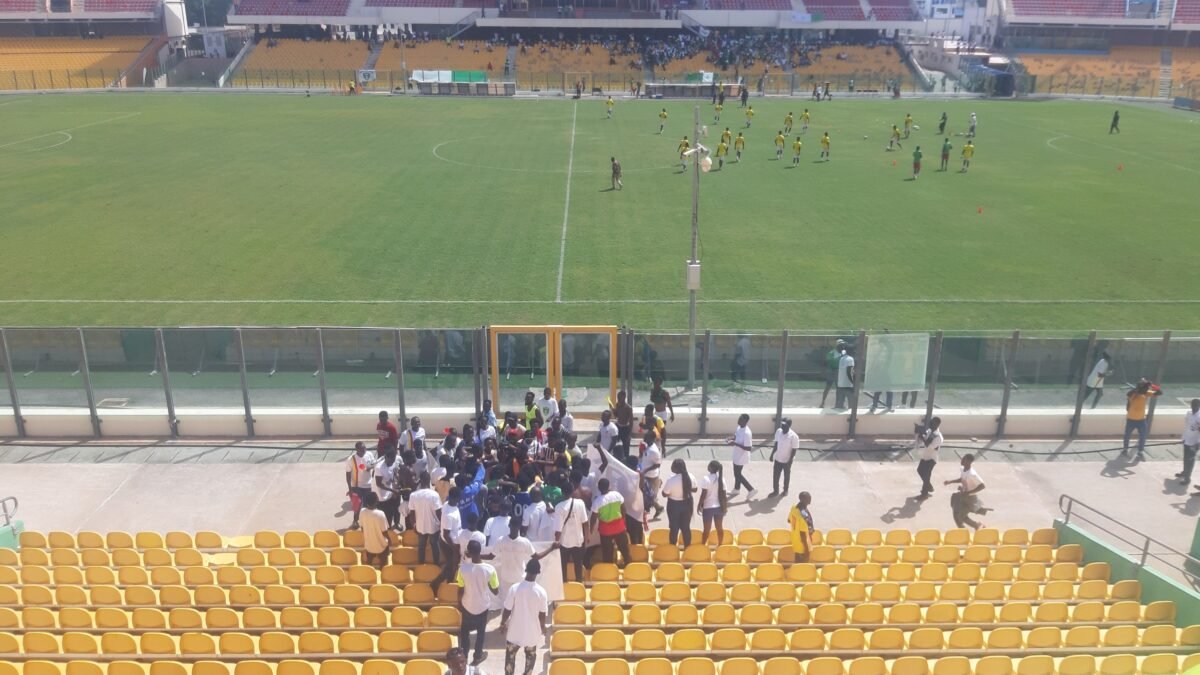
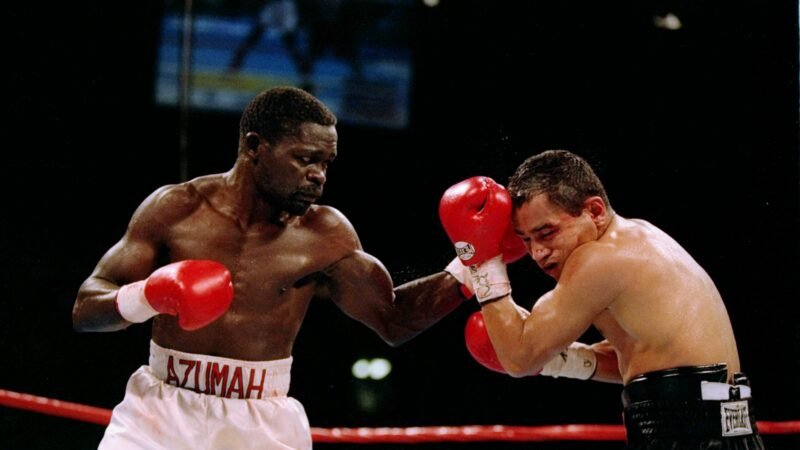
Ghana’s sporting story is not a single narrative. It is a braided rope of legacies, the golden fists of Azumah Nelson, the boot of Abedi Pele, the continental authority of a Black Stars squad that came agonisingly close to becoming the first African nation to reach a World Cup semi-final in 2010, pulled together and frayed apart by the same tensions that run through the country’s broader political economy. Pride is not the question. The question is what structure underlies the pride, and whether that structure is building toward something or consuming its own inheritance.
The Talent and the Gap
Ghana’s football record at the continental and global level is one of West Africa’s most decorated. Four appearances at the FIFA World Cup. Multiple Africa Cup of Nations titles. A youth football tradition, through the Black Satellites and Black Starlets, that has produced more FIFA Under-20 and Under-17 tournament victories than any other African nation. The pipeline of talent that Ghana has historically generated, flowing through academies in Accra and Kumasi and eventually to clubs in Europe’s top leagues, represents a genuine infrastructure of athletic development. That pipeline, however, has become more reliable at producing talent for other economies than for sustained national team performance.
The 2022 World Cup in Qatar crystallised what observers had been noting for several cycles: the gap between the individual quality of Ghanaian footballers playing at elite European clubs and the collective performance of the national team when assembled under tournament conditions. Players who command significant fees in the Premier League and Bundesliga underperformed as a unit in ways that pointed not to individual deficiency but to systemic issues, tactical preparation, managerial stability, the political dynamics of national football association governance, and the absence of a coherent long-term player development philosophy at the federation level. These are not problems unique to Ghana, but Ghana’s footballing ambition makes them particularly visible.
The One-Way Pipeline
Trace where the value of that talent actually settles and the structure comes into focus. A Ghanaian academy raises a player at local cost; a European club buys his prime years and books the transfer fee, the image rights, and the resale value. The pipeline is real, but it runs in one direction, converting Ghanaian childhood and community investment into assets owned and monetised abroad. The same logic governs boxing, where the rise of promotional ecosystems means the durable money sits with whoever holds the broadcasting and promotional contracts, rarely the fighter and almost never his federation. Ghana supplies the raw athletic material to a global market and captures the smallest share of the wealth that material generates. That is not a sporting failure. It is the familiar shape of an extractive value chain, expressed in boots and gloves.
Boxing sits differently in the national sporting consciousness. The tradition that Azumah Nelson established, three world titles across two weight classes, a career that stretched from the mid-1980s through the 1990s with a consistency that made him one of the finest pound-for-pound fighters of his era, has not been replicated in the decades since. Ghanaian boxing has continued to produce world champions across lighter weight classes, but the institutional infrastructure that would systematically develop and promote elite fighters has not kept pace with the talent that the sport continues to generate in gyms across the country. The economics of professional boxing have left Ghanaian fighters frequently at a structural disadvantage in the division of revenue their own performances generate.
A Governance Question
Ghana’s sporting predicament is, in the end, a governance question dressed in athletic clothing. The achievements that have defined the country’s reputation internationally, in football, in boxing, in athletics, have been sustained largely by the raw talent that Ghanaian communities produce and the individual determination of athletes who reach elite level through personal motivation and family sacrifice. Where Ghana has struggled is in building the institutional layer between that talent and its full expression: the technical coaching systems, the academy infrastructure, the sports medicine provision, the career transition support, and the federation governance that turns individual brilliance into sustained national excellence.
That institutional layer requires sustained public investment in sports infrastructure, governance reform within the national football association and athletic bodies, and a strategic decision about what Ghana wants sport to do, whether it functions primarily as a national identity performance, as a talent export industry that generates foreign exchange through transfer fees and diaspora connection, or as a platform for the kind of sustained continental and global competition that produces long-term soft power. These are not mutually exclusive, but they require different resource allocations and different institutional priorities. Ghana has not yet resolved that question explicitly. The result is a sporting legacy that is genuinely impressive in historical terms and genuinely uncertain in structural terms, a divergence that no single tournament result will resolve, but that patient institutional investment could. The talent will keep arriving, as it always has. Whether anything is built to hold it is the decision Ghana has so far declined to make. The talent is the inheritance; the institution is the choice. Ghana has been generous with the first and miserly with the second, and a legacy spent rather than invested eventually runs down, however rich its origins. A nation can produce champions for a generation on raw gift alone. It cannot produce them for a century without building the house that keeps them.