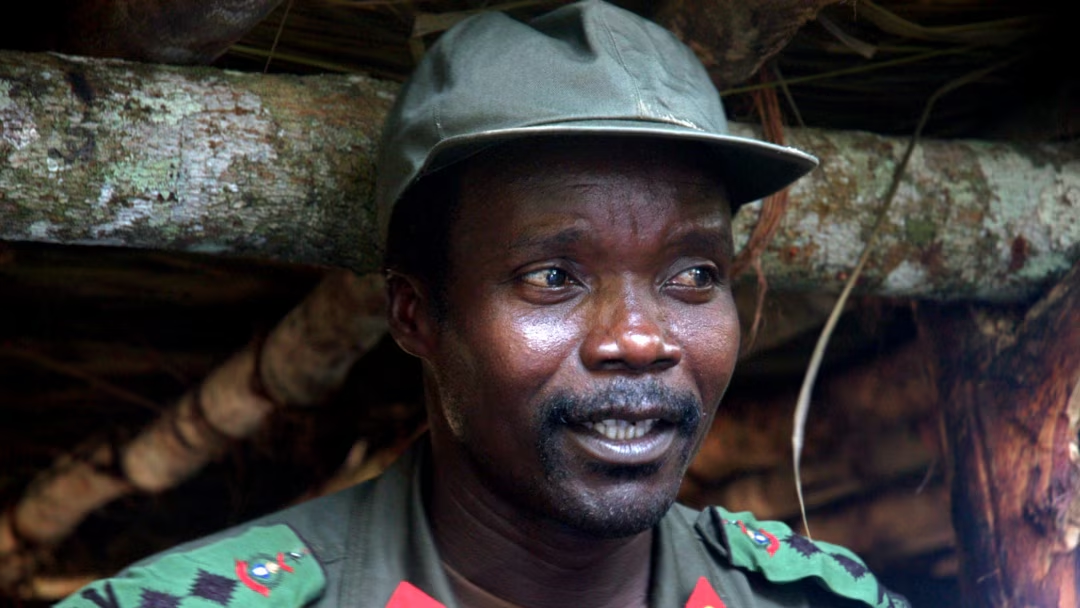
Joseph Kony has been wanted by the International Criminal Court since 2005. He has not been captured. This fact is not merely a personal failure of intelligence and operations; it is a structural indictment of the regional security architecture across Central and East Africa, and of the political calculations that have repeatedly prioritised short-term stability over the long-term accountability that Kony’s continued freedom denies to tens of thousands of his victims.
The Lord’s Resistance Army, which Kony founded in Uganda in the late 1980s as an ostensibly Christian millenarian movement and transformed into a vehicle for systematic terror, has operated across Uganda, South Sudan, the Democratic Republic of Congo, and the Central African Republic over nearly four decades. It has abducted an estimated 60,000 to 100,000 children as child soldiers and domestic enslaved people [Human Rights Watch estimates]. It has displaced millions. It has conducted massacres of civilians that the International Criminal Court’s indictment against Kony catalogues in specific and horrifying detail: crimes against humanity, war crimes, the use of children as combatants.
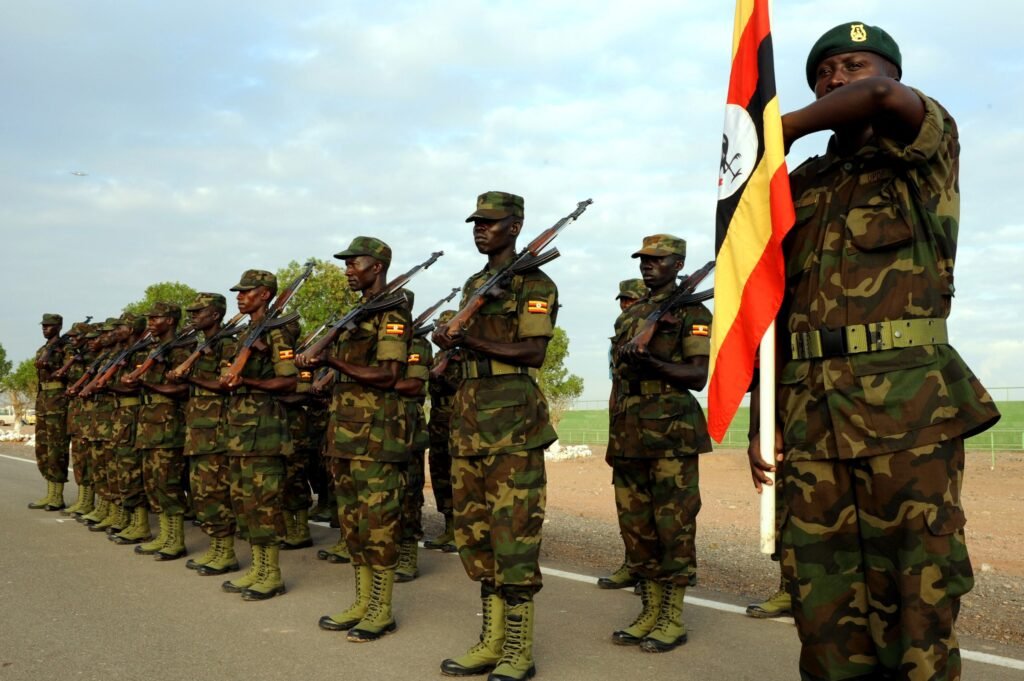
The LRA’s operational footprint has contracted substantially from its peak. Ugandan military operations, the joint regional counter-LRA task force, and American special forces advisory support deployed from 2011 reduced the LRA’s capacity to concentrate forces and conduct mass operations. Kony is believed to operate with a significantly diminished following, sheltering in remote terrain across the border regions of the Central African Republic, South Sudan, and DRC, areas where state authority is effectively absent and where the logistics of sustained military pursuit are prohibitive.
The Ungoverned Space Problem
Kony’s survival is a function of geography and governance failure in precise proportions. The terrain he occupies- dense forest, remote savanna, borderlands between states with limited mutual security cooperation and even more limited state presence- provides natural concealment that conventional military operations cannot penetrate sustainably. The communities within that terrain, which have experienced the LRA’s violence directly, have also learned that cooperation with government forces does not guarantee protection from retaliatory attack. The incentive structure for local intelligence provision, the foundation of any counter-insurgency strategy, is distorted by fear and the knowledge that security forces depart and the LRA returns.
The Congo-Sudan Seam
The DRC’s eastern regions, where LRA remnants have operated alongside dozens of other armed groups, represent one of the most complex security environments on the continent. The Congolese state’s capacity to project authority into this region has been limited by decades of conflict, predatory governance, and the specific challenge of coordinating with neighbouring states whose own interests in the region are not uniformly aligned with stability. South Sudan, itself an active conflict zone for much of its existence as an independent state, has provided terrain for LRA movement without consistent counterforce.
Kony’s survival is a function of geography and governance failure in precise proportions, and the political calculations that have repeatedly prioritised short-term stability over long-term accountability.
The Political Economy of Non-Resolution
Kony’s continued freedom is not solely a military failure; it reflects political calculations at multiple levels. The Juba peace talks of 2006-2008 came closer than any previous initiative to a negotiated settlement with the LRA, ultimately collapsing because Kony refused to sign the final agreement and because the ICC arrest warrants, which the LRA leadership regarded as non-negotiable obstacles, could not be withdrawn by the Ugandan government or any other party. The tension between accountability and the negotiated settlements that might end active violence is not unique to the LRA, but it has been particularly acute in this case.
American special forces deployment to the region, the AFRICOM advisory mission authorised by the Obama administration in 2011, was withdrawn by the Trump administration in 2017, a decision that reflected the calculation that a diminished LRA was no longer a priority security concern for American strategy. This calculation is defensible on narrow security grounds; the LRA has not attacked American interests and its operational capacity is a fraction of its 2000s peak. It ignores the ongoing threat to civilian populations in the affected region. It sends a clear signal about the durability of American security commitments in Africa, which regional partners have noted.
What the LRA Case Reveals About Regional Security Architecture
The persistence of the LRA across four decades and five countries reveals specific weaknesses in the African security architecture that transcend this particular group. The inability of regional bodies to sustain coordinated counter-insurgency operations across borders, the dependence on external security partnerships that reflect external strategic priorities rather than African security needs, and the gap between the political ambitions of the African Peace and Security Architecture and the operational capacity to enforce them- all of these are structural conditions that the LRA’s survival has mapped in real time.
The victims of the LRA, the children abducted, the communities destroyed, the survivors carrying decades of trauma, are owed an accounting that the architecture of African security has not yet delivered. Building the capacity to prevent the next Kony-scale atrocity, through stronger regional security institutions, more consistent state presence in ungoverned border regions, and the political will to prioritise accountability over the short-term convenience of unresolved impunity, is the structural work that the LRA’s legacy demands and that African security architecture has not yet completed.
The most uncomfortable lesson Kony teaches is about the border itself, which African security treats as a line and the warlord treats as a refuge. State authority, by design, stops at the frontier; the LRA’s genius was to live precisely where four states’ authority ends, and none begins, a moving address in the seams of the map that no single army may follow and no two armies will jointly pursue. Sovereignty, the principle that protects the African state from outside interference, is the same principle that protects Kony from coordinated capture, because each state guards its borders against its neighbours’ forces more reliably than it guards its citizens against the LRA. Until regional security is built to follow the threat across the line rather than to halt at it, the borderland will remain what it has been for forty years: not a barrier to violence but a sanctuary for it, and the next Kony is already learning the geography.