The controversy that erupted around Julius Malema’s revival of “Dubul’ibhunu” in 2025 was not, at its core, about a song. It was about who gets to define what African political memory means, and what happens when that power sits in Washington and Silicon Valley rather than in Johannesburg or Pretoria.
When Donald Trump threatened to cut aid to South Africa over the chant, and when Elon Musk amplified the claim of “white genocide” to his 200-million-strong platform, the two men were not engaging with South African political history. They were performing it, rewriting a liberation-era protest anthem as evidence of persecution, evacuating its meaning to install their own. The Kill the Boer controversy is, in that sense, a case study in the exercise of interpretive power: the ability of external actors to reframe African political culture for global audiences in ways that serve entirely different agendas.
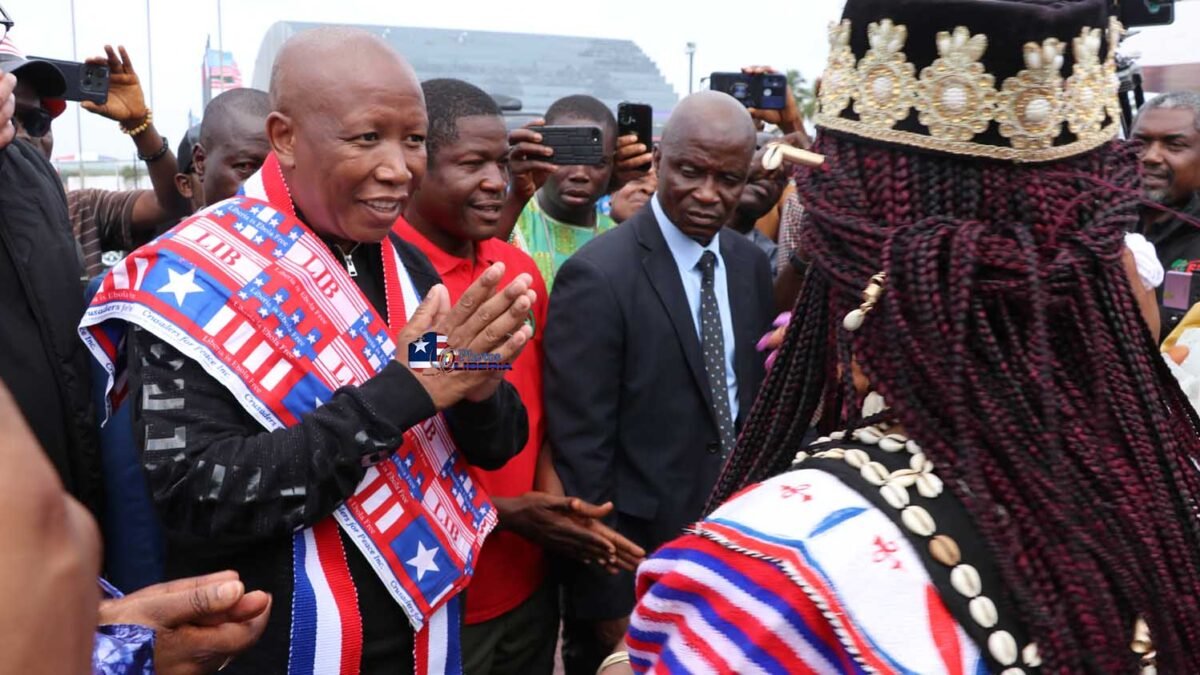
What Malema sang at an EFF rally in early 2025 was a chant with roots in the anti-apartheid struggle, a call rooted in collective defiance of a system, not an instruction to violence. South Africa’s Constitutional Court ruled in 2022 that the song does not constitute hate speech in its historical and political context. That legal determination did not survive the translation into the global media cycle. By the time it reached American political discourse, the song had become evidence of a humanitarian crisis that, by any measured statistic, does not exist.
The Facts Beneath the Frame
South Africa does have a farm murder problem. It is real, recorded, and politically contentious. But the data does not support the claim of systematic racial extermination. The country’s murder rate is severe and affects all communities, with Black South Africans constituting the overwhelming majority of victims. The “white genocide” framing requires ignoring that context entirely, and both Trump and Musk, men who have positioned themselves as opponents of information suppression, suppressed that context with precision.
Land, Not Genocide
The geopolitical stakes underneath this cultural controversy are not incidental. Trump’s threat to condition aid on South Africa abandoning land reform was not a moral intervention on behalf of persecuted farmers. It was a move to preserve a property structure whose origins lie in colonial dispossession, dressed in the language of human rights. South Africa’s Expropriation Act, which passed in January 2025 after years of parliamentary process, allows for land redistribution in limited circumstances with compensation at market or equitable value. It is not confiscation. It is a legislative attempt to address the fact that, three decades after apartheid’s formal end, land ownership in South Africa remains structurally unchanged: a minority population controls a disproportionate share of the country’s most productive agricultural terrain.
The Interpretation Gap
Malema understands his audience better than his critics understand him. The EFF is a populist vehicle built on grievance politics, and the chant performs the political work of signalling that the ANC’s cautious, negotiated approach to transformation has failed ordinary South Africans. He is not naive about what international reaction looks like. The controversy is, in part, the point. Each condemnation from Western capitals reinforces his domestic narrative: that Black South African aspirations are still subject to external veto, that the country’s political sovereignty over its own historical memory remains conditional.
That dynamic is what makes the Kill the Boer moment structurally significant beyond South Africa’s borders. It is a live demonstration of what might be called the interpretation gap, the distance between what African political expression means within its own context and what external powers decide it means for their purposes. Musk, born in Pretoria and invested in a particular historical memory of white South African experience, is not a disinterested translator. Trump, building a coalition that includes significant Afrikaner diaspora networks in the United States, is not a neutral humanitarian. Their interventions cannot be understood outside those positions.
South Africa has chosen, for now, to absorb the pressure without capitulating to it. The Expropriation Act has not been withdrawn. Diplomatic relations with the United States remain tense but functional. The ANC government, whatever its delivery failures, has not abandoned the constitutional framework that undergirds land reform as a sovereign political project. That is not a small thing. It suggests that the cost of misunderstanding, which African states are expected to pay, is being contested, quietly but firmly, at the governmental level even as the cultural controversy burns in the global media space.
The deeper question the controversy raises goes well beyond this specific chant or this specific leader. Who controls the grammar through which African political life is interpreted to the world? The answer, in 2025, remains: overwhelmingly, not Africans. Until that structural asymmetry is named and addressed, controversies like Kill the Boer will recur in different forms, with the same architecture, African expression, external redefinition, conditional pressure, and the demand that African political sovereignty justify itself to audiences that did not elect it and will not be governed by it.
The power being exercised here is easy to miss because it does not look like power. No troops moved, no sanctions bit, no court was overruled. What moved was meaning. A South African court had already ruled, in the song’s own historical context, that the chant was not incitement; that ruling was overwritten, at the speed of a social-media post, by men with the reach to make their translation the one the world received. This is the quiet frontier of sovereignty in the platform age: not the border or the treaty, but the right to have your own political memory read in its own language rather than rewritten in someone else’s. A continent that controls its minerals and its votes but not the interpretation of its own history has surrendered the one territory from which all the others are defended. The land debate will be settled in Pretoria. The argument over what the debate means is being settled in feeds owned elsewhere, and that, not the chant, is the real expropriation.