Europe does not want to be where people arrive. So it has spent the better part of a decade building a system to ensure they stop somewhere else, preferably somewhere that can be financially compensated for stopping them, and politically insulated from the human rights scrutiny that European courts would apply if the stopping happened on European soil. The result is a network of bilateral arrangements, financial transfers, and capacity-building agreements that has effectively transformed a belt of North African and sub-Saharan states into Europe’s enforcement frontier. Africa did not choose this position. It was constructed for the continent by partners who benefit from the arrangement and bear none of its costs.
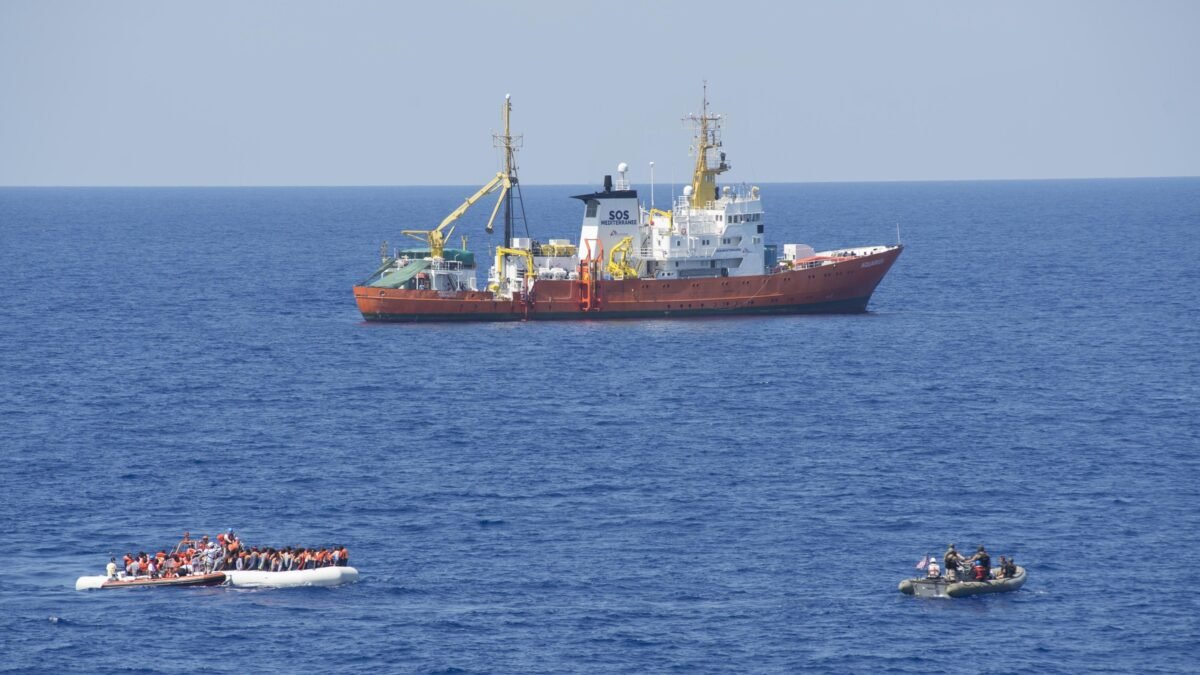
The architecture became visible with particular clarity in 2023, when the European Union concluded a memorandum of understanding with Tunisia that included a migration management component worth hundreds of millions of euros. The deal positioned Tunisia as a migration containment partner, responsible for intercepting people attempting to cross the Mediterranean, holding them, and preventing their onward movement. Reporting by international human rights organisations documented the consequences: mass expulsions into the desert, documented violence at the hands of Tunisian security forces, and migrants from sub-Saharan Africa subjected to racialised treatment that their governments had no diplomatic framework to contest [Amnesty International; Human Rights Watch 2023-2024].
Migration externalisation is not a policy. It is an export, Europe exporting the legal, moral, and physical cost of its migration politics to states that have less power to refuse the arrangement and less institutional protection for the people caught inside it.
The Architecture of Outsourcing
Libya has served as the most documented expression of this system for longer. The EU’s support for the Libyan Coast Guard, an institution that has returned migrants to a country where the UN has documented systematic torture, trafficking, and arbitrary detention in migration detention centres, represents the clearest example of what externalisation produces when the partner state lacks the institutional capacity or the political incentive to apply European human rights standards. The funding and training flow in one direction. The accountability flows nowhere. Europe’s courts cannot reach into Libyan waters. That is the architecture’s purpose.
The externalisation model has expanded southward through a series of arrangements with Niger, Senegal, Morocco, Mauritania, and the East Africa corridor through Ethiopia and Djibouti. Each arrangement is presented in the language of partnership, capacity-building, development finance, legal migration pathways. Each one also contains the enforcement component that is the actual European priority. The development finance is real but conditional. The legal migration pathways are real but narrow. The enforcement infrastructure is real and comprehensive. Countries that cooperate receive the development transfers. Countries that do not cooperate risk losing preferential trade arrangements and diplomatic goodwill they need for other purposes.
A Sovereignty Question
What this system does to African states is not only a human rights question, though the human rights dimension is severe. It is a sovereignty question. African governments that accept the enforcement mandate are agreeing to deploy their security infrastructure against their own populations and those of neighbouring states on behalf of European political preferences that have nothing to do with African development interests. The people being intercepted, detained, and returned are Africans, Senegalese, Ghanaians, Guineans, Malians, Nigerians, whose movement within and across their own continent is being criminalised by bilateral agreements that their governments signed without the political agency to refuse them.
The arithmetic underneath the bargain is rarely laid on the table. Remittances sent home by Africans abroad are among the largest and most stable capital flows the continent receives, rivalling foreign direct investment and dwarfing much of the aid that enforcement cooperation is rewarded with. A state that accepts European money to immobilise its own emigrants is, in strict accounting terms, trading a durable income stream owned by its citizens for a conditional subsidy owned by a foreign interior ministry. The deal survives because the subsidy arrives in the treasury while the remittances arrive in households, and governments negotiate for the ledger they control. What is presented as migration management is, followed to its end, a transfer of value from African families to African states, underwritten by Brussels.
The Continental Alternative
The AfCFTA’s Protocol on Free Movement of Persons, still incomplete and still unratified by many member states, represents the continental alternative. If Africa’s own mobility architecture were operational at scale, the framing of African movement as primarily a European border management problem would become structurally untenable. A continental free movement framework that creates legal channels for the mobility Africa’s labour markets and demographic transition actually require is incompatible with the externalisation model. Building it would require African governments to prioritise their citizens’ mobility rights over the diplomatic benefits of EU partnership arrangements, a trade-off most have not yet been willing to make.
The enforcement frontier is not an African failure. It is a European export that Africa has accepted because the terms of refusal are too costly and the continental alternative is not yet built. The cost of that acceptance is paid by the people caught between them, in Tunisian detention centres, on Libyan boats, in Nigerien desert transit routes, in the gap between a person’s right to move and the political architecture that has decided they should not. That gap is not a migration problem. It is a power problem, and it will be resolved only when Africa has built the continental mobility infrastructure and the diplomatic leverage to set its own terms.