On 18 March 2025, President Bola Tinubu declared a state of emergency in Rivers State, suspending Governor Siminalayi Fubara, his deputy, and the entire state legislature for six months. The declaration landed with the force of a political rupture, and it was designed to do so. The constitutional instrument invoked, Section 305 of the 1999 Constitution, exists as a provision for responding to genuine security emergencies: armed insurrection, natural disaster, a breakdown of order that elected government cannot manage. Whether the political crisis in Rivers State met that threshold is the legal question. The political question it raises is deeper: what the declaration reveals about how power in Nigeria actually works, and how far the gap between constitutional form and political reality can stretch before it becomes visible to all observers.
The Godfather Problem
The crisis in Rivers State had been building for over a year. Fubara, elected governor in 2023 as the candidate of the Peoples Democratic Party, had a problem with a political godfather. Nyesom Wike, his predecessor as governor, architect of his political ascent, and current Minister of the Federal Capital Territory in Tinubu’s cabinet, regarded the governorship as an asset he had transferred rather than a mandate he had ceded. When Fubara began making decisions that indicated he intended to govern independently rather than as a proxy, the conflict became public. Legislators aligned with Wike attempted to impeach Fubara; Fubara responded by relocating government operations and refusing to recognise a legislature whose legitimacy he contested. Rivers State became an advertisement for what happens when the informal power structures that actually operate Nigerian politics collide visibly enough that the formal constitutional machinery cannot contain them.
The emergency declaration was, in structural terms, a federal executive intervention in a sub-national political dispute whose roots were in the internal politics of a party in which the federal government’s key figures have personal stakes. Wike’s relationship with Tinubu’s political project is not incidental to this analysis. His defection from the PDP ahead of the 2023 election and his subsequent appointment as a cabinet minister with a significant portfolio positioned him as a political ally whose Rivers State interests would naturally receive sympathetic attention from the federal government. The emergency declaration removed Fubara, who had been asserting his political independence, and installed an administrator who governs at the federal executive’s pleasure. The constitutional form is emergency rule. The political substance is something else.
Federalism by Fiscal Leverage
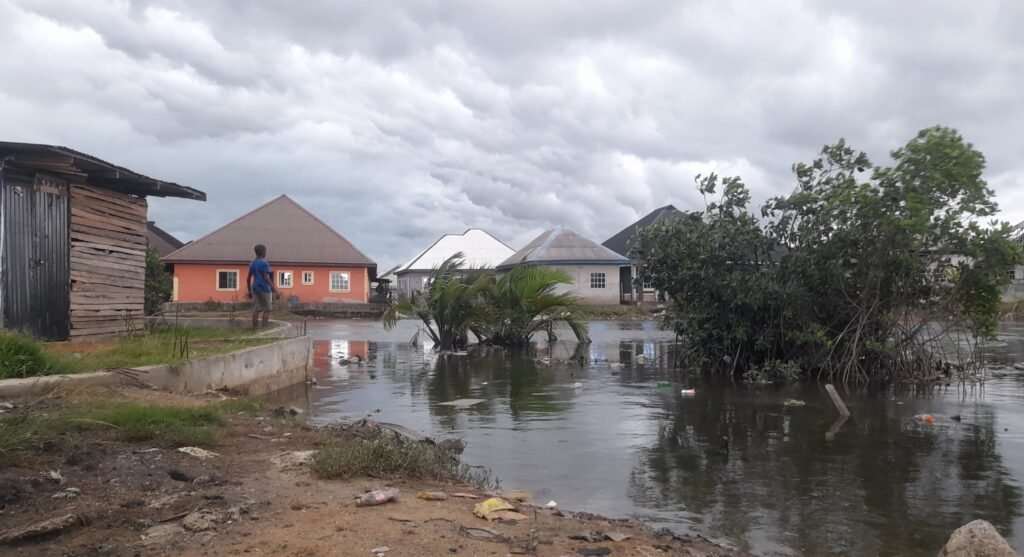
Nigeria’s federalism has always been imperfect, a constitutional structure of distributed power operating inside a political culture of centralised patronage. States elect governors who campaign on autonomy and arrive in office to discover that the fiscal and political architecture of the federation constrains that autonomy in ways that campaign rhetoric did not acknowledge. The federal government’s control of the distributable pool account, the primary source of state revenue for most Nigerian states, gives the federal executive leverage over sub-national governments that the formal constitutional separation of powers was designed to prevent but does not, in practice, prevent.
The legislature’s swift approval of the declaration completed the picture. The chamber, constitutionally positioned to check an overreaching executive, treated ratification as a formality, confirming that the federal centre’s gravitational pull operates on the National Assembly as surely as it does on the states it disciplines.
The security dimension of the Rivers State crisis- attacks on oil infrastructure in the Niger Delta region and the violence that accompanied the political standoff- is real and cannot be entirely reduced to political instrumentalisation. The Delta has always been volatile, and the combination of political instability and economic marginalisation produced by the crisis created conditions in which violent actors could operate. But the presence of security deterioration as a consequence of the political crisis does not establish that the declaration of emergency under Section 305 was the constitutionally appropriate response to it, but rather a political instrument deployed under constitutional cover.
What Rivers State reveals is a democracy whose institutions are strong enough to provide the language and the form of constitutional governance, and not strong enough to prevent the exercise of power in ways that that language was designed to constrain. The emergency declaration was signed by a president, transmitted to a legislature that voted to approve it, and executed under a constitutional provision designed for exactly this purpose. Every procedural step was followed. The political logic that drove those procedural steps is what the constitution was supposed to prevent. That gap, between constitutional procedure and constitutional purpose, is where Nigerian democracy actually lives.
The Precedent
The precedent is the part that outlasts personalities, and it is why Rivers matters far beyond Port Harcourt. A president has now demonstrated that an elected state government can be removed not by recall, court, or ballot but by a federal emergency declaration, lawfully signed, lawfully approved, and aimed at a governor whose offence was political independence rather than insurrection. What is available to this president is available to the next, and the office that suspended Fubara will one day be held by someone else with a different list of inconvenient governors. A democracy is not only the rules it writes but the precedents it tolerates, and a country that lets emergency power become a tool of intra-party discipline has quietly added a clause to its constitution that no assembly ever debated. The fiscal architecture makes the threat credible because a federal centre that controls the allocation of a state that cannot survive without it does not often need to declare an emergency; the knowledge that it can is usually enough. Rivers made the usually unspoken visible.