The Horn of Africa has lived for more than three decades with a paradox it cannot formally name: a government that functions without recognition and a state that is recognised but barely governs. In August 2025, when US Senator Ted Cruz urged President Donald Trump to extend formal recognition to Somaliland, the paradox briefly acquired a geopolitical frame that the African Union had long preferred to keep in the background.
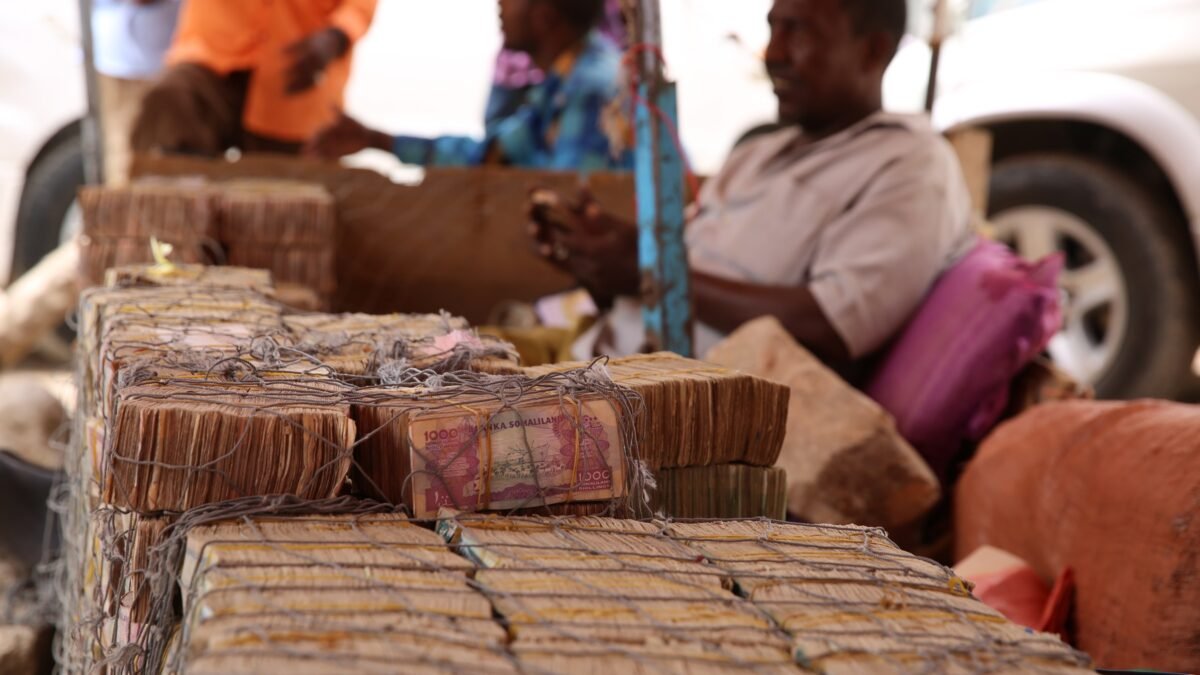
Somaliland declared independence from Somalia in 1991, following the collapse of the Siad Barre dictatorship, and has maintained elected governments, a functioning currency, a relatively stable security environment, and a constitutional order ever since, without a single seat in any international organisation. Somalia, formally recognised and a member of the African Union and United Nations, has spent much of that same period as a failed state, subject to insurgency by al-Shabaab, propped up by AMISOM peacekeepers, and unable to project administrative authority beyond the capital Mogadishu’s inner districts. The performance gap between these two entities is not subtle. It is one of the starkest demonstrations on the continent of the limits of the post-colonial border settlement.
The Frozen Border
The African Union’s doctrine of territorial integrity, enshrined to prevent the cascade of secession claims that its founding generation feared, is the dam holding recognition back. The logic was always instrumental: that the colonial borders, however arbitrary, were the only available frame for state-building in newly independent Africa, and that opening them to revision would produce not self-determination but endless fragmentation. That logic has never been wrong exactly. It has simply aged badly in the specific case of Somaliland, where the facts of governance have persistently and stubbornly refused to comply with the theory of borders.
The Somalia federal model, which assigns significant autonomy to regional states including Puntland and Jubaland, has not resolved the Somaliland question; it has merely deferred it. Mogadishu insists that Somaliland is a federal member state with special grievances, not a separate sovereign entity. Hargeisa insists the opposite with equal firmness. The positions are structurally incompatible, and no mediation process has found a way to move them. What has happened instead is that Somaliland has deepened its de facto international engagement, establishing trade relations, operating ports and airports that serve regional commerce, and signing a contentious memorandum of understanding with Ethiopia in early 2024 that granted Addis Ababa sea access in exchange for a commitment to explore recognition. That MoU triggered furious opposition from Mogadishu, which views it as a sovereign violation, and placed Ethiopia, Somalia, and Somaliland in a triangle of competing interests that the AU has struggled to manage.
The Ethiopian Stakes
The Ethiopian dimension is what makes Somaliland’s status question genuinely dangerous rather than merely unresolved. Landlocked Ethiopia has a structural need for Red Sea access that it lost with Eritrean independence in 1993 and has been attempting to recover through regional diplomacy ever since. Somaliland’s port at Berbera, developed with UAE investment, represents a viable corridor. If Addis Ababa formally recognised Hargeisa in exchange for that access, it would not be acting out of idealism about self-determination. It would be making a strategic calculation, and that calculation would immediately cascade into broader Horn of Africa realignments involving Eritrea, Djibouti, Sudan, and external powers including the Gulf states, Turkey, and the United States.
The Question the AU Won’t Ask
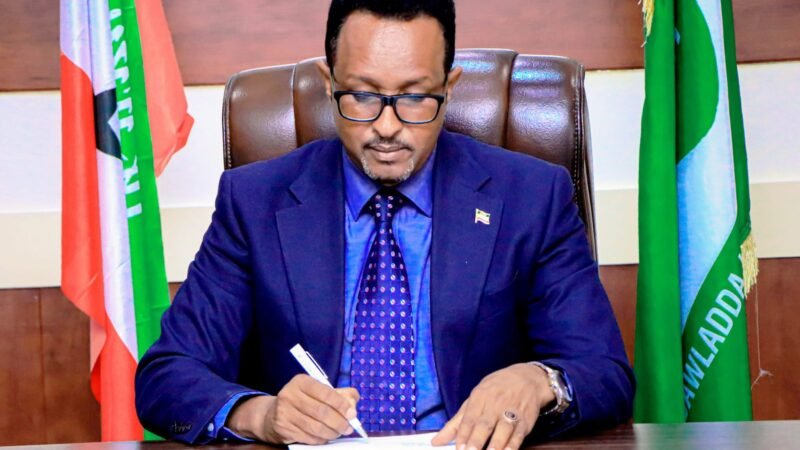
The federalism question underneath all of this is the one the African Union cannot yet bring itself to ask directly: whether the 1963 Charter commitment to colonial borders should be treated as a permanent settlement or as a provisional arrangement that was always intended to evolve as African states matured. The OAU/AU has made exceptions: Eritrea’s independence from Ethiopia in 1993, South Sudan’s independence from Sudan in 2011, both ratified through referenda, but it has resisted framing those exceptions as precedents. Somaliland advocates argue that is precisely what they should be. If the principle is self-determination through demonstrated governance, not permission from a parent state that never governed the territory in question, then Somaliland qualifies. The AU’s counter-argument is that principles applied selectively become no principles at all.
What makes the Somaliland case the continent’s most uncomfortable unresolved question is not its complexity. It is its clarity. The arguments on both sides are well understood. The governance record is publicly available. The diplomatic consequences of action are calculable. What is missing is not information. It is political will, the willingness of the AU, of individual member states, and of global partners to accept that the colonial border settlement, for all its strategic utility, has a cost. That cost is currently being paid, in full, by 3.5 million people in Hargeisa and the regions beyond it who are citizens of a country the world has decided not to see.
The deeper reason the AU holds the line is that Somaliland is not really an argument about Somaliland. It is an argument about the foundational bargain of the post-colonial order: that the inherited borders, however arbitrary, are frozen precisely because almost every African state contains a region that could make a Somaliland-style case. To recognise governance over inheritance in one place is to invite the question everywhere, and the continent’s map is full of lines no community drew that enclose peoples no plebiscite joined. The AU’s caution is therefore not blindness; it is self-preservation, a recognition that the principle Somaliland invokes, self-determination through demonstrated governance, is a solvent that could dissolve a dozen other states if it were ever applied as a rule. That is the genuine dilemma, and it is why the case is frozen rather than refused. Somaliland is asking the continent to choose between two things it cannot have at once: the stability of fixed borders and the legitimacy of earned governance. So far, it has chosen stability, and 3.5 million people are paying the difference.