The enduring shadow of Donald Trump over the transatlantic alliance has revealed something that strategic analysts have long understood but European and African governments preferred to treat as theoretical rather than operational: the United States’ commitment to collective security is a political choice, not a structural inevitability, and it changes with the occupant of the White House. Trump’s return to the presidency in 2025 has not merely reignited anxiety in Brussels and Kyiv. It has accelerated a reconfiguration of the global security architecture that African states, whose own security arrangements are entangled with Western partnerships in ways both visible and obscured, cannot afford to observe from a comfortable analytical distance.
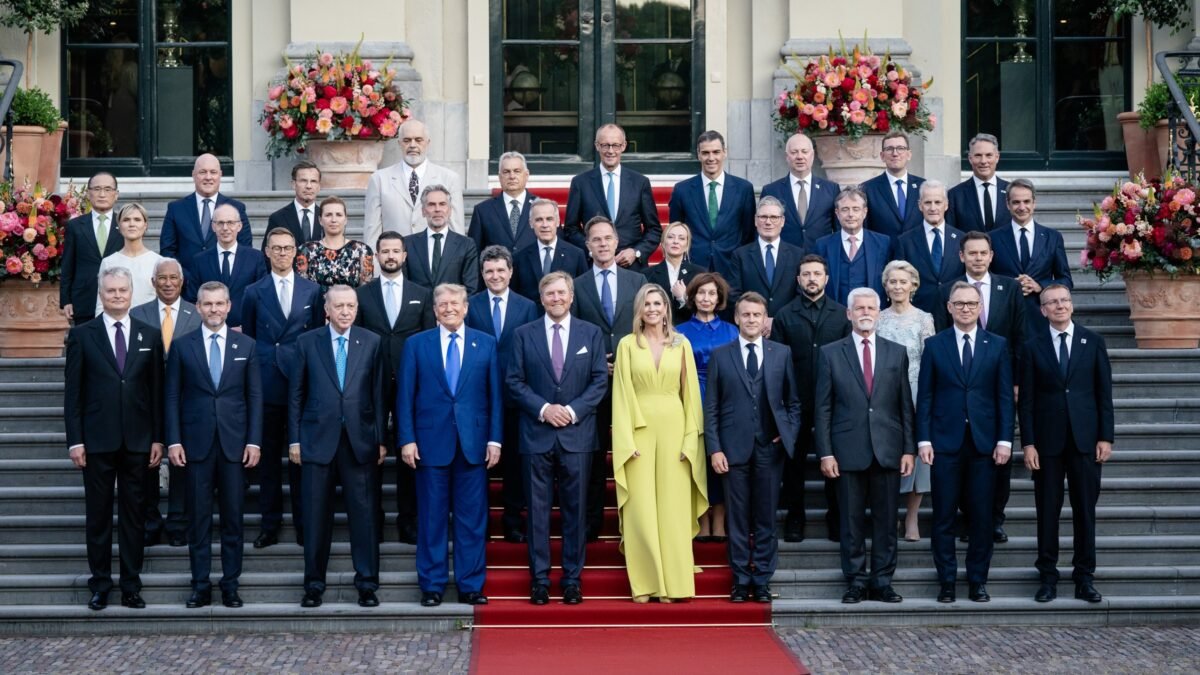
The Russia-Ukraine war has been the context in which Trump’s foreign policy unpredictability has been most intensely tested since his return. His administration’s approach- public sympathy for Russian positions, pressure on Kyiv to negotiate from a position of military disadvantage, conditional rather than automatic maintenance of military aid packages- has produced a situation where European NATO members are simultaneously committed to Ukrainian territorial integrity and uncertain whether American commitment to that position survives the next budget cycle or the next Trump press conference. That uncertainty is not incidental to European security planning. It is now the central planning assumption.
The Fracture Reaches Africa
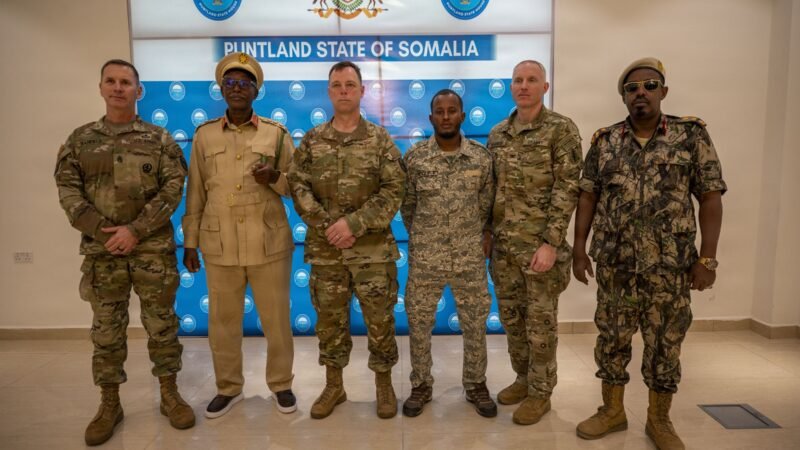
For Africa, the NATO fracture carries consequences that are less dramatic but structurally significant. Several African security architectures operate in formal or informal partnership with NATO member states: France in the Sahel, the United States through AFRICOM in East Africa and the Horn, the UK in East Africa and West Africa through bilateral security assistance programs. The coherence of those partnerships depends partly on the coherence of the alliance that binds those Western partners together. When Trump signals that NATO’s Article 5 collective defence commitment may be conditional on members’ financial contributions, he is not merely making a fiscal argument. He is introducing uncertainty into the credibility of the security guarantees that underpin Western partnership offers to African governments.
Why the Sahel Turned
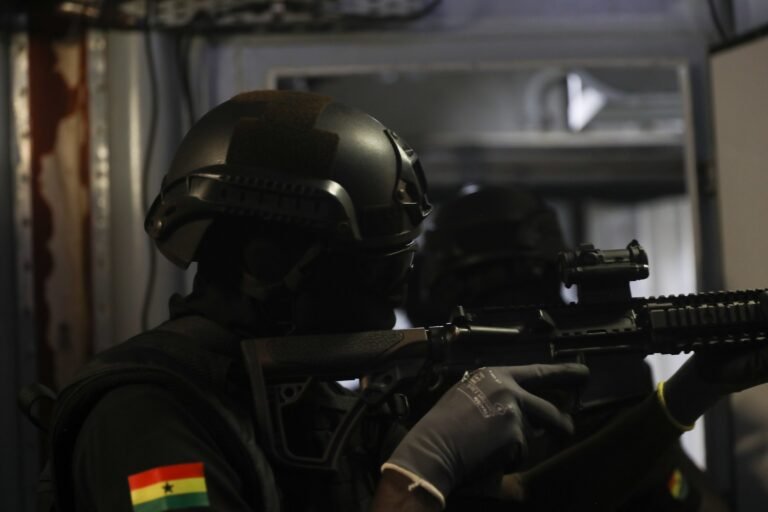
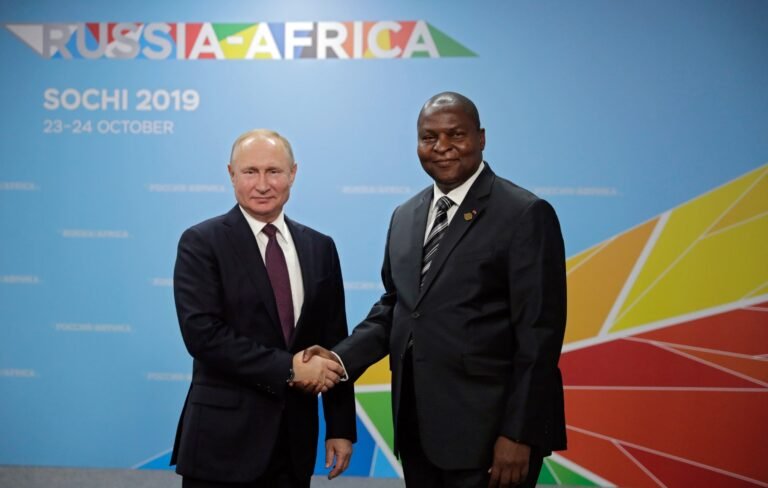
The Sahel coups of 2021 to 2024 were, in part, a response to this uncertainty, though the coup leaders framed their expulsion of French forces primarily in sovereignty terms. The deeper logic was more precisely this: if the Western security partnership on offer cannot reliably prevent terrorist territorial control, cannot guarantee sustainable funding, and exists within an alliance whose political coherence is subject to American electoral cycles, then the value calculation changes. Russia offered something simpler, if less sophisticated: deployment without conditionality, presence without governance demands. Wagner Group instructors and Russian security contractors do not require their hosts to hold elections or respect press freedom. They require basing access and commodity arrangements. For some governments facing immediate security threats, the offer was structurally more legible than the Western alternative.
Instrument, Not Partner
The Ukraine war’s African dimension has been misread in most Western analysis, which has focused primarily on African states’ voting patterns at the United Nations General Assembly and interpreted abstentions as moral ambiguity. The more accurate reading is that African governments are navigating a security environment in which both major external partners, Russia and the Western alliance, are instrumentalising the relationship for their own strategic purposes. Russia has used its existing African relationships to sustain diplomatic cover for its Ukraine operation. The United States and European states have used African relationships, including debt and aid leverage, to build Ukraine vote support. Neither position treats Africa as a primary strategic partner rather than a secondary diplomatic instrument.
The African Union’s peace framework for Ukraine, proposed in 2023 and received with polite scepticism in both Kyiv and Moscow, was strategically significant not because it was likely to succeed but because it represented Africa’s attempt to assert a mediating identity in a conflict where it had been assigned observer status. The framework acknowledged that African food security was directly affected by the war, through grain export disruptions, fertiliser price spikes, and shipping cost inflation, and that African governments therefore had legitimate interests in the conflict’s resolution beyond the humanitarian. That claim, that African material interests entitle African institutions to a seat in the negotiation architecture, is a more significant assertion than its reception suggested.
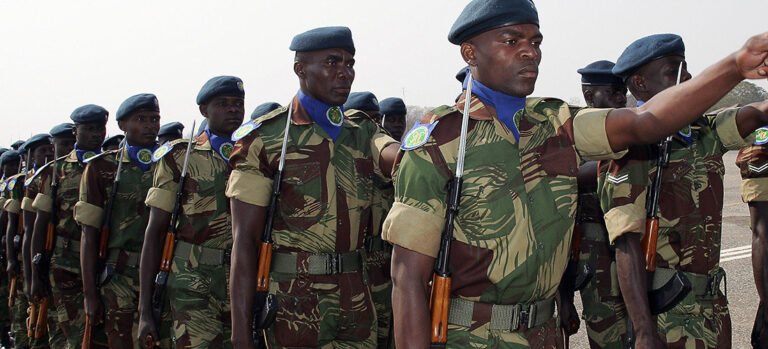
The long-term consequence of Trump’s NATO shadow for Africa is not that Western security partnerships become impossible. They remain, in most cases, more materially substantial than the Russian alternative. The consequence is that African governments have received, in real time, confirmation of a vulnerability their most strategic thinkers had always acknowledged: that security architecture dependent on the political continuity of a partner whose domestic politics are contested on four-year cycles is fragile by design. The Sahel has demonstrated one response to that fragility. The more sustainable response, building African collective security capacity through the African Peace and Security Architecture, reducing dependency on any single external partner, and using the multipolar moment to negotiate security terms rather than receive them, is harder, more expensive, and more consequential. It is also the only structural solution available.
The lesson Trump’s shadow delivers is one about the architecture of dependence itself, and it generalises far beyond NATO. A security guarantee is only as durable as the domestic politics of the country that issues it, which means a state that outsources its defence to a foreign electorate has, in effect, given that electorate a vote over its survival. African governments have spent six decades treating Western security partnership as a fixed feature of the landscape, like the climate, rather than as what it always was, a discretionary policy renewed or revoked every few years by voters who have never heard of Gao or Garissa. Trump did not create that exposure; he merely switched on the light that revealed it. The uncomfortable gift of his unpredictability is that it has made the cost of dependency legible in real time, and a vulnerability that can finally be seen is a vulnerability that can, at last, be budgeted against.