Zimbabwe’s proposal to build a new capital city at Mt. Hampden, a US$60 billion urban project spanning over 15,500 hectares in the country’s north-central corridor, is being discussed primarily in architectural and economic terms: how many hectares, how many residents, how many phases across how many years. These are the right questions to ask about project management. They are not the most important questions to ask about the project. The most important question is political: what does it mean when a southern African state that has spent three decades managing economic contraction, hyperinflationary collapse, land reform controversy, and international isolation decides to build a new capital city from the ground up? The Zimbabwe new capital at Mt. Hampden is a sovereignty declaration. Whether it becomes a functioning city or an aspiration interrupted is the secondary question. The declaration itself is the primary act.
Harare was built by colonial administration for a population it did not expect to exceed a million. It now holds over two million people, residents whose presence in the infrastructure it was designed to carry has created the cascading failures that any city faces when it operates beyond designed capacity. Water distribution, road networks, waste management systems, and the political administration that manages them are all performing under conditions of chronic stress. The practical argument for a new capital is therefore not manufactured: Harare’s physical infrastructure cannot be incrementally upgraded to absorb both its current population and the additional millions that Zimbabwe’s urbanisation trajectory will deliver in the coming two decades. A distributed urban development strategy that builds new capacity rather than retrofitting old capacity is analytically defensible.
The Blueprint
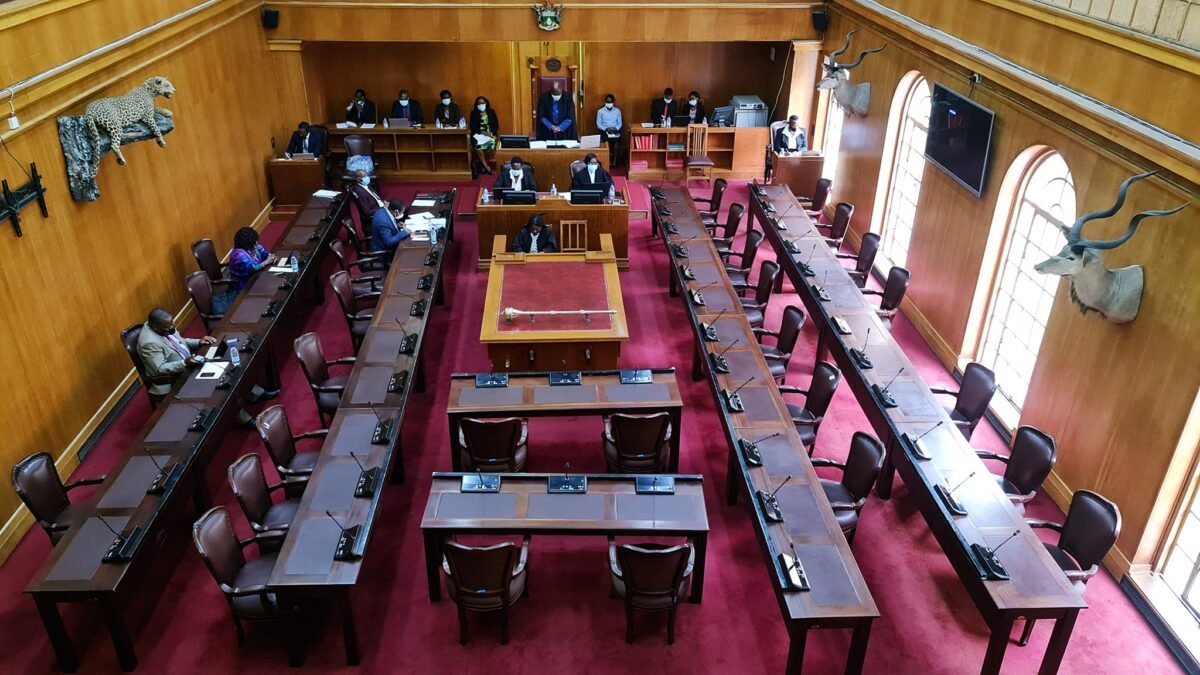
The design ambition for Zimbabwe new capital is correspondingly large. The proposed parliament building, which cabinet approved in December 2018, before ground broke on the physical project, stands as the institutional nucleus around which the city’s other elements are organised. A ring and radial road network connecting the new metropolis to Robert Gabriel Mugabe International Airport, Norton, and Ruwa provides the transport architecture. Renewable energy systems are designed into the city’s power infrastructure rather than retrofitted. The four-phase, ten-year construction plan distributes the capital burden across time: public finance for the essential infrastructure frame, public-private partnerships for the middle phases, foreign direct investment for the commercial buildout, and private equity for sustained refinement. Egyptian specialists involved in Cairo’s own capital relocation project to New Administrative City have provided technical consultation. The blueprint is serious.
The Execution Test
The test is always execution. African capital city projects carry a mixed record that is worth engaging directly. Egypt’s New Administrative City has progressed, though not without controversy about the social logic of relocating administrative functions away from the population centres they are meant to serve. Nigeria’s Abuja was a new capital project that took decades longer than planned and cost multiples of original budgets but ultimately produced a functioning federal capital. Tanzania’s Dodoma was designated as the new capital in 1973 and has been in a perpetual state of incomplete relocation ever since. The difference between these trajectories is not primarily architectural. It is political: whether successive administrations treat the project as a national commitment or as their predecessor’s legacy to be managed, deferred, or repurposed.
Zimbabwe’s Specific Risks
Zimbabwe’s context adds specific variables. The country’s relationship with international capital markets is constrained by debt arrears that complicate the foreign direct investment components of the Mt. Hampden financing model. The political stability required to sustain a decade-long construction programme across multiple budget cycles depends on an institutional continuity that Zimbabwe’s recent history has not made structurally reliable. The phased approach, which manages risk by sequencing investments, also creates the risk of phase one remaining the totality of the project if political conditions or financing arrangements change before phase two capital is committed.
The cultural logic of the project is its most underexamined dimension. Building a capital city is not simply an infrastructure exercise. It is an act of national self-definition, a statement about what the state considers worth building, where it places its institutional centre of gravity, and what it intends the experience of national citizenship to feel like. Zimbabwe’s choice to build a parliament as the nucleus of Mt. Hampden’s first phase places democratic governance at the literal and symbolic centre of the new city. That is a choice. It carries implications for how the city’s relationship to the citizens it will eventually house is expected to be configured.
The Zimbabwe new capital project will be judged by the gap between its declared ambition and its delivered reality. That gap may close over years and phases in ways that vindicate the ambition. It may open in ways that add Mt. Hampden to the inventory of African infrastructure declarations that did not survive contact with fiscal constraint and political discontinuity. What is already established, regardless of that outcome, is the declaration itself: that Zimbabwe, despite the weight of its economic recent history, retains the institutional imagination to conceive of itself as a state capable of building its future rather than only managing its inheritance.
The uncomfortable question the project cannot escape is one of sequence: whether a state should build a new capital before it has demonstrated it can run the old one. Harare’s failures, the unreliable water, the strained roads, the stressed administration, are not arguments only for new capacity; they are evidence about institutional capacity itself, and the same institutions that could not maintain Harare are the ones being asked to deliver Mt. Hampden across a decade and four financing phases. A new city does not escape the governance that produced the old city’s decay. It inherits it, at greater scale and cost. That is the real test buried inside the steel and soil. Not whether Zimbabwe can imagine a capital, every state can imagine, but whether it can build and then sustain one, which is the far rarer and less photogenic competence, and the one its recent history has most called into question.