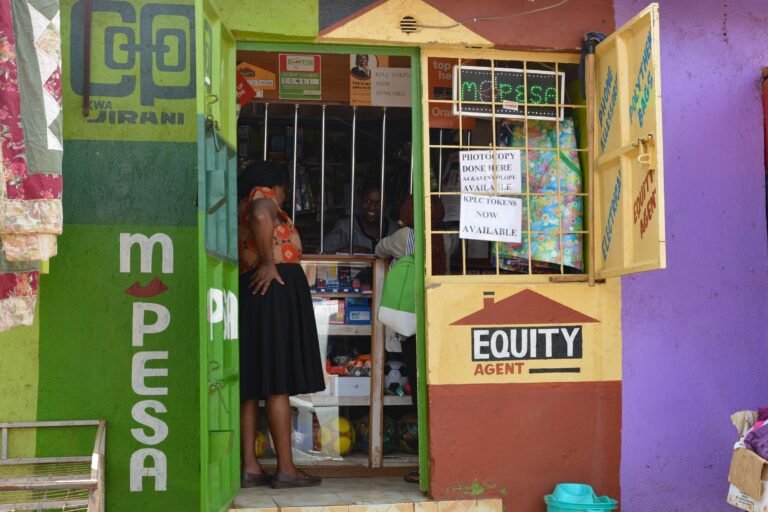
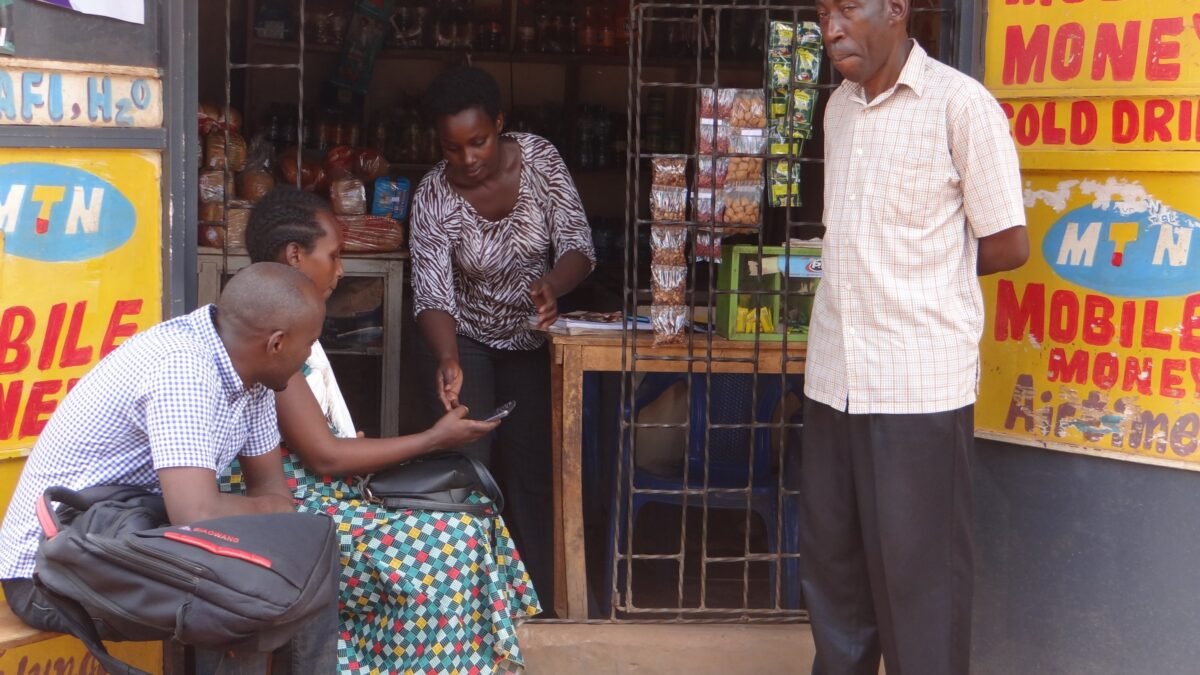
Across Africa, businesses are discovering that the most effective financial infrastructure does not require marble lobbies, vault doors, or a licence from a central bank. It requires a phone, a float, and someone whom the community trusts. Agency banking, the model by which licensed financial institutions deploy independent agents to deliver services that would otherwise require a physical branch, has moved from pilot programme to continental architecture in less than a decade. It is now rewriting the ownership question in African financial services: not just who has access to money, but who controls the pipes through which money moves.
The numbers are significant. In Nigeria, the agent banking network operated through licensed Mobile Money Operators, and super-agents had processed transactions worth trillions of naira by 2024, reaching populations in local government areas where no formal bank branch exists and possibly never will [Central Bank of Nigeria, 2024]. In Kenya, the M-Pesa agent network, the ancestor of the model the rest of the continent has studied and adapted, has created an infrastructure layer so deeply embedded in daily economic life that removing it would be operationally equivalent to removing the road network. In Tanzania, Ghana, Uganda, and increasingly Senegal and Côte d’Ivoire, variations of the same model are extending financial reach into communities that formal banking had written off as economically unviable.
Who Owns the Rails
The strategic shift hidden inside the agency banking story is one of network architecture and who owns it. The traditional banking model was vertically integrated: the bank owned the branch, the staff, the ATM, and the customer relationship. The agency model disaggregates that integration. The agent, a pharmacist, a grain trader, a mobile phone airtime dealer, owns the customer touchpoint, builds the trust relationship, and provides the physical presence that the bank’s digital infrastructure cannot substitute. The bank provides the licence, the float management, and the product suite. The value creation is genuinely shared. But so is the power, and who controls the network’s terms and conditions, pricing, and interoperability standards determines who ultimately captures it.
Nigeria’s experience illuminates the regulatory complexity that agency banking creates. The Central Bank’s framework has licensed multiple categories of agents operating under different regulatory umbrellas, traditional commercial banks with agent networks, Microfinance Banks with different capital requirements, Payment Service Banks designed specifically for mobile money, and super-agent companies that aggregate sub-agents under their own operational frameworks. The multiplicity of regulatory categories has created a layered market with significant interoperability challenges: an agent registered under one principal cannot necessarily serve customers of a competing institution, which fragments the network’s potential reach and creates inefficiencies that ultimately cost the customer.
The infrastructure sovereignty question is most acute at the point where international technology platforms intersect with African agent networks. The major mobile money platforms in East and West Africa operate on rails that ultimately run through licensing agreements, technology stacks, and data architectures with varying degrees of African institutional control. When the business logic of those platforms changes, when fee structures shift, when interoperability decisions are made, when data policies are updated, the agents, the customers, and even the regulators are responding to decisions made by entities whose primary accountability is to their own investors rather than to the financial inclusion mandate they are simultaneously serving.
The Gender Dimension
The gender dimension of agency banking deserves specific attention because it has been underanalysed in most of the financial inclusion literature. Women represent a significant proportion of agency banking customers in markets where traditional bank branches have historically been more accessible to men, either due to working hour constraints or social geography. Women also represent a significant proportion of agents themselves, particularly in the smaller-scale operations embedded in market trading and local commerce. A financial inclusion model that channels women into a position of infrastructure dependency, using the system but not owning or governing it, reproduces, at scale, the same exclusion pattern that agency banking claims to disrupt.
The Ownership Problem
The next phase of the agency banking revolution will be determined by regulatory architecture and interoperability standards more than by technology innovation. The technology for mobile money, biometric verification, and digital credit scoring is well developed and widely available. What is not yet established, across most of the continent, is a regulatory and competitive framework that prevents agency banking from becoming a new form of concentrated market power, where the entities that own the agent network rails effectively own the financial lives of the communities those agents serve.
Africa’s agency banking revolution has genuinely extended financial access to tens of millions of people who had none. That achievement is real and should not be qualified into irrelevance. What it has not yet done is answer the infrastructure sovereignty question with the same ambition. The agent at the kiosk is the bank for the community she serves. Whether she, and the community she serves, has any meaningful influence over the rules of the system she is operating within is the question the next decade of African financial regulation must answer.
The deeper pattern is one Africa has lived before in every other layer of its economy, now reappearing in the financial one. The continent supplies the indispensable last mile, the trust, the face at the counter, the knowledge of who in the village is good for a loan, while the rails beneath that last mile, the platform, the fee schedule, the data, the switch that decides which transaction clears, are owned and governed elsewhere. Financial inclusion, celebrated as an unambiguous good, can quietly become financial dependency if the people brought into the system are admitted only as users and never as owners. Access to the network is not the same as power over it, and the difference is the entire distinction between a continent that banks itself and a continent that is banked, profitably, by others. The agent at the kiosk has solved the access problem the formal banks could not. The ownership problem, harder and less photogenic, is the one Africa has not yet chosen to solve.