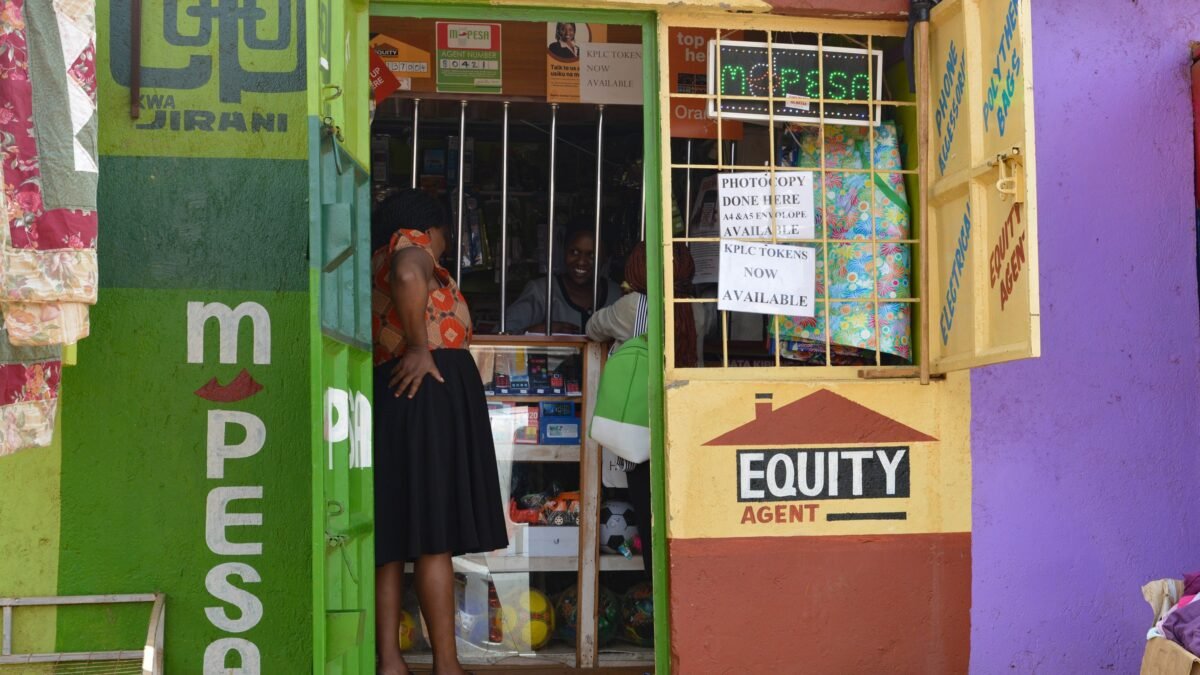
A trader in Kigali can send money to a cousin across town in under ten seconds, for a fee measured in cents, using a mobile money account that requires no bank branch and no smartphone beyond the most basic handset. The same trader sending payment to a supplier in Nairobi, four hundred kilometres and one border away, faces a transaction that is slower, costlier, and routed through an entirely different system: a correspondent bank relationship, a currency conversion priced in dollars, and frequently a Visa or Mastercard settlement rail that has nothing to do with either country’s domestic mobile money infrastructure. Africa built the most admired retail payment innovation of the past two decades. It still does not control the rails that move money across its own internal borders.
Two Payment Systems, One Continent
The gap is structural, not accidental. Mobile money networks- M-Pesa in Kenya, MTN MoMo across a dozen countries, Wave in West Africa- were built as domestic systems, licensed and regulated country by country, optimised for person-to-person transfers within a single national market. They succeeded spectacularly at that task; Kenya alone moves a sum equivalent to a significant share of its GDP through mobile money annually. What they were never built to do, and what no single telecom operator had the mandate or the multilateral standing to build, was interoperate across borders. A Kenyan shilling in an M-Pesa wallet and a Ghanaian cedi in an MTN MoMo wallet exist in separate technical universes, and moving value between them has historically required exiting the mobile money system entirely and re-entering the international correspondent banking system that African fintech was supposed to be disrupting.
That re-entry is where the leverage sits. Cross-border African trade settled in dollars must typically pass through a correspondent bank, often based in London, New York, or increasingly Dubai, which charges a spread on the currency conversion and a fee for the service. The African Export-Import Bank has estimated that this structure costs African economies billions of dollars annually in fees and lost time that a direct currency-to-currency settlement system would not impose. A continent that trades more with itself every year under the African Continental Free Trade Area still pays a foreign intermediary and foreign exchange risk to settle a transaction between two African currencies.
A continent trading more with itself every year still pays a foreign intermediary to settle a transaction between two African currencies.
PAPSS and the First Real Attempt
The Pan-African Payment and Settlement System, launched by the African Export-Import Bank in partnership with the African Union, is the first infrastructure genuinely designed to close this gap: a system allowing commercial banks and licensed payment providers to settle cross-border African transactions directly in local currencies, without routing through a dollar correspondent account. Nigeria, Ghana, and several West African Monetary Zone countries have connected central banks to the system since its launch, and the ambition- settlement in local currency, cleared through an African-owned and African-governed platform- is precisely the sovereignty layer the mobile money revolution never built.
Why the Card Networks Still Win by Default

The obstacle is not technical capability so much as the accumulated weight of everyone else’s existing infrastructure. Visa and Mastercard have decades of merchant relationships, bank integrations, and consumer trust built across the continent, and African banks that plug into their networks get instant international interoperability that a newer, thinner system like PAPSS cannot yet match at scale. Every bank, telecom, and merchant that must choose which rail to build defaults to the network that already works everywhere, which is a self-reinforcing advantage the incumbents did not need to defend actively. PAPSS has to be better than the existing system for enough participants simultaneously to reach the network effects that made mobile money itself viable within a single country. That is a much harder coordination problem across fifty-four sovereign regulators than it was within one.
The reason this matters beyond transaction fees is that payment rails are a form of infrastructure leverage no different in kind from the port concessions and cloud regions that increasingly define who controls African economic activity. A settlement system is also a data system, a record of who trades what with whom, at what volume, and it is also a point of potential restriction, since a network operator can, in principle, decline to process a transaction. A continent that clears the overwhelming majority of its own internal trade through foreign-domiciled payment networks has outsourced not just a fee structure but a layer of economic visibility and potential control to institutions with no obligation to African governments or regulators.
Mobile money proved that African markets could out-innovate the rest of the world at the point of consumer transaction. The unfinished task is doing the same at the point where value crosses a border, which is precisely where the fees, the friction, and the foreign dependency are concentrated. PAPSS is the first infrastructure with the mandate and the governance structure to close that gap. Whether it reaches the scale mobile money reached within a single country depends on whether African governments treat it as a strategic priority worth defending against the network effects of incumbents, or as one more well-intentioned platform competing for adoption on its own.