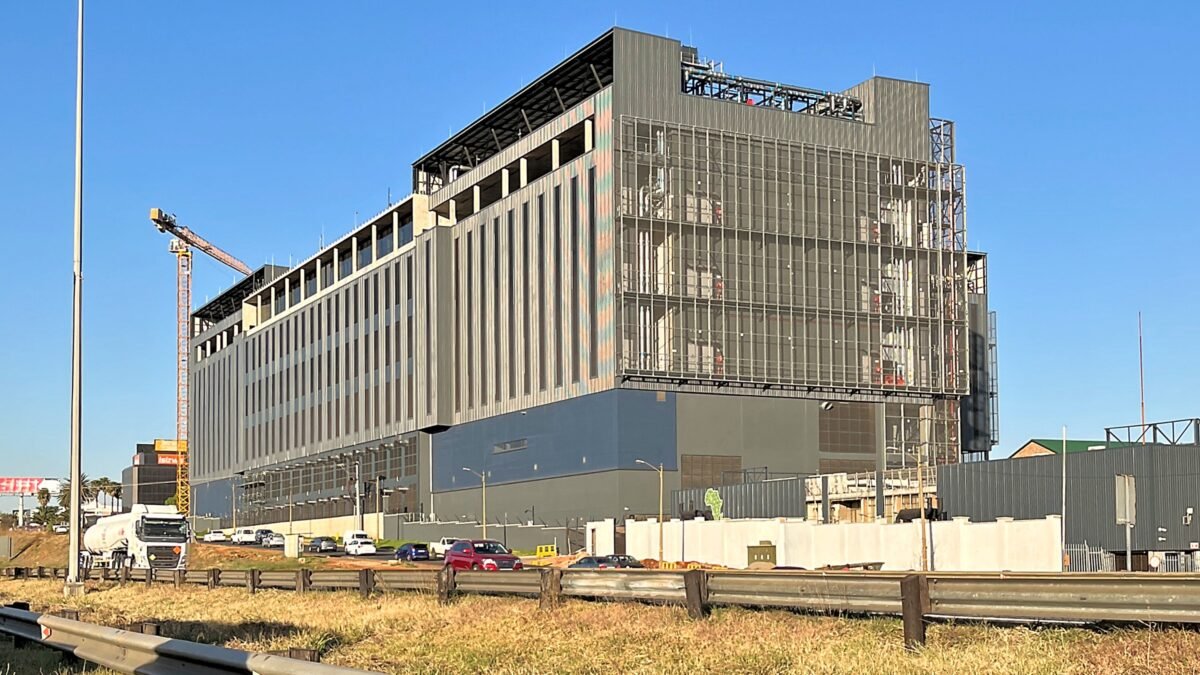
A new data centre broke ground outside Nairobi this year, financed by a regional developer, cooled by systems tuned for equatorial heat, and celebrated by the minister who cut the ribbon as evidence that Kenya was building its own digital future. The building is real. The jobs are real. What is not real is the idea that the facility, by itself, delivers sovereignty over anything. The building houses racks. The racks run software. The software, in the large majority of cases across the continent, is licensed from Microsoft, Amazon, or Google, priced in dollars, governed by terms of service written in Seattle and Mountain View, and subject to laws that reach the data long after it has left African soil. Africa is building the shell. It has not yet built the thing that lives inside it.
The Building Is Not the Asset
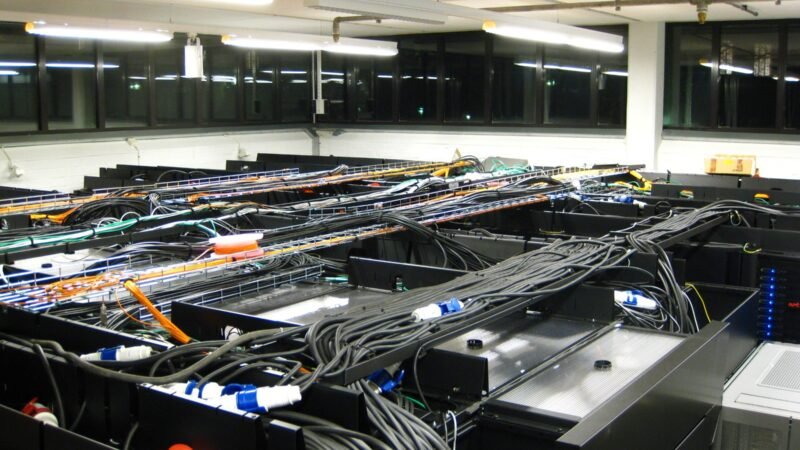
The last decade produced a genuine physical transformation. Microsoft opened Africa’s first hyperscale cloud regions in Johannesburg and Cape Town in 2019. Amazon Web Services followed with a Cape Town region the following year. Google added a Johannesburg cloud region in 2024. Local operators, Raxio, Africa Data Centres, Teraco, have added colocation capacity across a dozen cities. Two new subsea cable systems, Meta’s 2Africa and Google’s Equiano, ring the continent’s coastline, landing in Lagos, Accra, Mombasa, and Cape Town, carrying more bandwidth to Africa than every previous cable combined. By any measure of physical infrastructure, Africa’s digital footprint is larger and better connected than it has ever been.
Physical presence is not the same as control. A hyperscale region in Johannesburg means Microsoft’s infrastructure sits closer to African users, reducing latency and satisfying local data-residency rules. It does not mean Microsoft has ceded anything. The land, the power contract, and the concrete may be South African. The operating system, the billing relationship, the security architecture, and the terms under which the data can be accessed, subpoenaed, or migrated remain the property and the jurisdiction of a company headquartered eight thousand miles away. Building a data centre inside a country changes where the server sits. It does not change who decides what runs on it.
Building a data centre inside a country changes where the server sits. It does not change who decides what runs on it.
What Data Localisation Actually Localises
Kenya, Nigeria, and South Africa have each passed data protection statutes over the past six years requiring that certain categories of data, financial records, health information, government data, be stored within national borders. The laws were written as sovereignty measures, a response to the discomfort of having citizen data sit on servers a government cannot inspect or compel. In practice, the laws have mostly relocated the servers without relocating the power. A bank in Lagos that must keep customer data in Nigeria satisfies the letter of the law by hosting it in a Lagos-based hyperscale region, still operated, patched, priced, and ultimately controlled by the same American cloud provider it used when the servers sat in Virginia. The data moved. The dependency did not.
Three Companies, One Continent’s Compute
Follow where the leverage actually sits and the picture sharpens. Across sub-Saharan Africa’s enterprise and government cloud workloads, the overwhelming majority run on infrastructure owned by three American firms. That concentration means pricing power, the terms of service, and the roadmap for what African institutions can and cannot build are set in negotiations to which no African government is a party. It means a change in United States export-control policy, a sanctions regime, or a unilateral pricing decision can alter the operating cost of an African hospital records system or a national tax platform overnight, with no local recourse. The three companies compete vigorously with each other. They do not compete with an African alternative, because a continental hyperscaler with comparable capital, chip supply, and engineering depth does not yet exist.
The absence of that alternative is not simply a market gap. It reflects a genuine capital and technical barrier: hyperscale computing requires tens of billions of dollars in sustained investment, semiconductor supply chains Africa does not control, and engineering talent the continent is still training rather than retaining. Rwanda, Nigeria, and South Africa have each floated sovereign or continental cloud initiatives; none has reached the scale that would let a government run its core systems without a foreign hyperscaler underneath. The gap between owning the building and owning the compute is not a policy failure alone. It is a capital-formation problem that data-residency law cannot solve by itself.
The Chokepoint Beneath the Chokepoint
The subsea cables compound the exposure rather than relieving it. 2Africa is financed by a consortium in which Meta holds the largest stake; Equiano is a Google asset end to end. The physical fibre that carries a Kenyan bank’s transaction to a Kenyan customer in Kenya may still be routed through infrastructure owned by the same companies that own the cloud layer processing it. A continent that depends on foreign-owned cables to connect its own cities to each other, and foreign-owned compute to run the services running on top, has not built a digital economy so much as leased one, at every layer, from the same small set of landlords.
None of this argues against the hyperscalers’ presence, which has lowered costs, improved reliability, and accelerated digitisation in ways smaller African-owned providers could not have matched on their own timeline. The argument is that presence has been mistaken for sovereignty, and the two are not the same transaction. A government that wants genuine leverage needs the parts of the stack a ribbon-cutting cannot substitute for: capital pooled at continental scale, engineering talent retained rather than exported, and procurement rules that treat cloud dependency as a strategic exposure to be actively managed, not a convenience to be accepted. The data centres rising across Johannesburg, Nairobi, and Lagos are worth building. The mistake is calling them sovereignty when the compute running inside them still answers to somebody else.