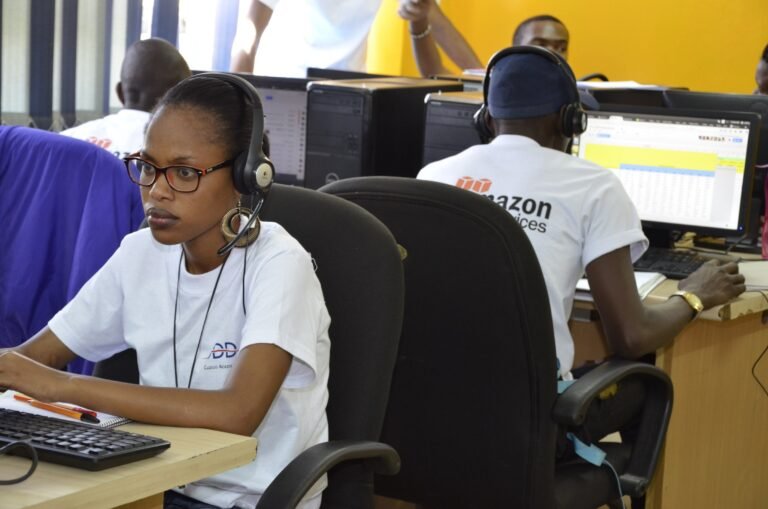
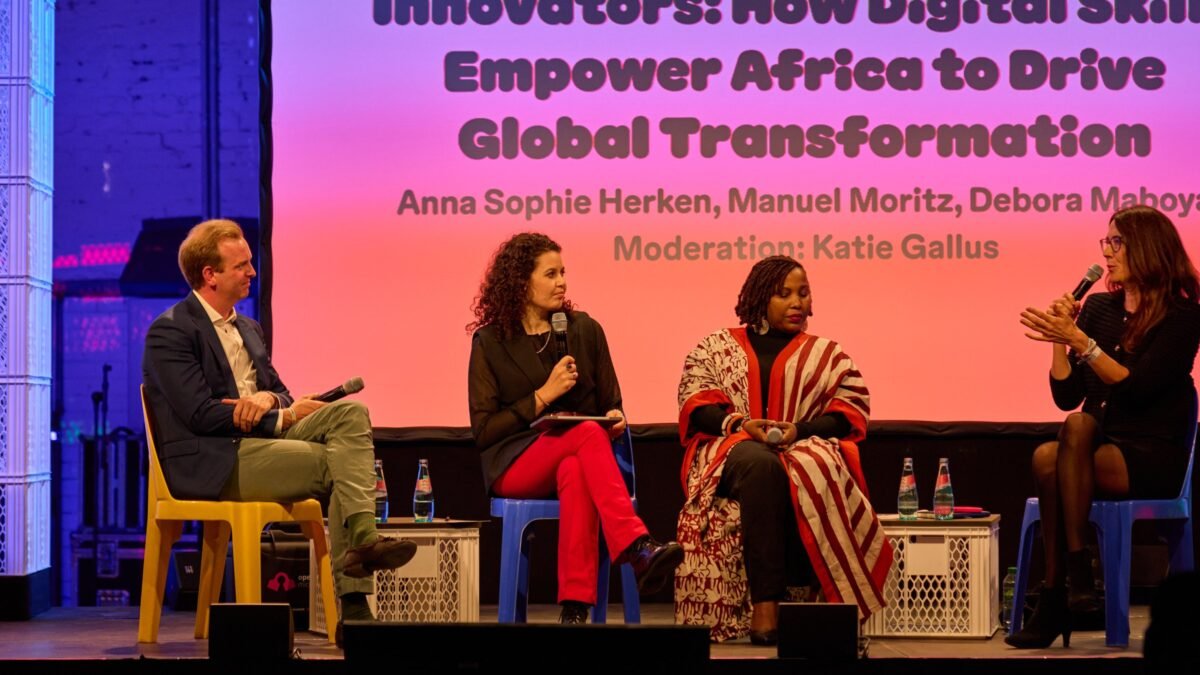
The Fourth Industrial Revolution is redrawing the global economic map, and Africa must decide whether to be a spectator or a sculptor. As automation, artificial intelligence, and digitisation rewrite the rules of productivity, nations across the continent face a defining question: adapt, or fall further behind. The World Economic Forum projects that by 2025, half of all global employees will require reskilling. Yet in many African economies, legacy education systems and inadequate digital infrastructure remain misaligned with the skills needed by emerging industries- fintech, healthtech, smart agriculture- whose growth is already outpacing the continent’s capacity to staff them.
The asymmetry is most acute at the level of human capital. Africa has experienced three prior waves of industrial transformation that bypassed large swaths of the continent. The Fourth Industrial Revolution fuses digital, biological, and physical systems in ways that create new human-machine interfaces and challenge how societies produce, communicate, and govern. For a continent with the world’s youngest population, 60 per cent under 25, this disconnect threatens both growth and stability. But if harnessed correctly, Africa’s youth bulge could be its competitive advantage in the global innovation race. The question is whether the continent moves fast enough to convert demographic weight into digital capacity before the window closes.
The Tools and the Gap
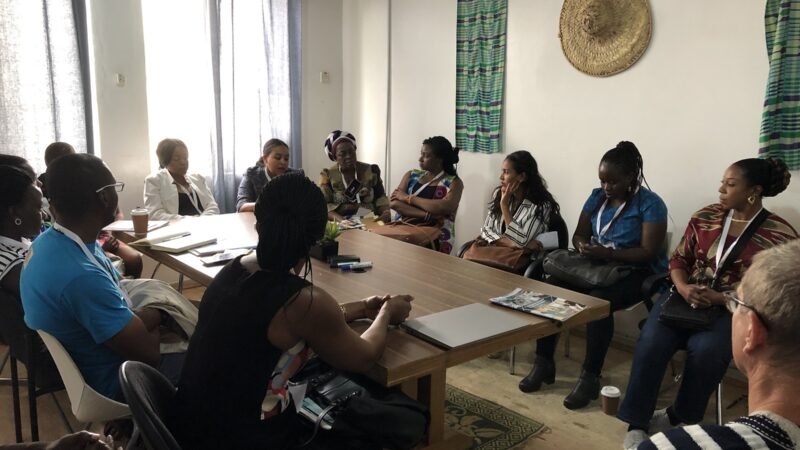
The disruptive forces shaping this moment are not abstract. Artificial intelligence is already used in fraud detection by African banks and in medical diagnostics, while also threatening to automate away jobs in retail, logistics, and basic services. Blockchain is finding use in land titling, cross-border payments, and identity management, but adoption lags due to regulatory fog. Cloud infrastructure remains thin across the continent, while digital sovereignty and access costs constrain the scale of what domestic markets can achieve. The challenge is not the absence of innovation. From AI-driven crop monitoring in Kenya to drone delivery trials in Rwanda’s health sector, pockets of innovation signal that the Fourth Industrial Revolution is not abstract; it is already happening. The challenge is making those pockets structural.
Who Owns the Layer
Beneath the language of skills and inclusion sits the harder question the optimism tends to skip: who owns the layer on which all of this runs? The cloud that stores African data, the foundation models that power African applications, the payment rails that clear African transactions, are predominantly built, hosted, and governed abroad. A continent can produce brilliant developers and still be a tenant on infrastructure it does not control, paying rent in data and dependency for capabilities it consumes but cannot govern. Reskilling a workforce to operate other people’s platforms is genuine progress and a ceiling at the same time. The decisive variable is not whether Africans can use the tools, but whether the tools, the data, and the rules that govern them are owned where the value is created. Sovereignty over the digital layer is not protectionism, and it is not a rejection of foreign technology. It is the difference between renting capability and accumulating it, between a market that consumes platforms and one that builds, owns, and exports them. That distinction decides whether Africa’s young population becomes the cheapest labour in someone else’s value chain or the architects of their own, and it is settled by policy choices made now, not by the talent that already exists in abundance.
Leaders and Laggards
Africa’s readiness is starkly asymmetrical, revealing a continent of sharp contrasts. Kenya has solidified its leadership in digital finance through M-Pesa, which commands over 90 per cent of mobile money transactions in the country; the government’s Ajira Digital Programme has upskilled over one million youth. Rwanda’s Smart Rwanda Master Plan, with 4G coverage reaching 96 per cent of the country and the country’s partnership with Zipline for medical drone delivery, represents what deliberate top-down policy orientation can achieve. South Africa anchors a $3 billion tech startup ecosystem across Cape Town and Johannesburg. Against these leaders sit the laggards, the Central African Republic, Chad, and the DRC, where internet penetration remains below 15 per cent, and the disappointers: Ethiopia and Nigeria, where enormous potential coexists with inconsistent regulation, unreliable electricity, and internet shutdowns that erode the trust digital economies depend on.
To harness the benefits of this transformation, Africa must architect an ecosystem that combines regulatory agility with infrastructural reliability. The priority investments are not mysterious: broadband expansion and data centre capacity, aligned with the African Union’s Digital Transformation Strategy 2030; education systems reoriented from rote memorisation to problem-solving, with coding, robotics, and AI ethics integrated into curricula; adaptive regulation across digital payments, data privacy, and AI use; and the creation of a pan-African digital single market that harmonises data protection laws, digital identity systems, and payment interoperability across borders. The AfCFTA’s Digital Protocol is the architecture on which that market can be built. Harmonisation reduces duplicative spending and, crucially, increases the continent’s bargaining power with the global technology firms that would otherwise set the terms one fragmented market at a time.
Capital remains cautious, and rightly so, given the policy unpredictability that continues to characterise several major African markets. But the first-mover advantage in green energy, agricultural technology, and digital identity systems is real, and it belongs to the governments and institutions willing to build the enabling environment now. Africa’s digital renaissance will not be gifted. It must be built through coherent policy, bold investment, and unwavering political will. Until the lion learns to write, every story glorifies the hunter. The time has come for Africa not just to adopt technologies, but to own the layers beneath them, and to do so before the terms of the next global industrial order are set without it.