


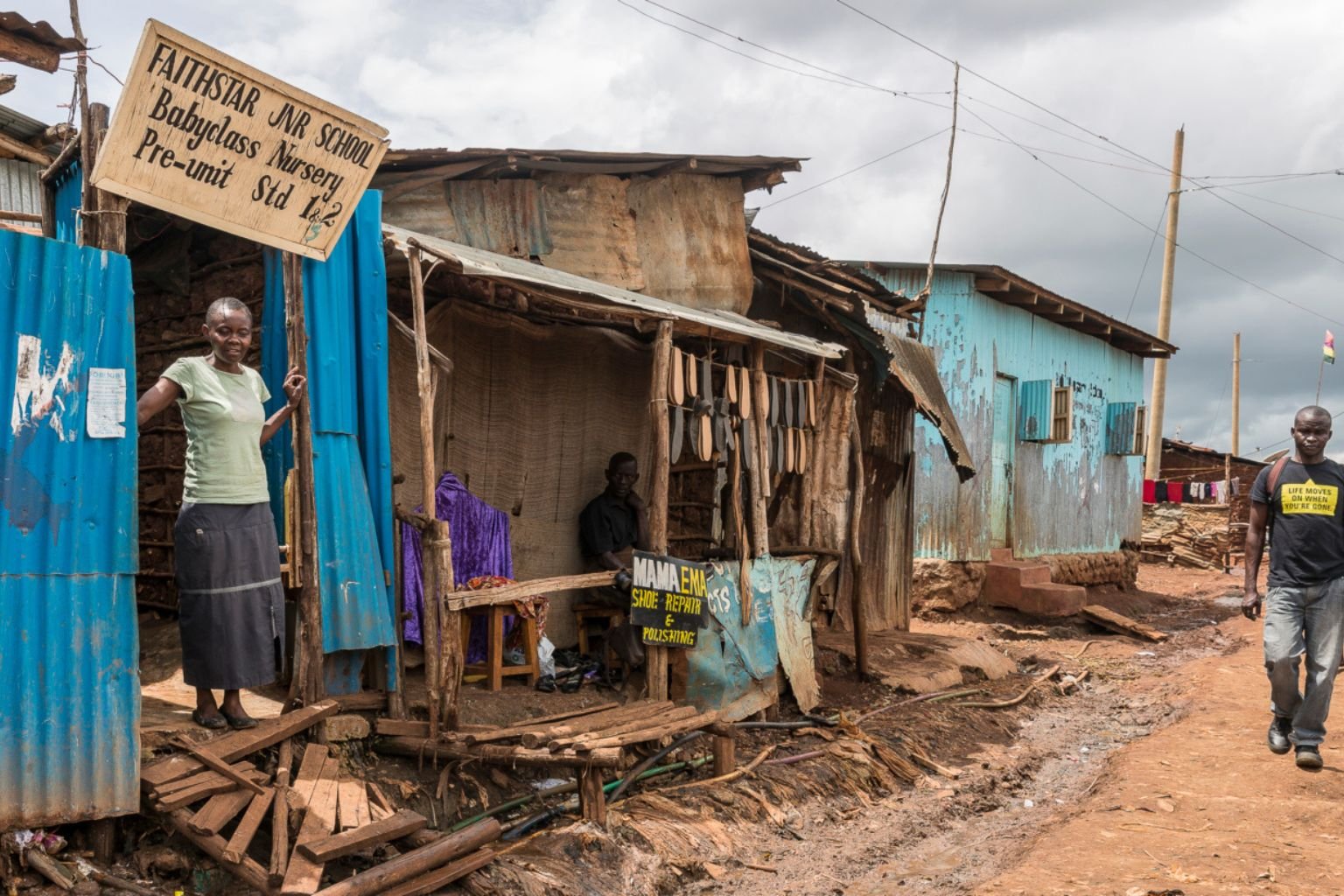
Globally, extreme poverty has declined drastically from 1.9 billion people in 1990 to around 800 million today.
But Africa remains the epicentre of this struggle. As of 2025, roughly half a billion people in Sub-Saharan Africa, nearly two-thirds of the world’s extreme poor, live on less than $2.15 per day. Africa’s poorest are no longer a mere fraction of the global story; they are the story.
Unlike other regions where poverty is slowly retreating like a setting sun, in Sub-Saharan Africa, it rises each dawn like a stubborn harmattan dust, unyielding and suffocating. According to the World Bank’s latest reports, the triple-headed monster of conflict, institutional fragility, and violence remains the chief architect of this troubling trend. In countries like the Central African Republic, South Sudan, and Somalia, where the rule of law is as fragile as a calabash in a child’s grip, poverty is both shadow and substance of daily life. In parts of the Sahel and Central Africa, entire communities teeter on the very edge of survival. Nations from Mali and Chad to the Democratic Republic of Congo endure poverty rates that often exceed 50%, with conflict and state collapse turning everyday existence into a fight for the bare essentials.
But it is not only the fires of war that scorch the earth. Rapid population growth, especially in the Sahel and West Africa, fans the flames, stretching already-thin resources like palm oil across too many yam slices. Over 60% of Africa’s people today are under 25, a youthquake of hopeful souls coming of age with precious few opportunities to match. By the mid-2030s, nearly half a billion young Africans will reach working age, a demographic tide that could either power a surge of prosperity or swell into a wave of frustration. Unlike in Asia, where poverty has been chased away like goats from a maize farm, Africa’s economic growth has crawled like a limping tortoise: erratic, uneven, and often excluding the very people who need upliftment the most.
Africa’s long marriage to extractive industries has become a union of riches and ruin. It is a double-edged hoe, one that digs up wealth from the earth while sowing seeds of despair among its people. From Nigeria’s oil fields to Zambia’s copper belts, and the gleaming mineral veins of the Congo, the continent’s treasures are hauled out like dowry gifts, enriching a handful while leaving the many to gnaw at bones. For example, oil-rich Nigeria pumps out millions of barrels yet has been dubbed the “poverty capital of the world,” hosting more people in extreme poverty than any other country. These industries, much like greedy elders at a funeral feast, consume in abundance yet pass little to the mourners gathered.
The extractive economy is capital-heavy and job light, a tree with a fat trunk but no shade, a well that fills buckets at the top while the bottom remains parched. Wealth pools at the apex like rain trapped on a tin roof, never dripping down to nourish the hungry roots. The aftermath is often a bitter harvest: polluted rivers, hollowed lands, and promises that vanish like footprints on a riverbank after the flood. It is the old story of Africa’s resource curse, a continent rich in the earth but poor in the pot.
To break this age-old cycle, African leaders must toss aside the old script. Like a farmer rotating crops to renew tired soil, the continent must pivot from digging alone to sowing new seeds of possibility. Diversification is no longer a suggestion; it is a survival chant. The lessons are there for those willing to learn: nations like Germany, Denmark, and the United States did not rise by hawking what lay beneath their feet, but by nurturing what grew in their people’s minds and the strength of their hands.
Africa’s wealth must be ploughed not just into mines, but into minds. Into classrooms where children are taught not merely to recite, but to dream, invent, and build. Into hospitals where mothers do not fear childbirth as a dance with death. Into infrastructure roads that don’t just connect towns, but destinies; rails that don’t just carry goods, but hopes; electricity that doesn’t flicker like a firefly, but shines like a lighthouse.

Where this vision has been pursued, the results are palpable. Kenya, for instance, has boosted electricity access to nearly 80% of its citizens by harnessing geothermal steam and solar rays to light up its towns and villages. East Africa has launched a regional power pool that sends megawatts across borders. Ethiopian dams now keep Kenyan homes bright at night, and new highways and railways from Lagos to Mombasa are stitching together once isolated markets. Each connection, each megawatt and each mile extends the reach of opportunity, turning distant hopes into everyday reality for millions.
True prosperity, like a baobab tree, must grow from deep roots, not shallow spoils. Until Africa moves from exporting raw potential to refining purpose, she will remain like a market woman selling diamonds in baskets of dust full of value, yet constantly underpriced.
Building schools and hospitals is like planting yams, but forgetting to weed out infrastructure without skilled hands to run it is a basket that carries water. The presence of qualified teachers and health workers is not a luxury but a lifeline. Yet across Sub-Saharan Africa, there is, on average, only about one doctor for every 5,000 people, and nearly 100 million children still never set foot in a classroom. Despite gains in enrollment, these almost 100 million out-of-school African children stand as a stark reminder that new buildings and brochures mean little without teachers, textbooks, or clinics stocked with medicine. Each understaffed hospital and each empty classroom seat reminds us that brick and mortar alone cannot heal or teach; policymakers ignore this lesson at their peril.
Equally, roads and reliable electricity must cease being election-time promises and become the arteries of economic life. What manufacturing firm will set up where the lights dim more often than they shine? After all, more than 600 million Africans still have no access to electricity, making darkness and diesel generators a daily norm. And none will cook a meal in a kitchen without firewood.
And let us not forget the villages, the oft-neglected roots of the African tree. While the bright lights of Lagos and Nairobi dazzle with investment, the soul of poverty resides in the countryside nearly 80% of Africa’s extreme poor live in rural areas, far from any gleaming skyline. There, a well of clean water can be more revolutionary than a skyscraper. There, a reliable road can turn a farmer’s harvest into a nation’s export.

Africa’s path forward must be like a well woven kente: colourful in its diversity, intense in its unity, and purposeful in its design. The time has come to rise not with the roar of rhetoric, but with the quiet thunder of meaningful action, planting not just for today, but for the generations yet to till this sacred soil.
The Role of Governance and Political Will
Economic reforms, like planting during the dry season, will bear no fruit if not watered by strong governance and the rule of law. A field may be ploughed and sown, but without rain, it yields nothing. In this regard, Ethiopia, despite its recent political turbulence, has managed to coax green shoots from barren soil. By shifting away from over reliance on subsistence farming and investing in manufacturing and services, the country has taken bold steps toward diversified growth and poverty reduction. Similarly, Rwanda, rising from the ashes of conflict, has embraced clean governance and human development, translating into steady gains in health, education, and income for its people.
Meanwhile, in distant corners of Asia, China and Vietnam have walked paths once thorny with poverty, now paved with progress. Their secret? Policies carved with the knife of purpose, sharpened to serve the poor, not the powerful. Africa, standing at the crossroads, can draw from these wells of wisdom to shape its own pro-poor growth strategies.
But the road ahead is steep. If Africa continues at its current pace, limping while others sprint, extreme poverty in Sub-Saharan Africa may still cling like a leech well beyond 2030. While other regions might reduce extreme poverty to a mere shadow, just a few per cent of their populations, Africa could still find nearly one third of its people in the belly of hardship. By then, over three-quarters of the world’s poorest could call this continent home.
Yet the winds can still change direction.
This fate is not carved in stone but in wet clay, still soft enough to reshape. With bold strokes of governance reform, strategic infrastructure investments, and economies no longer tethered to the whims of commodity prices, Africa can veer off this path of despair and onto a new trail of shared prosperity. Pan-African initiatives like the African Continental Free Trade Area are beginning to unfurl new opportunities, boosting trade among neighbours and nurturing homegrown industries from Cape Town to Casablanca.
For even under the weight of its burdens, Africa is a lion caged, not broken. The continent’s wealth is not just beneath its soil, but within its soul in the boundless ingenuity of its people. They are like seeds buried in the dry season, stubbornly pushing through cracked earth, reaching skyward for promise. Beneath every setback lies a smouldering ember of innovation, flickering but not extinguished. You can see it in the bustling tech hubs of Lagos and Nairobi, where young entrepreneurs craft fintech and agritech solutions to local challenges with shoestring resources. These sparks of creativity may be small today, but with wise stewardship, they can set the savannah ablaze with progress.
What Africa needs are steady hands and clear eyed leaders who govern like village elders protecting the harvest, not looters picking from the barn. There are glimmers of this ethos: in Zambia and Malawi, voters recently unseated entrenched regimes in favour of reformers promising accountability, and in Tanzania, a new leadership has begun to rein in corruption and rekindle faith in institutions. With such wise leadership, targeted investment, and justice that protects the weak as fiercely as it curbs the powerful, Africa can stop dancing at the periphery of progress and claim its rightful place at the table of global prosperity.
The story need not remain one of hunger and hustle. Even a broken clay pot, when remoulded by skilled hands, can carry water sweeter than before. Africa, too, can be reshaped not by pity, but by purpose.
To do so, the cracks must be sealed, weak institutions reinforced like mud walls before the storm, and infrastructure rebuilt not just for headlines but for households. From potholes that stall progress to bureaucracies that drain energy, the roots of underdevelopment must be pulled up like weeds from a cassava field.
Africa must rise not as a continent waiting for rescue, but as one claiming its inheritance. The wealth of the land and of the hands that work it is not a curse to be tamed but a treasure to be awakened. And when the tide rises, not only for the elite but for the farmer, the weaver, the teacher, and the trader, the world will cease to gaze at Africa through the eyes of charity or commerce. Instead, they will see her as a partner: equal, potent, and proud.


