Africa 360 Degrees
No Result
View All Result
  • Business
    Digital transformation forces rethink on policy, skills, and inclusion across the continent

    Digital transformation forces rethink on policy, skills, and inclusion across the continent

  • Economics
    Digital composite image of Africa's economic landscape, featuring a glowing map of Africa, stacked coins, and financial market data, symbolising growth, resilience, and economic renewal across the continent.

    Africa Paddles Through Resilient Currents of Renewal

    africas-creative-pulse-meets-hard-economics

    Africa’s Creative Pulse Meets Hard Economics

    From Pledges To Projects In Africa’s Climate Economy

    From Pledges To Projects In Africa’s Climate Economy

    Tariffs, Corridors, and the Race to Finance Africa’s Future

    Tariffs, Corridors, and the Race to Finance Africa’s Future

    Trade Barriers and Political Tensions Threaten East African Integration

    Trade Barriers and Political Tensions Threaten East African Integration

    Tanzania’s Turning Point in Africa’s Great Market Experiment

    Tanzania’s Turning Point in Africa’s Great Market Experiment

    Nigeria’s N3.7 Trillion Budget Crisis Signals Broader Governance Failure

    Nigeria’s N3.7 Trillion Budget Crisis Signals Broader Governance Failure

    Petro Power or Petro Peril? Africa’s Governance Gamble

    Petro Power or Petro Peril? Africa’s Governance Gamble

    Hypocrisy, Oil, and the Globalist Agenda in Question

    Hypocrisy, Oil, and the Globalist Agenda in Question

  • Featured
    • All
    • Arts & Culture
    Where the Smoke That Thunders Meets the Singing Dunes

    Where the Smoke That Thunders Meets the Singing Dunes

    afrobeats-paywaves-power-moves

    Unstoppable Afrobeats, Bold Paywaves, and Power Moves Driving Africa’s Future

    Patients wait in a crowded hospital corridor in Africa, some using crutches or IV drips, highlighting the strain on public healthcare systems amid chronic power outages and underfunded infrastructure.

    The Human Cost of Africa’s Failing Power and Healthcare Systems

    Julian Assange And The Global War On Journalism

    Julian Assange And The Global War On Journalism

    Ancient Insight Meets Africa’s Modern Governance Crisis

    Ancient Insight Meets Africa’s Modern Governance Crisis

    Ayi Kwei Armah’s The Beautyful Ones Are Not Yet Born A Critique of Post Independence Disillusionment

    Feminist Resistance In The Works Of Ama Ata Aidoo

    Smoke, Fire, and the Forgotten Voices of Biafra

    Smoke, Fire, and the Forgotten Voices of Biafra

    bridging-africas-past-ideals-with-its-future-needs

    Bridging Africa’s Past Ideals with Its Future Needs

  • National
    Aerial view of buildings burning in Khartoum, Sudan, with thick black smoke rising into the sky — symbolising the country’s collapsing economy and ongoing war. The image captures the human and structural toll of Sudan’s conflict, where the army (SAF) and Rapid Support Forces (RSF) fight over territory, gold, and trade routes. It visually represents the article’s theme: Sudan’s war economy intertwined with Red Sea geopolitics, famine, and illicit wealth amid regional power rivalries.

    Sudan’s War Economy and Red Sea Geopolitics Collide

    Morocco youth protests and the price of public neglect

    Morocco youth protests and the price of public neglect

    Madagascar crisis deepens as Rajoelina fires government

    Madagascar crisis deepens as Rajoelina fires government

    How the Sahel is Rewriting the Postcolonial Script

    How the Sahel is Rewriting the Postcolonial Script

    The Hidden Forces Shaping Burkina Faso’s Struggle for Sovereignty

    The Hidden Forces Shaping Burkina Faso’s Struggle for Sovereignty

    africas-hidden-exclusion-crisis-disability-education-and-denial

    Africa’s Hidden Exclusion Crisis: Disability, Education, and Denial

    From Sankara’s Shadow to Security Shambles Traoré’s Burkina Faso

    From Sankara’s Shadow to Security Shambles Traoré’s Burkina Faso

    Congolese army soldier on duty in North Kivu, eastern Democratic Republic of Congo, representing the country’s ongoing struggle against armed groups and competition for mineral-rich territories.

    Congo’s War of Wealth and Wounds

    from-ashes-to-growth-rwanda-grapples-with-rebuilding-trust-and-unity

    From Ashes to Growth Rwanda Grapples with Rebuilding Trust and Unity

  • Politics
    Aerial view of buildings burning in Khartoum, Sudan, with thick black smoke rising into the sky — symbolising the country’s collapsing economy and ongoing war. The image captures the human and structural toll of Sudan’s conflict, where the army (SAF) and Rapid Support Forces (RSF) fight over territory, gold, and trade routes. It visually represents the article’s theme: Sudan’s war economy intertwined with Red Sea geopolitics, famine, and illicit wealth amid regional power rivalries.

    Sudan’s War Economy and Red Sea Geopolitics Collide

    Czech Nationalism Redefines Prague’s Dance with Brussels

    Czech Nationalism Redefines Prague’s Dance with Brussels

    Morocco youth protests and the price of public neglect

    Morocco youth protests and the price of public neglect

    How the Sahel is Rewriting the Postcolonial Script

    How the Sahel is Rewriting the Postcolonial Script

    The Hidden Hands Behind Africa’s Ongoing Conflicts Geopolitics And Greed

    The Hidden Hands Behind Africa’s Ongoing Conflicts Geopolitics And Greed

    The Hidden Forces Shaping Burkina Faso’s Struggle for Sovereignty

    The Hidden Forces Shaping Burkina Faso’s Struggle for Sovereignty

    From Sankara’s Shadow to Security Shambles Traoré’s Burkina Faso

    From Sankara’s Shadow to Security Shambles Traoré’s Burkina Faso

    Congolese army soldier on duty in North Kivu, eastern Democratic Republic of Congo, representing the country’s ongoing struggle against armed groups and competition for mineral-rich territories.

    Congo’s War of Wealth and Wounds

    From Power Transfer To Power Struggle Inside The DRC’s Fragile Evolution

    From Power Transfer To Power Struggle Inside The DRC’s Fragile Evolution

  • Technology
    Digital transformation forces rethink on policy, skills, and inclusion across the continent

    Digital transformation forces rethink on policy, skills, and inclusion across the continent

  • World
    Czech Nationalism Redefines Prague’s Dance with Brussels

    Czech Nationalism Redefines Prague’s Dance with Brussels

    africa360degrees-global-uranium-supply-chains-and-the-us-dilemma

    Global Uranium Supply Chains And The U.S. Dilemma

    moldova-election-redraws-europes-political-map

    Moldova Election Redraws Europe’s Political Map

    MSF Halts Gaza City Clinics amid Intensified Offensive

    MSF Halts Gaza City Clinics amid Intensified Offensive

    The Hidden Hands Behind Africa’s Ongoing Conflicts Geopolitics And Greed

    The Hidden Hands Behind Africa’s Ongoing Conflicts Geopolitics And Greed

    The Power and Plurality of 54 Nations Africa Is Not A Country

    Hypocrisy, Oil, and the Globalist Agenda in Question

    Hypocrisy, Oil, and the Globalist Agenda in Question

Sun, Jan 18 2026
  • Business
    Digital transformation forces rethink on policy, skills, and inclusion across the continent

    Digital transformation forces rethink on policy, skills, and inclusion across the continent

  • Economics
    Digital composite image of Africa's economic landscape, featuring a glowing map of Africa, stacked coins, and financial market data, symbolising growth, resilience, and economic renewal across the continent.

    Africa Paddles Through Resilient Currents of Renewal

    africas-creative-pulse-meets-hard-economics

    Africa’s Creative Pulse Meets Hard Economics

    From Pledges To Projects In Africa’s Climate Economy

    From Pledges To Projects In Africa’s Climate Economy

    Tariffs, Corridors, and the Race to Finance Africa’s Future

    Tariffs, Corridors, and the Race to Finance Africa’s Future

    Trade Barriers and Political Tensions Threaten East African Integration

    Trade Barriers and Political Tensions Threaten East African Integration

    Tanzania’s Turning Point in Africa’s Great Market Experiment

    Tanzania’s Turning Point in Africa’s Great Market Experiment

    Nigeria’s N3.7 Trillion Budget Crisis Signals Broader Governance Failure

    Nigeria’s N3.7 Trillion Budget Crisis Signals Broader Governance Failure

    Petro Power or Petro Peril? Africa’s Governance Gamble

    Petro Power or Petro Peril? Africa’s Governance Gamble

    Hypocrisy, Oil, and the Globalist Agenda in Question

    Hypocrisy, Oil, and the Globalist Agenda in Question

  • Featured
    • All
    • Arts & Culture
    Where the Smoke That Thunders Meets the Singing Dunes

    Where the Smoke That Thunders Meets the Singing Dunes

    afrobeats-paywaves-power-moves

    Unstoppable Afrobeats, Bold Paywaves, and Power Moves Driving Africa’s Future

    Patients wait in a crowded hospital corridor in Africa, some using crutches or IV drips, highlighting the strain on public healthcare systems amid chronic power outages and underfunded infrastructure.

    The Human Cost of Africa’s Failing Power and Healthcare Systems

    Julian Assange And The Global War On Journalism

    Julian Assange And The Global War On Journalism

    Ancient Insight Meets Africa’s Modern Governance Crisis

    Ancient Insight Meets Africa’s Modern Governance Crisis

    Ayi Kwei Armah’s The Beautyful Ones Are Not Yet Born A Critique of Post Independence Disillusionment

    Feminist Resistance In The Works Of Ama Ata Aidoo

    Smoke, Fire, and the Forgotten Voices of Biafra

    Smoke, Fire, and the Forgotten Voices of Biafra

    bridging-africas-past-ideals-with-its-future-needs

    Bridging Africa’s Past Ideals with Its Future Needs

  • National
    Aerial view of buildings burning in Khartoum, Sudan, with thick black smoke rising into the sky — symbolising the country’s collapsing economy and ongoing war. The image captures the human and structural toll of Sudan’s conflict, where the army (SAF) and Rapid Support Forces (RSF) fight over territory, gold, and trade routes. It visually represents the article’s theme: Sudan’s war economy intertwined with Red Sea geopolitics, famine, and illicit wealth amid regional power rivalries.

    Sudan’s War Economy and Red Sea Geopolitics Collide

    Morocco youth protests and the price of public neglect

    Morocco youth protests and the price of public neglect

    Madagascar crisis deepens as Rajoelina fires government

    Madagascar crisis deepens as Rajoelina fires government

    How the Sahel is Rewriting the Postcolonial Script

    How the Sahel is Rewriting the Postcolonial Script

    The Hidden Forces Shaping Burkina Faso’s Struggle for Sovereignty

    The Hidden Forces Shaping Burkina Faso’s Struggle for Sovereignty

    africas-hidden-exclusion-crisis-disability-education-and-denial

    Africa’s Hidden Exclusion Crisis: Disability, Education, and Denial

    From Sankara’s Shadow to Security Shambles Traoré’s Burkina Faso

    From Sankara’s Shadow to Security Shambles Traoré’s Burkina Faso

    Congolese army soldier on duty in North Kivu, eastern Democratic Republic of Congo, representing the country’s ongoing struggle against armed groups and competition for mineral-rich territories.

    Congo’s War of Wealth and Wounds

    from-ashes-to-growth-rwanda-grapples-with-rebuilding-trust-and-unity

    From Ashes to Growth Rwanda Grapples with Rebuilding Trust and Unity

  • Politics
    Aerial view of buildings burning in Khartoum, Sudan, with thick black smoke rising into the sky — symbolising the country’s collapsing economy and ongoing war. The image captures the human and structural toll of Sudan’s conflict, where the army (SAF) and Rapid Support Forces (RSF) fight over territory, gold, and trade routes. It visually represents the article’s theme: Sudan’s war economy intertwined with Red Sea geopolitics, famine, and illicit wealth amid regional power rivalries.

    Sudan’s War Economy and Red Sea Geopolitics Collide

    Czech Nationalism Redefines Prague’s Dance with Brussels

    Czech Nationalism Redefines Prague’s Dance with Brussels

    Morocco youth protests and the price of public neglect

    Morocco youth protests and the price of public neglect

    How the Sahel is Rewriting the Postcolonial Script

    How the Sahel is Rewriting the Postcolonial Script

    The Hidden Hands Behind Africa’s Ongoing Conflicts Geopolitics And Greed

    The Hidden Hands Behind Africa’s Ongoing Conflicts Geopolitics And Greed

    The Hidden Forces Shaping Burkina Faso’s Struggle for Sovereignty

    The Hidden Forces Shaping Burkina Faso’s Struggle for Sovereignty

    From Sankara’s Shadow to Security Shambles Traoré’s Burkina Faso

    From Sankara’s Shadow to Security Shambles Traoré’s Burkina Faso

    Congolese army soldier on duty in North Kivu, eastern Democratic Republic of Congo, representing the country’s ongoing struggle against armed groups and competition for mineral-rich territories.

    Congo’s War of Wealth and Wounds

    From Power Transfer To Power Struggle Inside The DRC’s Fragile Evolution

    From Power Transfer To Power Struggle Inside The DRC’s Fragile Evolution

  • Technology
    Digital transformation forces rethink on policy, skills, and inclusion across the continent

    Digital transformation forces rethink on policy, skills, and inclusion across the continent

  • World
    Czech Nationalism Redefines Prague’s Dance with Brussels

    Czech Nationalism Redefines Prague’s Dance with Brussels

    africa360degrees-global-uranium-supply-chains-and-the-us-dilemma

    Global Uranium Supply Chains And The U.S. Dilemma

    moldova-election-redraws-europes-political-map

    Moldova Election Redraws Europe’s Political Map

    MSF Halts Gaza City Clinics amid Intensified Offensive

    MSF Halts Gaza City Clinics amid Intensified Offensive

    The Hidden Hands Behind Africa’s Ongoing Conflicts Geopolitics And Greed

    The Hidden Hands Behind Africa’s Ongoing Conflicts Geopolitics And Greed

    The Power and Plurality of 54 Nations Africa Is Not A Country

    Hypocrisy, Oil, and the Globalist Agenda in Question

    Hypocrisy, Oil, and the Globalist Agenda in Question

No Result
View All Result
Africa 360 Degrees
No Result
View All Result
Home National

Congo’s War of Wealth and Wounds

Beneath Congo’s vast mineral wealth lies a war economy sustained by foreign profiteers, political greed, and global hypocrisy. As militias, corporations, and neighbours feed on its cobalt and gold, ordinary Congolese endure ruin. Real peace demands reclaiming sovereignty, turning resources into power, memory into reform, and exploitation into a future owned by its people.

by Africa360 Degrees News Desk
April 11, 2025
in National, Politics
Reading Time: 11 mins read
0
A A
0
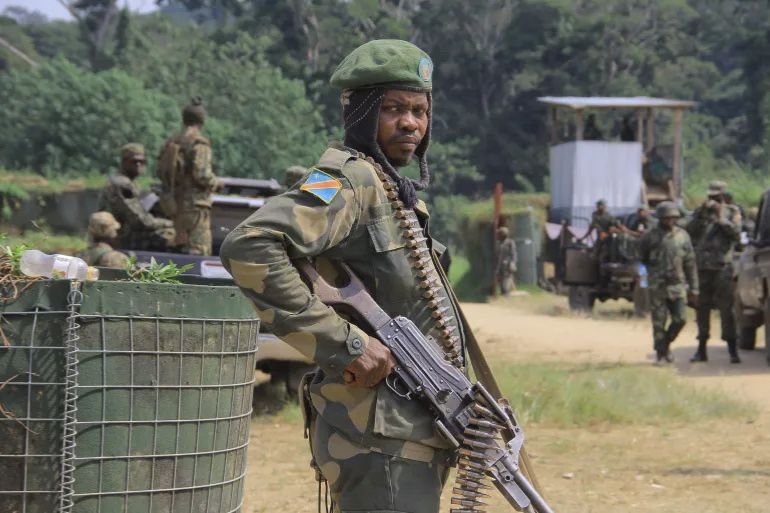
Congolese army soldier on duty in North Kivu, eastern Democratic Republic of Congo, representing the country’s ongoing struggle against armed groups and competition for mineral-rich territories.

A Congolese soldier stands guard in North Kivu a symbol of a nation battling on multiple fronts, from foreign-backed militias to the fight for control over its mineral wealth.

The earth beneath Goma remembers. It remembers miners who descend into narrow shafts in search of cobalt that powers cars they will never drive. It remembers the boots of militias trampling cassava fields. It remembers diplomats speaking of peace while their nations feed on Congo’s minerals.

The Democratic Republic of Congo stands as one of the richest lands on earth, holding 70% of the world’s cobalt, immense copper deposits, and gold that could gild generations. Yet its people remain trapped in poverty and perpetual war. This paradox is not destiny but design, a structure of exploitation sustained by political greed, foreign meddling, and global indifference.

Artisanal miners in eastern Democratic Republic of Congo manually extract minerals such as cobalt and coltan, illustrating the human cost behind the global tech and clean energy industries.
Artisanal miners work by hand in a deep pit in eastern Congo the backbreaking labour that fuels the global demand for cobalt, gold, and coltan.

The Architecture of Endless Conflict

More than 120 armed groups carve up the eastern provinces into fiefdoms. To the outsider, their violence seems chaotic. Yet behind the anarchy lies a grim order. These militias serve three masters: political elites, regional governments, and global markets.

The M23 rebels in North Kivu operate not as bandits but as proxies. Reports by the United Nations trace their funding and weapons to Rwanda and Uganda, countries that profit from Congo’s disorder by securing control over border mines. In return, they weaken a neighbour that could one day eclipse them.

Former President Joseph Kabila’s shadow also lingers. UN investigators allege his network backed M23 to undermine the current administration of Félix Tshisekedi. In Congo, rebellion doubles as a political instrument, an invisible vote of no confidence enforced through gunfire.

Behind this theatre of blood stands a more profound logic of profit. A 2024 UN report estimated that 80% of militia revenue comes from illegal trade in cobalt, gold, and coltan. War has become a business model, a conflict in its own economy. Commanders levy taxes at checkpoints, traders smuggle ore through porous borders, and global corporations purchase minerals scrubbed clean by counterfeit certificates.

The Curse of Wealth Without Power

Congo’s soil is both its fortune and its doom. Foreign corporations from China, the United States, and Europe have long extracted minerals through opaque contracts signed in Kinshasa’s backrooms. Political elites pocket royalties while miners in Kolwezi earn two dollars a day, their children inhaling dust underground.

Global certification systems meant to sanitise the mineral trade, like the International Tin Supply Chain Initiative, have been twisted into rituals of hypocrisy. Conflict minerals merely change their names, rebranded as “ethical” through forged paperwork. Western companies preserve their clean image, Chinese firms secure supply, and Congo remains the skeleton on which the green energy revolution hangs its conscience.

The irony burns. The same cobalt that powers electric vehicles and smartphones imprisons the Congolese in poverty. In a world chasing renewable futures, Congo remains shackled to the oldest trade of all, extraction without transformation.

Revenge and Memory as Weapons

Beneath the scramble for minerals lie older fires. Congo’s conflicts feed not only on profit but on memory, ethnic divisions, political betrayals, and ancestral wounds kept open for advantage.

President Tshisekedi governs under the long shadow of Kabila, whose allies still hold ministries, command the security forces, and control mining concessions. Reforms falter under sabotage. In Ituri, ancient rivalry between Hema and Lendu communities resurfaces, reignited by politicians who thrive on division. In North Kivu, tensions between Tutsi and Hutu populations echo the Rwandan genocide, weaponised anew by local warlords.

Foreign interference magnifies these rifts. Rwanda’s Paul Kagame and Uganda’s Yoweri Museveni deny involvement, yet UN reports document material support for armed groups operating in eastern Congo. The lack of sanctions confirms what the Congolese have long known: the world’s justice system bends to the strong and overlooks the profitable.

Peace Without Power Is Performance

MONUSCO, the United Nations’ billion-dollar peacekeeping mission, has become a symbol of international futility. Blue helmets patrol but do not protect. They stand between civilians and militias yet lack the authority to dismantle the war economy that feeds both. Accusations of corruption and collusion trail the mission. Without a political solution, peacekeeping becomes choreography performed for donor nations.

Western and Chinese corporations alike claim to be committed to conflict-free supply chains. Yet their own balance sheets betray them. Minerals laundered through Rwanda or Uganda enter global markets with ease. Auditors cannot trace what politicians conceal. The rebels adapt faster than the regulations meant to stop them.

Meanwhile, global empathy remains selective. Ukraine, Gaza, and Sudan dominate front pages while Congo’s death toll counts in silence. The world mourns when cobalt shortages threaten technology stocks, not when Congolese families flee burned villages.

Learning from Those Who Escaped the Trap

Congo’s tragedy mirrors Africa’s wider dilemma: how abundance becomes dependency. The continent’s mineral wealth fuels global industries but rarely its own development. China once stood in a similar position, stripped of raw materials by colonial powers. It broke free not through charity but through control.

Beijing demanded technology transfers, banned the export of unprocessed rare earths, and invested heavily in its own infrastructure. It built refineries, power grids, and roads before exporting finished products. Africa, by contrast, continues to send unrefined ore abroad and import finished goods at a premium.

Congo’s leaders could follow Zambia’s recent example by reclaiming ownership of key mines and insisting that no cobalt leaves the country unprocessed. Such policies demand courage, transparency, and the political will to resist bribery from global corporations. Without reform, nationalisation risks becoming another rent-seeking enterprise.

Reclaiming Sovereignty From the Ground Up

To heal, Congo must rebuild both state and spirit. Reclaiming resource sovereignty is the first step in establishing local processing zones, enforcing corporate accountability, and investing in Congolese expertise. Infrastructure must serve industry, not merely the extraction routes of foreign companies.

The national army, FARDC, also requires rebirth. Soldiers, unpaid for months, often join the same smuggling networks they are meant to police. Reform means more than new uniforms; it means wages, discipline, and a chain of command loyal to the republic rather than to factions.

Regionally, Congo must leverage its membership in the East African Community to hold its neighbours accountable. Proper regional integration cannot coexist with cross-border looting. Diplomatic firmness, backed by economic leverage, can begin to reset the balance.

For the international community, words of concern must yield to consequences. Rwanda and Uganda should face targeted sanctions for documented interference. Mining corporations must undergo independent audits with real penalties for violations. Development aid should shift from handouts to infrastructure investment, power plants, roads, and education that build capacity rather than dependency.

The Path Beyond Exploitation

Congo’s war endures because it benefits those who wage it. To end it requires disrupting that profitability. A continental mineral cartel, akin to OPEC, could give African producers collective bargaining power to set prices and negotiate technology transfers. The African Continental Free Trade Area offers the framework; what remains is political courage.

Above all, Congo must reclaim its narrative. Its people are not eternal victims but custodians of a land whose wealth could light the world. The miners in Kolwezi, the farmers in Kivu, the women who rebuild markets after raids, they are the quiet architects of a different future, one not dictated by gunmen or foreign investors.

The Earth Remembers

Health workers wearing protective suits in Goma, Democratic Republic of Congo, collect human remains amid overlapping conflicts and public health emergencies, symbolizing Congo’s enduring humanitarian struggle.
Health workers in Goma, DRC, collect human remains a stark reflection of a nation where conflict and crisis often overlap.

The wound of Congo bleeds by choice, not by fate. It endures because leaders, neighbours, and distant powers have all found profit in its pain. Yet even wounds can scar, and scars can harden into strength.

The earth beneath Goma still remembers who took and who gave nothing back. It remembers who mined for greed and who prayed for peace. If the memory of the land carries forward, perhaps one day Congo’s riches will no longer curse it but crown it.

Tags: #AfricanDevelopment#ConflictMinerals#CongoCrisis#GlobalJustice#GreenEnergyParadox#ResourceSovereignty
Previous Post

From Power Transfer To Power Struggle Inside The DRC’s Fragile Evolution

Next Post

Trade Barriers and Political Tensions Threaten East African Integration

Next Post
Trade Barriers and Political Tensions Threaten East African Integration

Trade Barriers and Political Tensions Threaten East African Integration

Ayi Kwei Armah’s The Beautyful Ones Are Not Yet Born A Critique of Post Independence Disillusionment

From Sankara’s Shadow to Security Shambles Traoré’s Burkina Faso

From Sankara’s Shadow to Security Shambles Traoré’s Burkina Faso

The Power and Plurality of 54 Nations Africa Is Not A Country

africas-hidden-exclusion-crisis-disability-education-and-denial

Africa’s Hidden Exclusion Crisis: Disability, Education, and Denial

Leave a Reply Cancel reply

Your email address will not be published. Required fields are marked *

I agree to the Terms & Conditions and Privacy Policy.

Africa 360 Degrees

© 2025 Africa360Degrees - Where Africa's Pulse Meets the Global Framework. Powered by Africa360Degrees .

Navigate Site

  • Business
  • Economics
  • Featured
  • National
  • Politics
  • Technology
  • World
  • About
  • Contact

Follow Us

Welcome Back!

Login to your account below

Forgotten Password?

Retrieve your password

Please enter your username or email address to reset your password.

Log In

Add New Playlist

No Result
View All Result
  • Business
  • Economics
  • Featured
  • National
  • Politics
  • Technology
  • World

© 2025 Africa360Degrees - Where Africa's Pulse Meets the Global Framework. Powered by Africa360Degrees .

This website uses cookies. By continuing to use this website you are giving consent to cookies being used. Visit our Privacy and Cookie Policy.
-
00:00
00:00

Queue

Update Required Flash plugin
-
00:00
00:00