


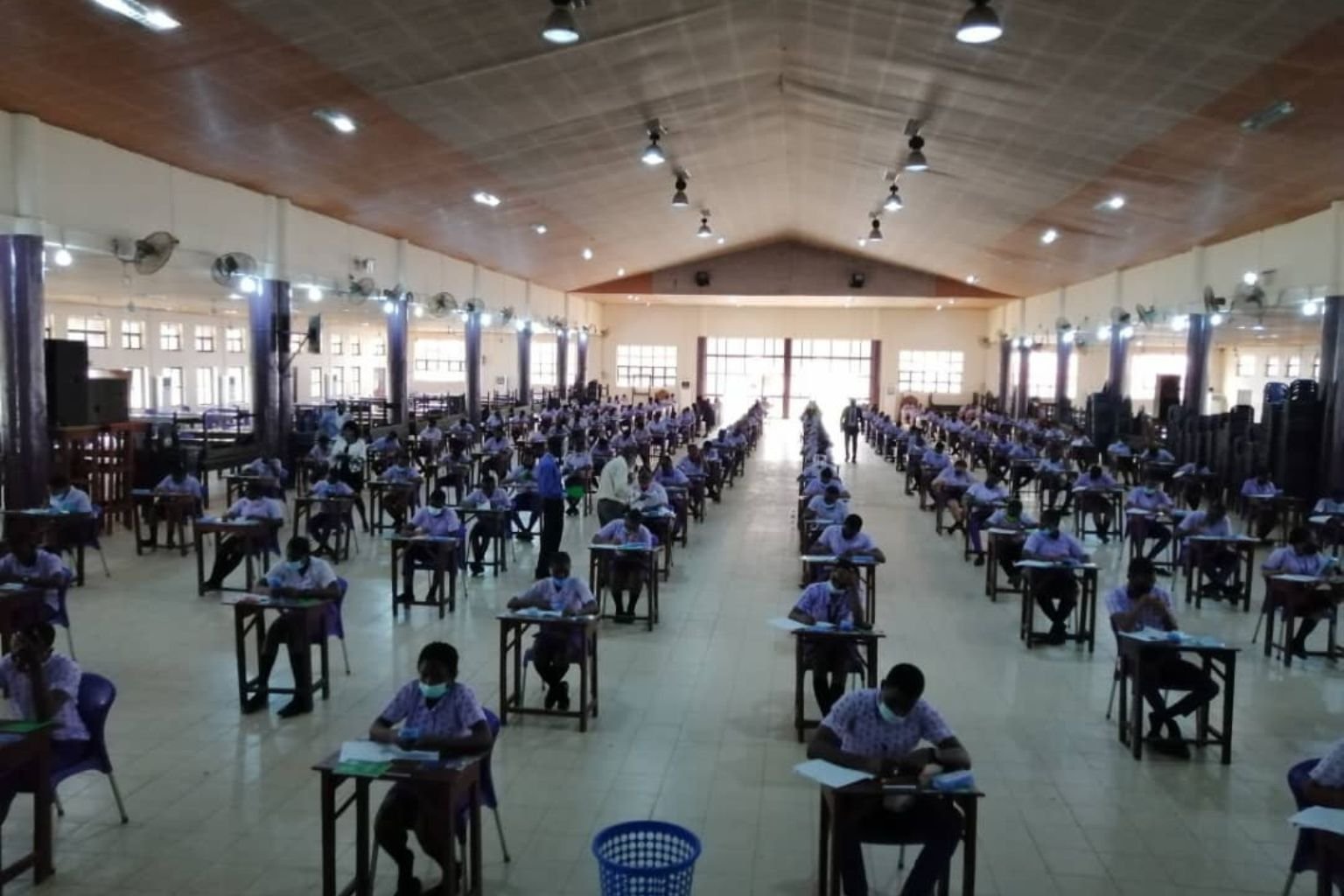
The examination hall in Ibadan held more than nervous energy. It held intention. Young Nigerians shuffled papers, exchanged jokes, and spoke of distant cities with the casual confidence of people already halfway gone. Japan. Australia. China. Hungary. These names floated through the room like departure gates being announced.
For many candidates, this government sponsored scholarship examination was not merely an academic test. It was a threshold. A narrow opening through which escape felt possible.
In the moments before invigilators demanded silence, conversations drifted toward life beyond Nigeria’s borders. It was there, in those unguarded exchanges, that a quiet truth surfaced. Most of the examinees had no intention of returning. Officially, the scholarships were meant to build national capacity. Unofficially, they were seen as exit routes. Study abroad. Find work. Stay back. Adjust status. Begin again.
This was not anger. It was arithmetic.
When Leaving Becomes the Rational Choice

Nigeria has reached a point where migration is no longer framed as ambition but as a survival strategy. Young people do not leave because they lack patriotism or attachment to their country. They leave because staying has become an endurance test with no clear reward.
There was a time when Nigeria attracted others. Ghanaians crossed borders in search of opportunity. Togolese traders built livelihoods in Nigerian markets. The country functioned as a regional magnet, its institutions imperfect but reliable, its promise credible. That Nigeria now exists mostly in memory.
For today’s generation, departure signals progress. Return is met with disbelief. Ask someone abroad when they plan to come home, and the question itself can sound like sabotage. Nigeria, in this narrative, is not a place to return to but a chapter to escape from.
Brain Drain Is Not an Accident of Globalisation
Brain drain is often described as a natural outcome of globalisation, as if talent evaporates toward brighter lights. This framing is convenient and dishonest. Skilled migration on Nigeria’s scale is not accidental. It is systemic.
When a country consistently fails to reward competence, protect labour, or invest in human capital, talent responds logically. Doctors work without equipment. Engineers watch projects die in committee rooms. Researchers operate in institutions starved of funding, power, and policy coherence. Innovation is trapped in prototype form, applauded briefly and then abandoned.
Nigeria does not lose talent because the world is attractive. It loses talent because the state has made itself difficult to live in.
A Health System Bleeding Quietly

Nowhere is this loss more visible than in healthcare. Nigerian doctors are not leaving in dribs and drabs. They are living in predictable, measurable flows. Registration data from overseas medical councils show steady increases in the number of Nigerian doctors relocating abroad over the past decade [Africa Check].
At home, doctors endure late salaries, overstretched hospitals, inadequate protective equipment, and little institutional respect. Career progression is uncertain. Training opportunities are limited. Overseas systems, by contrast, offer structure, functional tools, and dignity of labour.
The result is a doctor-to-patient ratio that verges on systemic neglect. Nigeria operates far below global health standards [WHO]. The arithmetic is unforgiving. Fewer doctors. More patients. Rising mortality. And yet the exodus continues with alarming normalcy.
This is not simply a health crisis. It is a governance failure written on human bodies.
Exporting Excellence While Importing Dependency
The irony of Nigeria’s brain drain is not that its citizens excel abroad. That has never been in doubt. The tragedy is that their excellence strengthens other systems while Nigeria remains structurally weak.
Nigerian professionals design military surveillance technology for foreign governments. They train pilots, build aerospace systems, lead medical research, and drive technological innovation abroad. Their competence is recognised, funded, and scaled elsewhere.
At home, insecurity persists, aviation systems struggle, and innovation stagnates. When crises deepen, the state looks outward for assistance. When tragedies occur, investigations follow the loss of life rather than preventing it. Nigeria knows how to request help. It has forgotten how to retain capacity.
The country exports brilliance and imports explanations.
Innovation Without Infrastructure

Across universities, private labs, and informal workshops, young Nigerians continue to innovate. Renewable energy concepts. Health solutions. Agricultural technologies. Software platforms tailored to local needs. Most never leave the prototype stage.
There is limited venture capital, weak intellectual property protection, and little government procurement of local solutions. No clear pipeline connects research to market. Innovation survives just long enough to prove it existed.
Other countries treat scholarships as strategic tools. Students are sent abroad to acquire skills aligned with national priorities. Their return is planned, incentivised, and monitored. In Nigeria, scholarships often function as symbolic gestures. There is no industrial strategy waiting on the other side.
Talent leaves not out of betrayal, but because there is nothing structured to return to.
Leadership and the Politics of Neglect
Brain drain is a verdict on leadership. It reflects governance that prioritises election cycles over institutional continuity. When policy is reactive and vision is absent, citizens do not wait for reform. They relocate.
The long term cost is profound. Skilled migration hollows out the middle class, weakens public services, and erodes civic faith. The next generation grows up learning that contribution is optional and departure is sensible.
Over time, the state survives increasingly on remittances from the very people it failed to keep.
Making Staying Make Sense Again
Reversing brain drain does not require patriotic slogans or emotional appeals. It requires material reform. Competitive wages. Functional infrastructure. Transparent institutions. Respect for expertise. Protection for innovators. A social contract that works.
People stay when systems function. They return when dignity is restored. They invest when effort is rewarded.
Nigeria does not need to beg its young people to believe. It needs to build a country worth believing in.
Choosing Home as a Viable Future
Every society reaches a moment when it must decide whether it will be a place of passage or a place of purpose. Nigeria is at that moment now.
The continued loss of its brightest minds is not destiny. It is a choice made through neglect and tolerated through silence.
If the country becomes livable, its people will return.
If it becomes functional, its talent will invest.
If it becomes fair, its future will stabilise.
The question is no longer why Nigerians are leaving.
The question is how long the country can afford to pretend that it does not matter.

