


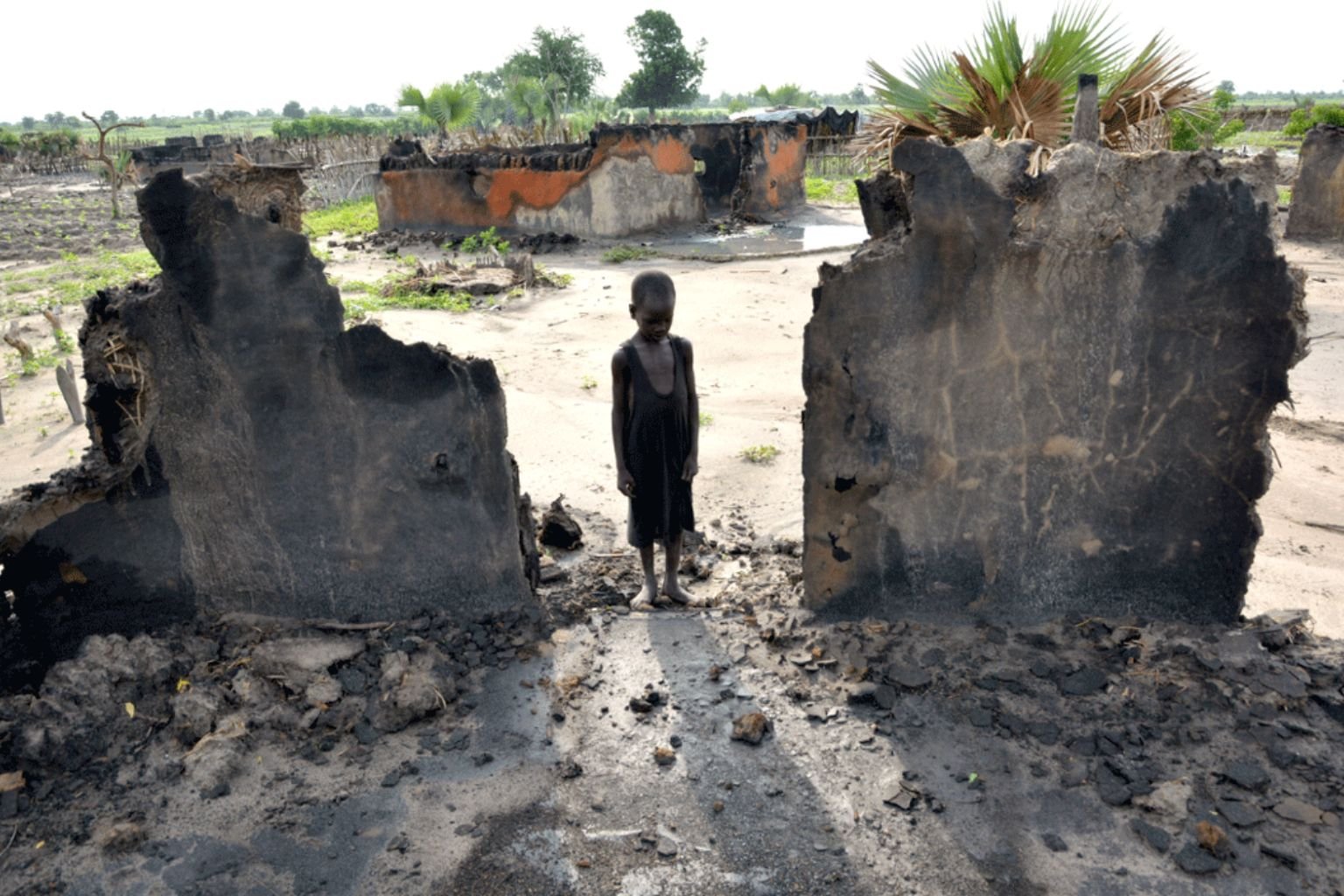
When South Sudan gained independence in July 2011, the world’s youngest nation was celebrated as a beacon of hope in a troubled region.
It was a hard-won victory, carved from decades of bloody struggle with Sudan, and was supposed to mark the dawn of a peaceful and prosperous era. Yet, 14 years later, that optimism has curdled into bitter disillusionment. The country teeters once more on the brink of civil war, plagued by ethnic violence, political betrayal, and a humanitarian crisis of staggering proportions.
What’s worse, the international institutions tasked with preventing South Sudan’s disintegration, the African Union (AU) and the United Nations (UN), have become symbols of helplessness. Despite grand declarations, peace agreements, and the deployment of one of the world’s most expensive peacekeeping operations, these organisations have failed spectacularly to prevent the current unravelling. South Sudan’s slide back into chaos is not just a tragedy for its people but a damning indictment of the limits of modern diplomacy.
The Mirage of Peace How 2018’s Accord Unravelled

At the heart of South Sudan’s latest implosion is the Revitalised Agreement on the Resolution of the Conflict in South Sudan (R-ARCSS), signed in 2018 after a brutal civil war that left nearly 400,000 people dead. The accord was touted as a breakthrough, designed to create a unity government between President Salva Kiir and his longtime rival, Riek Machar. Central to the agreement were ambitious plans: integrate rival armed forces, establish a power-sharing arrangement, and lay the groundwork for long-term stability.
But the ink was barely dry before cracks began to appear.
President Kiir, determined to consolidate his grip on power, began systematically sidelining Machar and his allies. Loyalists were appointed to key government positions, while opposition figures were harassed, marginalised, or detained. The power-sharing government that emerged was more of a façade than a functional administration, with deep mistrust simmering beneath the surface.
A key failure lay in the promised integration of armed forces. The Joint Defence Board (JDB), tasked with merging government and opposition fighters into a single national army, has essentially collapsed. Only about 7% of the promised 83,000 unified forces have been deployed – a glaring signal that South Sudan’s rival factions remain armed and hostile. The dream of a united national army has disintegrated into a nightmare of fragmented militias, each loyal to its own political patrons.
In March 2025, the already fragile peace process took a fatal blow. Machar was placed under house arrest, accused by Kiir’s government of fomenting rebellion following renewed clashes in Upper Nile State. His detention effectively torpedoed what little remained of the 2018 peace deal, plunging the country back into violent uncertainty.
The AU Rhetoric Without Teeth
The African Union has long presented itself as the guardian of peace and stability on the continent, boasting high-profile interventions in The Gambia, Mali, and elsewhere. But in South Sudan, the AU’s performance has been marked by impotence and indecision.
Repeated AU communiqués have condemned Kiir’s breaches of the peace deal, but these pronouncements have been little more than empty words. Unlike the Economic Community of West African States (ECOWAS), which imposed biting sanctions on the junta in Niger in 2023, the AU has been paralysed by fear – fear that pressuring Kiir too hard might provoke total collapse.
The AU’s High-Level Ad Hoc Committee (C5), established to steer peace efforts, has become a talk shop. Its mediators shuttle between African capitals issuing press statements, but they have failed to extract any real concessions from Juba. Even the Intergovernmental Authority on Development (IGAD), the regional bloc leading diplomatic efforts, has seen its initiatives thwarted. A planned diplomatic mission to Juba was abruptly cancelled after Kiir’s government refused to cooperate, further exposing the limits of the AU’s influence.
A fundamental problem is that the AU remains chronically underfunded and overly reliant on external donors, particularly the European Union and the United States. This dependency constrains its autonomy, leaving it cautious and reactive rather than bold and decisive.
UNMISS The Failure of Protection

Meanwhile, the United Nations Mission in South Sudan (UNMISS), one of the UN’s most significant and costliest peacekeeping operations, has proven incapable of fulfilling its most basic mandate: protecting civilians.
The March 2025 massacre in Nasir was a watershed moment. Government-aligned forces, including the feared White Army militias, stormed the town and slaughtered dozens of civilians. Despite the presence of UN peacekeepers and even a botched evacuation attempt by the UN itself, the carnage was unstoppable. Among the dead was a UN staffer, a grim reminder that even international personnel are not immune to South Sudan’s spiralling violence.
In theory, UNMISS exists to safeguard civilians, support humanitarian aid, and monitor human rights abuses. But in practice, it has been hamstrung by bureaucratic paralysis and a toxic dependence on Kiir’s government for access and security cooperation. Time and again, UN peacekeepers have been forced to stand down in the face of atrocities, unable to act decisively without the regime’s permission.
The results speak for themselves: 2.3 million refugees, 2 million internally displaced people, and ethnic clashes that show no sign of abating. The peacekeeping mission’s $1.2 billion annual budget has become a symbol of international failure, a monumental investment that has yielded heartbreakingly little.
Why Diplomacy Keeps Failing
The diplomatic failure in South Sudan cannot be attributed solely to local actors. It is also the result of more profound systemic weaknesses within the AU and the UN, compounded by shifting geopolitical priorities.
Globally, attention has been diverted to flashpoints elsewhere – the Ukraine war, escalating conflict in Gaza, and Sudan’s own civil war next door. South Sudan has become a “forgotten crisis,” with donor fatigue setting in. The 2024 humanitarian response plan was funded at just 40%, leaving aid organisations dangerously short of resources even as needs escalate.
Regional dynamics have further complicated peace efforts. Uganda, long an ally of Kiir, continues to provide military backing, effectively shielding the regime from external pressure. The United Arab Emirates, meanwhile, has been accused of funnelling support to Machar-linked factions, adding another layer of complexity to the proxy conflict. And Sudan’s civil war has spilt over into South Sudan, disrupting vital oil exports and exacerbating economic turmoil.
The AU’s reluctance to impose sanctions on Kiir stands in sharp contrast to its earlier willingness to act against West African juntas. Fear of destabilising Kiir’s government, combined with financial constraints and geopolitical hesitations, has rendered the AU largely ineffective.
Is There a Way Forward?
Despite the grim outlook, paths to salvage the situation remain, though they require a radical shift in strategy and political will.
First, there must be a renewed push to resurrect peace talks. This starts with the immediate release of Riek Machar and the restoration of the original power-sharing framework. The AU and UN must also impose targeted sanctions such as asset freezes and travel bans on hardline spoilers within Kiir’s inner circle to raise the stakes for non-compliance.
Second, the mandate of UNMISS needs an urgent overhaul. Peacekeepers must be empowered to protect civilians more robustly, including through the enforcement of no-fly zones to prevent government aerial bombardments. Independent investigations into atrocities like the Nasir massacre are essential to rebuild trust and ensure accountability.
Third, diplomatic efforts should pivot towards a regional mediation strategy. IGAD, backed by the AU, must take the lead, bypassing the UN’s bureaucratic quagmire. Countries with significant influence over Kiir, such as Egypt, Saudi Arabia, and China, must be actively engaged to apply pressure and incentivise compliance.
A Test of Africa’s Diplomatic Resolve
South Sudan’s agony is more than a national tragedy; it is a litmus test for the effectiveness of African and international diplomacy. The failure to hold South Sudan’s leaders accountable has allowed a fragile peace to degenerate into renewed conflict, at catastrophic human cost.
For the AU, this crisis is a chance to demonstrate that it can move beyond rhetoric and embrace decisive, self-directed action. For the UN, it is a call to reflect on the limitations of peacekeeping in environments where host governments are both belligerents and supposed partners.
Without bold, coordinated, and sustained efforts, South Sudan risks remaining not just the world’s youngest nation but also its most broken.


